Water in an EV charging port sounds worse than it usually is. Every modern EV sold in the United States has a sealed, weather-rated charge port designed to handle rain, splash, and the kind of coastal humidity the Puget Sound throws at a car most months of the year. What matters is not that water touched the port. It is how much got in, where it pooled, and whether the car is telling you something is wrong before you plug in.
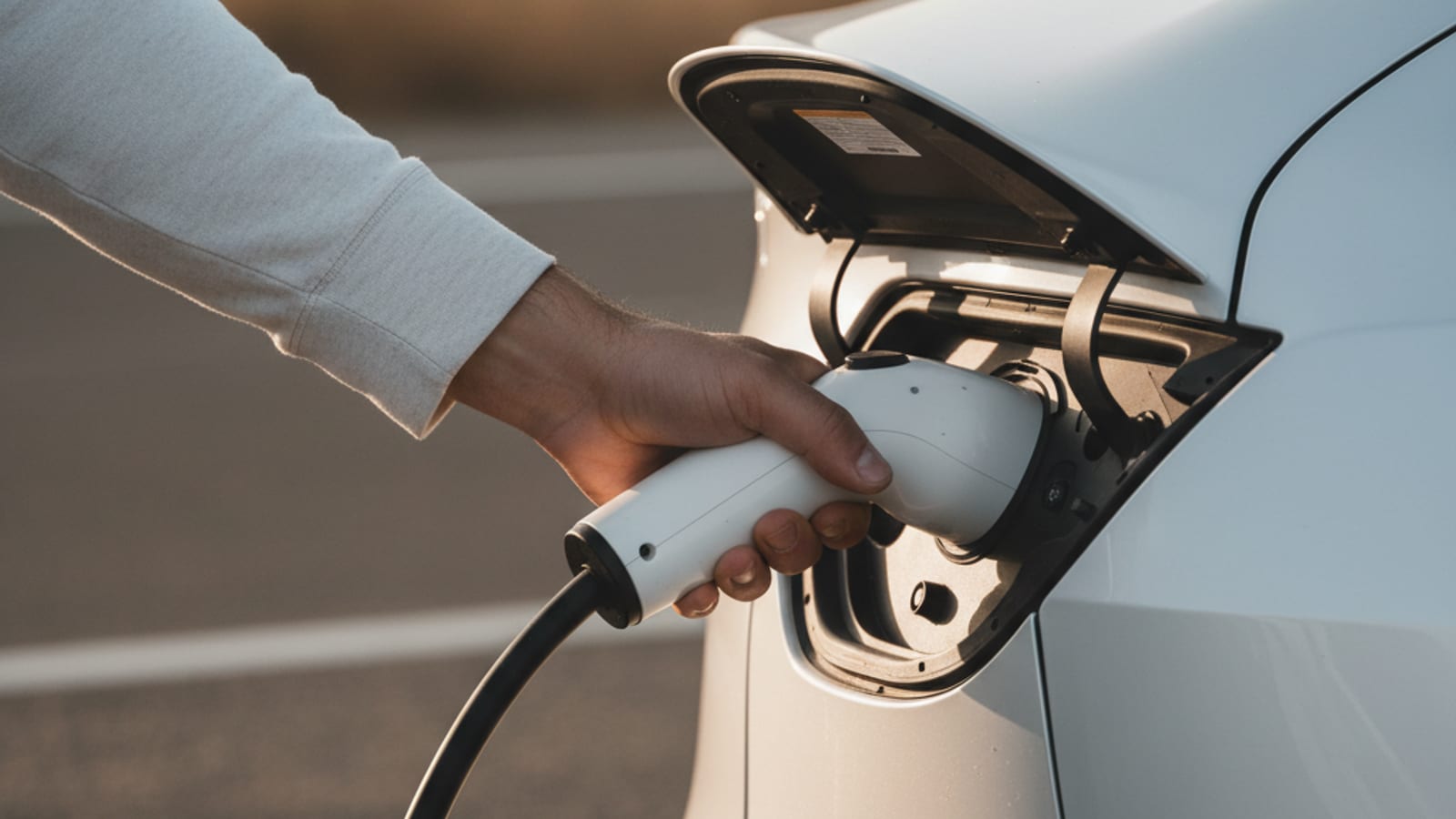
Why this comes up so often here
The Puget Sound runs in the 35 to 45F band for months, and the marine layer is not just a June thing. Drivers in Edmonds, Shoreline, and Alki deal with heavy morning moisture most of the year, and a charge port door left open overnight in that fog collects condensation the same way a cold glass does. Add beach parking near Alki or Golden Gardens, where wave spray and salt air reach cars parked closer than people expect, and it is easy to open a charge port and see beads of water sitting in the housing.
Sprinkler overspray is the other repeat offender. A lot of apartment complexes and townhome HOAs run irrigation early in the morning, right when commuters are walking out to plug in or unplug. A charge port facing a landscaped strip can take a direct hit from a sprinkler head almost every day without the owner ever noticing until they look closely.
The fall and winter storms add a third pattern. A driver who plugs in during a dry morning and unplugs during a wind-driven rainstorm may pull the connector out into a wet environment and then push the port door closed with moisture still on the housing. By the next morning, that moisture has worked its way into the seam.
What actually happens when water in an EV charging port gets in
The port itself is built to shed water. The charging pins sit behind a spring-loaded door, and the connector interface uses a rubber gasket that seals against the plug when it is inserted. Rain hitting a closed door, or light splash on an open one, is exactly what that design accounts for. Water in an EV charging port becomes a real concern in three specific situations: standing water pooled deep enough to touch the pins directly, water forced in under pressure like a pressure washer or an automatic car wash with an aggressive undercarriage jet, or water that has been sitting long enough to start corroding a contact.
Most of the time what a driver finds is condensation. It looks alarming in the moment, a film of moisture across the housing, but it evaporates or wipes away in seconds and never touches anything electrical.
What to do before you plug in
If you open the charge port and see visible water, do not plug in immediately. A few minutes of care here beats a charging session that trips a fault code or, worse, damages a pin.
Wipe the visible moisture out with a dry microfiber cloth first, reaching as far into the port opening as you comfortably can without forcing anything. Let the port sit open in dry air for 10 to 15 minutes if you are not in a rush. The metro’s indoor garages and covered stalls usually clear the rest on their own. Skip the hair dryer or any heat source. Heat near the pins and the surrounding plastic housing does more harm than the water ever would. If you are parked somewhere shaded and breezy, that is honestly the best drying environment you will get.
Once the port looks dry, plug in normally and watch the first few seconds of the charging session. A charge that starts and holds steady means the port did its job. A charge that starts, stops, and throws an error, or a port door that will not fully latch afterward, means it is time to stop and get it looked at rather than keep trying.
Signs it is more than surface water
A handful of signals point to something beyond simple moisture, and none of them are worth troubleshooting yourself in a parking lot. A burning or plastic smell near the port, a charging session that repeatedly faults on the same connector after the port is visibly dry, a port door that will not close all the way, or corrosion you can actually see on the pins all mean the same thing: the car needs a real inspection before it charges again. Forcing repeated charge attempts on a port with a suspected electrical fault risks turning a minor issue into a much more expensive one.
If your EV will not charge at all after a water exposure and you are not near home, that is a different problem than a slow charge or a stuck cable. Our guide to what to do when your EV charge port will not release covers the mechanical side of a stuck connector, and our broader EV charging guidance covers model-specific fixes if the door or latch itself is the culprit rather than water.
Stranded with a charging issue in the Puget Sound
If water in an EV charging port has left you unable to charge and you are stuck somewhere in King, Snohomish, or Pierce County, our referral line connects stranded drivers with independent local operators. Our mobile EV charging line dispatches a local operator who can bring a charge to the car’s location, and our EV roadside assistance line covers everything from a fault code you cannot clear to a car that will not accept a charge at all. Coverage runs from Seattle and Bellevue out through Everett and across to Tacoma. We do not perform the repair ourselves. We connect you with an operator who can assess the vehicle on-site.
If your car simply will not power on rather than will not charge, our guide to what’s not working when an EV charger is not working is the better starting point.
Frequently asked questions
Is water in an EV charging port dangerous?
Usually not. Charge ports are designed with sealed housings and gasketed connectors to handle rain and splash. Light condensation or a quick rinse of overspray almost never reaches the actual pins. Standing water that has pooled deep in the housing, or water forced in under pressure, is what actually raises concern.
Can I still charge my EV if the port is wet?
If it is light surface moisture, wiping it dry first and letting the port air out for 10 to 15 minutes before plugging in is the safer approach. If there is standing water inside the housing or the car throws an error when you try to charge, do not keep attempting it. Get it checked first.
What should I never do to dry out a charge port?
Skip the hair dryer, heat gun, or any direct heat source. Heat near the pins and the surrounding plastic can warp the housing or damage a seal, which creates a bigger problem than the water did. A dry cloth and a few minutes of open air handle almost every case.
Why does my charge port keep collecting water near the coast?
The Puget Sound’s marine layer produces heavy overnight condensation in coastal neighborhoods like Edmonds, Alki, and Magnolia for much of the year. Sprinkler overspray from nearby landscaping and wave splash in beach parking areas add to it. Parking with the charge port facing away from sprinklers, and closing the port door fully when the car is not charging, cuts down on most of it.
Can water in the charging port damage my EV’s battery?
The charge port and the high-voltage battery pack are separate, isolated systems. Water reaching the port’s pins is a connector and charging-circuit concern, not a direct threat to the battery itself. That said, a corroded pin or a persistent fault left unaddressed can eventually affect the charging system, so it is worth fixing early rather than living with an intermittent connection.
What if my EV will not charge at all after getting wet?
Stop trying to force a charge and get the vehicle assessed. If you are stranded in the Puget Sound, call (206) 202-7018 to reach a local operator.