EV roadside assistance when you're stuck and the clock is running.
Running out of charge in an EV isn't like running out of gas. There's no gas can fix. You either get charge to the car or the car gets towed. We're the charge option. The operators we work with cover the full Puget Sound region freeway network, I-5, I-90, I-405, US-2, SR 520, SR 99, SR 167, plus every surface street between Everett and Tacoma. Call dispatch and we'll connect you.
What's included in this service?
- Coverage across 56 cities and communities in the Puget Sound region
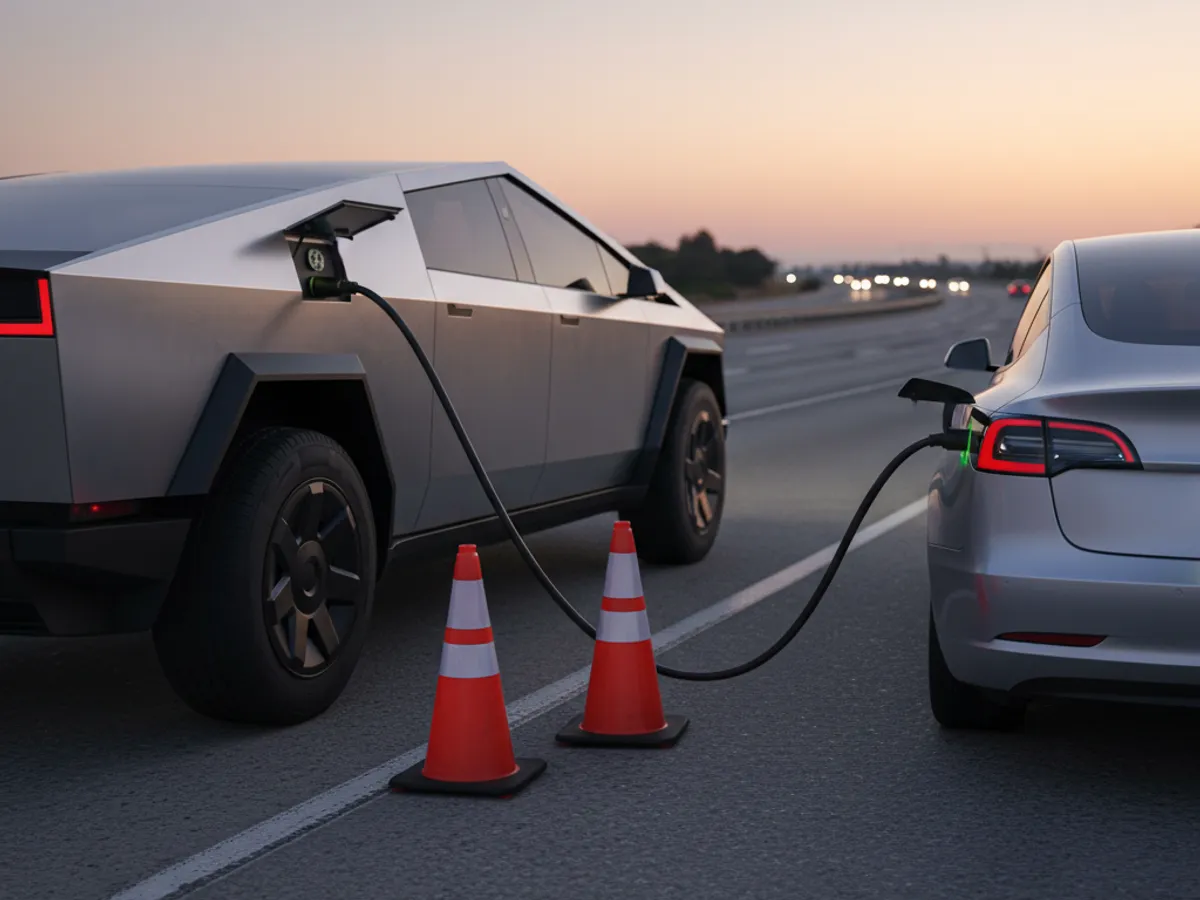
- Mobile Level 2 charging (240V / 9.6 kW) brought to your location
- Tesla 12V jump-start for dead accessory batteries
- CCS adapter support for Rivian, Ford, Hyundai, Kia, Polestar, Bolt
- Charge port troubleshooting when the handle won't latch or release
- PIN-to-drive and valet lockout coordination with Tesla support
- Tow dispatch coordination if on-site charge won't resolve the problem
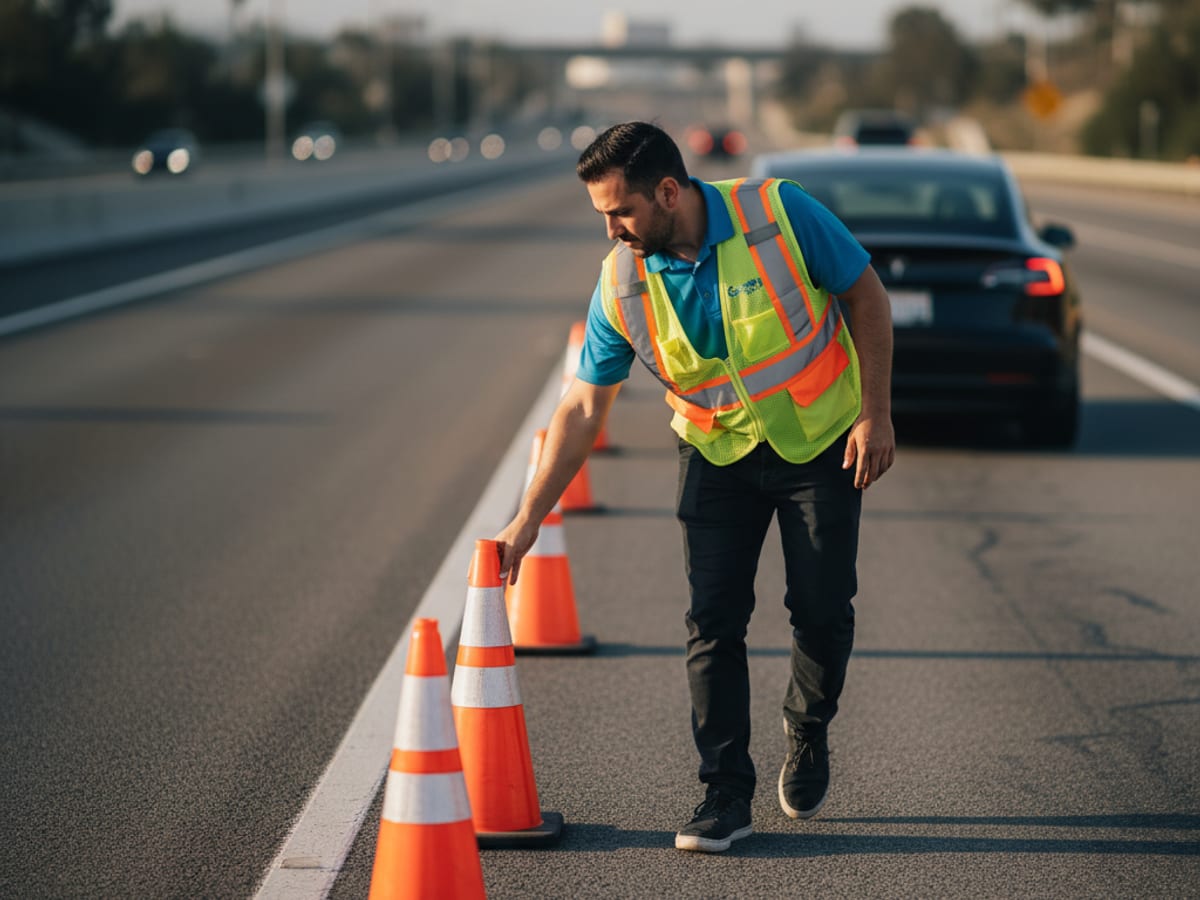
- Freeway shoulder safety setup, cones, vest, flares if needed
When do you need this service?
- Battery reached 0% and the car shut down
- "Limited power" or "Car needs service" warning appeared and you pulled over
- Charge port handle won't release from the car
- 12V accessory battery died and the car won't wake up
- Supercharger you counted on is offline or out of reach
- You're idle at the Mukilteo ferry and the next charger is out of range
- You locked the keys in, phone died, and the app can't authenticate
What do EV drivers ask about EV Roadside?
Why not just call AAA?
AAA will tow your EV, they generally won't charge it. Some AAA regions now partner with mobile charging companies in major metros. If you want the car charged on site instead of loaded onto a flatbed, call us first. Ask the operator directly about AAA reimbursement, since policies differ.
What does a typical rescue cost?
Charge Pro SEA doesn't set the price. The operator who takes the job quotes you before starting and bills you directly. What moves the number: how far they travel to reach you, how much range you need to get to the next charger, and the time of day.
Can you rescue from a freeway shoulder safely?
Yes, with caveats. Operators deploy cones and a safety vest, position their vehicle as a shield, and work from the passenger side whenever possible. If shoulder conditions aren't safe (the I-90 floating bridge and the SR-99 tunnel have no usable shoulder), 911 and WSDOT get involved to move you somewhere safer before the charge starts.
How long does the charge itself take?
The connection runs 15 to 30 minutes for a typical rescue, which adds 10 to 20 miles of range at Level 2 speeds. Setup and paperwork add a few minutes on top. Travel time to reach you is up to the operator and the distance, so ask them when you're connected.
What if charging alone won't fix my problem?
If the issue is mechanical (failed high-voltage battery module, drivetrain fault, collision damage) charging won't help. The operator diagnoses on site, documents the fault, and coordinates a flatbed tow to the nearest authorized service center. Settle what that costs with the operator before they start.
Where do we offer EV Roadside in the Puget Sound region?
We provide ev roadside in 56 cities and communities in the Puget Sound region. Pick your city for local climate notes and service specifics.
See ev roadside in all 56 cities
Need ev roadside in the Puget Sound region?
Call and we'll connect you with a local operator. They quote you before starting.