Everett is the anchor of Snohomish County’s EV market. About 4,800 registered EVs live inside the city, and the surrounding communities of Marysville, Lake Stevens, Mukilteo, and Arlington add thousands more. The freeway corridors that connect those drivers to the rest of the region are I-5, US-2, and SR 99. A dead EV on any of those is the same incident from the operator’s perspective, and the response is the same: a referral match with a licensed, independent local operator.
This guide covers the local stranding patterns around Everett, what mobile rescue can and cannot do here, and how to reach the right operator.
Where Everett drivers run out
Three patterns dominate.
The home charging gap. Everett has a higher share of renters and multi-family housing than some of the Eastside cities. Drivers without home charging depend on workplace or public stalls. A broken hub, a delayed charge, or a missed overnight plug-in can leave a driver at low pack the next morning. Cold morning starts on a 35-degree day compound the issue.
I-5 between Everett and Marysville. The freeway runs north-south through the metro and the peak commute traffic fills the available stalls. A driver who relies on the Everett area hubs needs a backup plan, and the backup plan is mobile charging or a working stall at the next exit.
US-2 east toward Monroe and Sultan. The corridor has fewer public stalls and longer stretches without service. Drivers heading out from the metro for a hike or a cabin weekend can find themselves at low pack with limited options. Mobile rescue in this corridor often means the operator dispatches from a wider point like Monroe or the Snohomish valley.
What mobile rescue actually does in Snohomish County
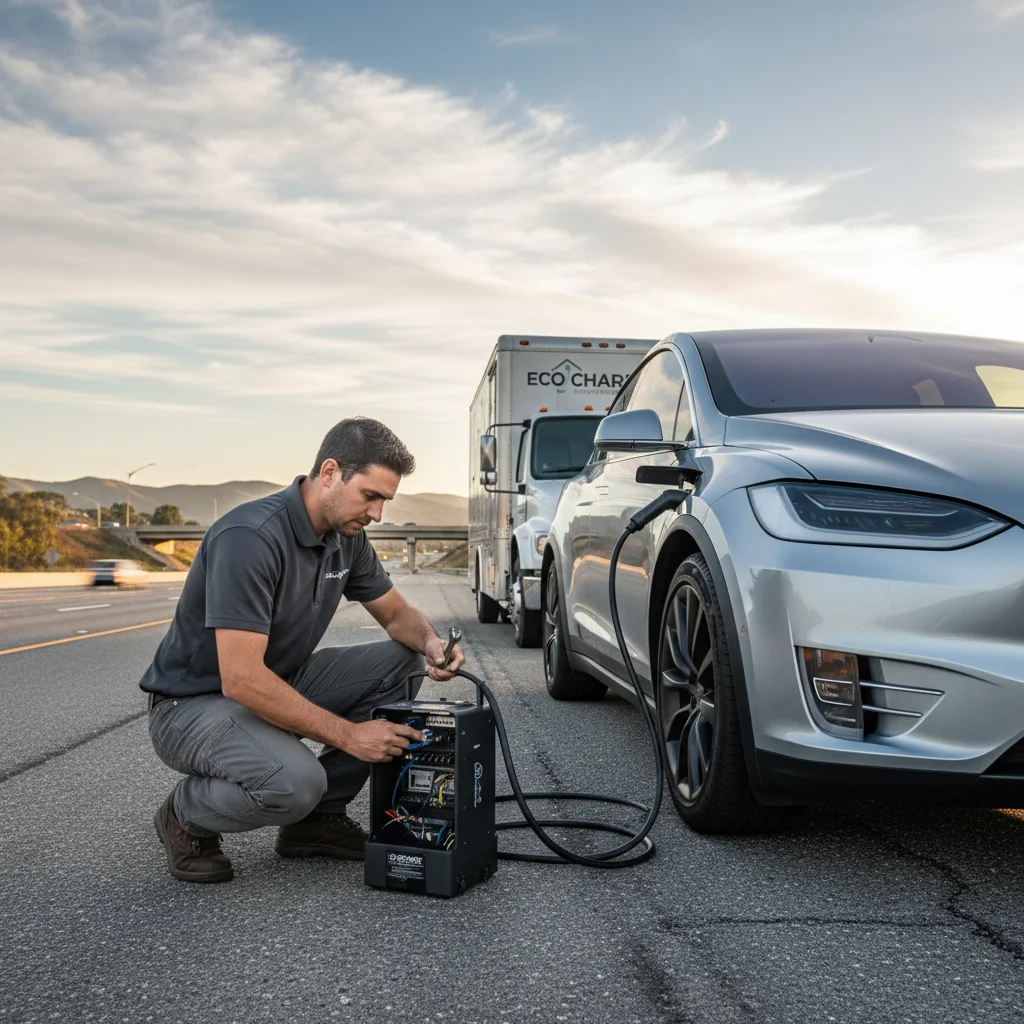
A mobile EV rescue operator working with Charge Pro SEA brings a portable Level 2 charger or a DC fast charger, depending on the situation, and connects to the vehicle at the location where it sits.
For a 12V failure, the operator brings a portable jump pack and revives the 12V through the under-hood jump posts. The whole job usually takes less than ten minutes once the operator is on scene. The driver is then able to drive to a service center for the actual 12V replacement.
For a traction pack at zero, the operator brings a portable charger and adds enough range to reach a fixed charger, home, or a workplace stall. The session is short and the goal is practical mobility, not a full charge.
For a stuck charge port, the operator can perform a manual release on most modern EVs. The procedure varies by brand; some need a plastic pull-tab under the inlet, others need a software reset through the dash. The operator confirms the fix before leaving.
For a flat tire, the operator coordinates a flatbed tow to a tire shop of the driver’s choice, or applies a plug kit on the shoulder if the tire is pluggable.
The matched operator is licensed, independent, and local. Charge Pro SEA makes the referral; the operator performs the work, sets the terms, and bills the customer directly.
Service area and dispatch patterns
Snohomish County stretches from Everett and Mukilteo on the west to Monroe, Sultan, and Gold Bar in the Cascades. The dispatch density is highest near the I-5 corridor. Operators serving the rural east side often stage near Monroe or Snohomish to keep travel time reasonable.
For drivers in Marysville or Arlington, the matched operator may dispatch from a town to the south or the north depending on the workload. The dispatcher confirms the expected window before the driver commits to the call.
For drivers in the Stevens Pass corridor, the practical limit is weather. Operators do not dispatch into active chain-up zones or during a WSDOT closure. The right move in that case is to wait at the nearest safe staging area in Monroe or Gold Bar until conditions improve.
The Snohomish County PUD layer
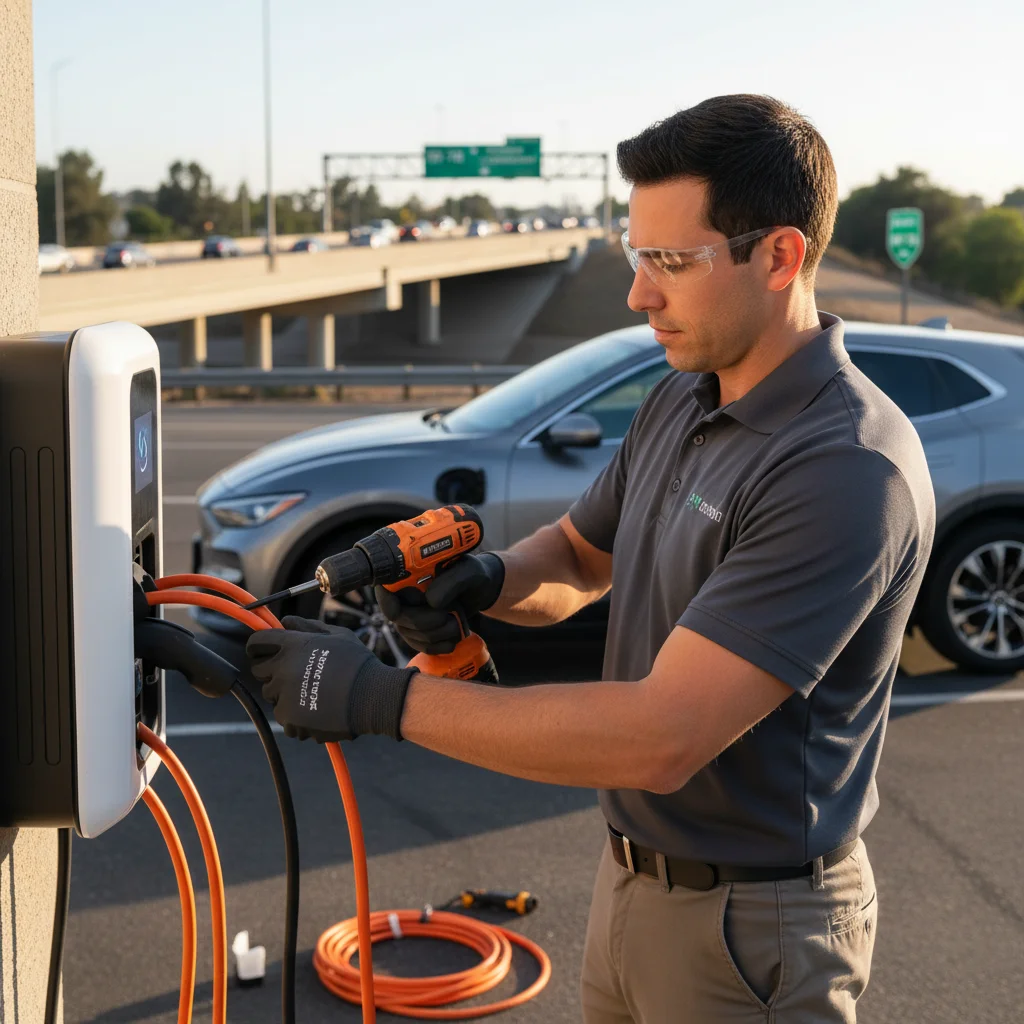
Snohomish County PUD No. 1 (SnoPUD) is the dominant electric utility in the area. The utility publishes residential and commercial EV charger rebate programs that change over time. The current program status is worth confirming with SnoPUD before a homeowner invests in a Level 2 station installation.
For stranded EV drivers, the utility layer does not affect the immediate response. The dispatch goes through the matched operator regardless of which utility serves the address. The utility layer matters when the driver wants to install a permanent home charger or add a dedicated circuit for faster charging.
WSDOT IRT and state highway coverage
WSDOT’s Incident Response Team patrols I-5 through Snohomish County and parts of US-2 and SR 99. The published coverage area is about 1,300 centerline miles statewide. The IRT helps with flat tires, running out of gas, and minor mechanical issues. The published materials do not mention EVs.
A driver on the shoulder of I-5 near Marysville can dial 911 from the road and ask what the local IRT crew can do. The IRT can clear the scene and coordinate a tow. They do not bring mobile Level 2 charging, and they do not jump 12V batteries as a standard offering.
For a 12V jump or a mobile charge, the right call is Charge Pro SEA. For traffic control and a tow-to-charger, IRT plus a flatbed may be the faster answer.
What to record before the call
Drivers about to call for help should record four things.
Vehicle make, model, model year. The matched operator confirms the connector type and the under-hood jump-post location from this.
Connector type. CCS1, NACS (J3400), and CHAdeMO are all in use. Tesla drivers in the area have NACS. Most other brands still ship with CCS1.
Current pack percentage and displayed warnings. A driver who reports “12 percent, no warnings, just dead” gets a different response than a driver who reports “12 percent, reduced propulsion warning, throttle limited.”
Location, including the nearest cross street or landmark. “I-5 northbound at the 41st Street exit” is useful. “On 5” is not.
Whether the car can roll, steer, and accept charging. A car that will not roll needs a flatbed, not a portable charger.
When the issue is not a dead EV
A driver whose car will not start in Everett may have a problem that is not traction-pack or 12V. A few cases worth knowing.
The vehicle is in a state of deep software fault. The dash shows a yellow or red warning that does not match a 12V or pack failure. The fix is a service-center diagnostic, not a roadside charge.
The traction pack has been damaged in a collision. The driver should not attempt to charge the vehicle. The right move is a flatbed tow to a collision center.
The charge port has been damaged. A bent pin or a cracked inlet needs a service-center repair. The matched operator can confirm the damage visually and arrange a tow if needed.
When to call us
If the EV is dark, the pack is empty, or the charge port will not release, Charge Pro SEA connects Snohomish County drivers with licensed independent local operators. Call (206) 202-7018 to reach a local EV rescue operator.