The car sits in your Bellevue driveway after a long stretch of fall rain, and the I-Pace refuses to wake up. The flush handles stay tucked away, the fob does nothing, and the dash stays black. The traction pack may be at 80%, and the small 12V battery is what keeps the car from doing anything. This is the version that catches Pacific Northwest owners off guard, because the symptoms look like a dead pack when the real fault is the small battery.
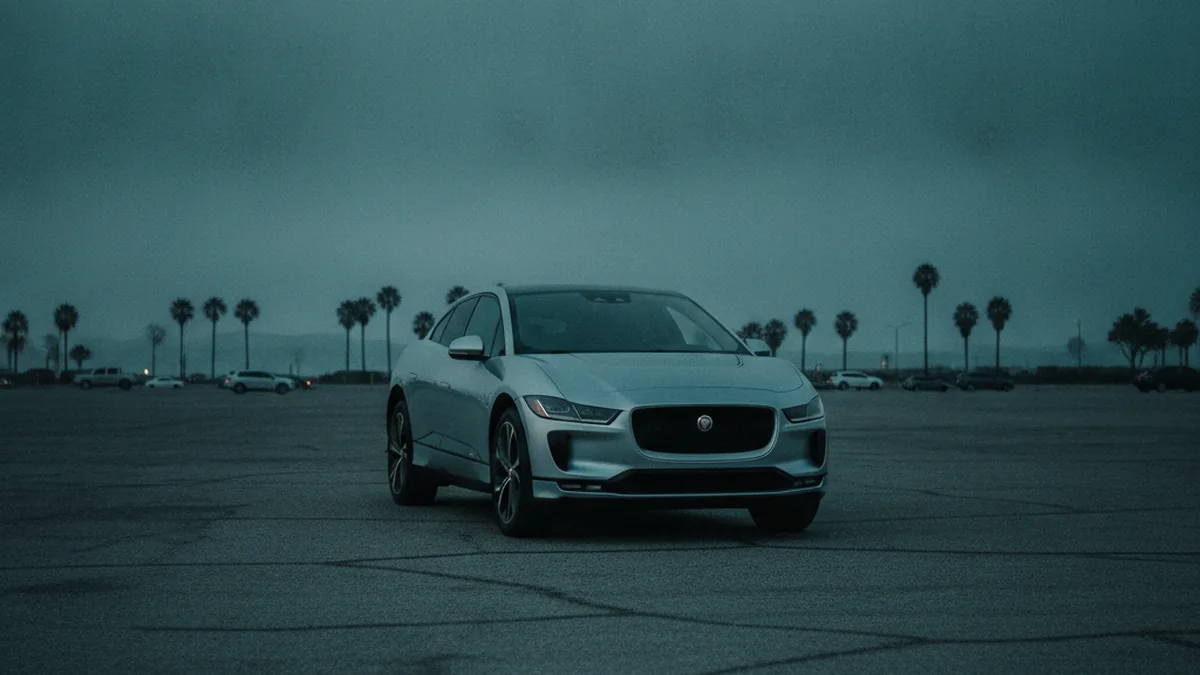
The Puget Sound climate is harder on an I-Pace 12V than many owners realize. Cool garage floors in Medina, covered parking near South Lake Union, and unheated carports from Kirkland down through Renton all create the same pattern. The 12V runs the wake-up handshake for the high-voltage contactors, and a battery that’s been quietly losing capacity over a wet winter gives up the moment you try to start it.
Why an I-Pace goes completely dead
A Jaguar I-Pace runs on two separate electrical systems. The high-voltage pack moves the car. A conventional 12V battery runs the low-voltage electronics, including the computers that wake the high-voltage system up. If the 12V is dead, the traction pack stays locked out no matter how full it is.
That is why an I-Pace showing 60 miles of range can still refuse to do anything. The screens stay dark, the door handles never present, and there is no chime as you approach. The big pack is fine. The 12V simply can’t boot the car.
Watch for the signs that point straight at the 12V:
- Flush door handles stay retracted and won’t present when you approach
- The fob won’t unlock the car, so the mechanical key blade is your only way in
- The driver’s display and center touchscreens all stay dark
- No welcome chime, no lock clunk as you walk up to the vehicle
If the dashboard instead lights up, throws a warning, and then quits, that is a different fault that needs a dealer scan. For the plain “nothing happens at all” version, start with the 12V. For the bigger picture on why this hits every EV brand, read what to do when an EV won’t start.
The I-Pace’s known 12V weakness in the Pacific Northwest
The early cars have a documented history of 12V trouble. Owners of pre-2021 models report the 12V running down while parked, and many have replaced batteries at around three years old, sooner than they expected. Jaguar revised the setup for the 2021 model year, so pre-MY21 cars are the ones that fail most often around Sammamish and Mercer Island.
The pre-2021 I-Pace also uses a dual 12V setup, with two batteries under the frunk panel rather than one. A weak battery can drag the whole low-voltage system down, and a jump has to reach the right post. Our long wet seasons speed the decline, since a lead battery left at a low charge starts to sulfate, which is permanent capacity loss. If your I-Pace is a 2018 to 2020 car and it has never had the 12V replaced, treat a slow or glitchy startup as a warning, not a fluke. A quick load test settles it. For the broader pattern that hits the Puget Sound, see our EV battery care guide for Pacific Northwest winters.
How to get into a locked I-Pace when the 12V is dead
A dead 12V leaves the flush handles retracted, so you can’t grab a door the normal way. The fix is the mechanical key hidden inside the fob. Slide the release and pull the metal key blade out of the fob body.
Now find the hidden lock on the driver’s door. Push the front of the door handle inward, near the small button, so the back edge pivots outward. Pull the handle out as far as it comes to expose the lock cylinder behind it. Insert the key blade and turn it clockwise to unlock the door. That gets you into the cabin even with zero power in the car.
This lockout trap is common across EVs with power door handles, and the recovery is similar on other models. If you want the parallel, see how it plays out on getting back into a Tesla when the 12V is dead.
Where the 12V is and how to jump it
The I-Pace 12V lives in the frunk, under a removable center panel. A dead 12V is what keeps the frunk latched. To open it manually, get into the cabin first, then find the frunk release cable behind a black plug in the right side footwell. Pull it, and the frunk pops so you can reach the batteries.
Lift the center panel in the frunk. On pre-2021 cars you’ll see two batteries, and the positive posts are marked with red caps. Here is the safe way to jump it:
- Connect the red clamp to the exposed positive post with the red cap
- Connect the black clamp to bare, unpainted metal on the chassis, not the battery’s negative terminal
- Let the donor source feed the battery for two to three minutes
- Try to power the car up and bring it to READY
Grounding to the body instead of the negative post keeps any spark away from the battery. Always confirm the exact post and panel against your own model-year manual before you touch anything, since the pre-MY21 and MY21 layouts differ. For the full walk-through that applies to any EV, read how to jump start an EV safely.
When to stop and call for rescue
If the manual key won’t turn, if the frunk release won’t pop the hood, or if the car won’t wake after a clean jump, stop there. Forcing a flush handle or the wrong terminal can cost more than a service call. The same goes for a car dead in a tight parking structure in downtown Bellevue or on the shoulder of I-90 across Mercer Island, where jumping it yourself isn’t safe.
That’s when we come to you. Charge Pro SEA connects I-Pace owners across the Puget Sound with licensed local EV rescue operators, from the dense Eastside corridors in Bellevue and Kirkland to the Seattle core. Operators carry the gear to open a locked I-Pace, jump the correct post, load test the battery on the spot, and add a charge if range is also low.
Our non-Tesla EV rescue service handles the full Jaguar EV lineup, and our mobile EV charging service covers the case where range, not the 12V, is the real problem. For the wider view of what roadside help covers, see our EV roadside assistance hub.
Frequently asked questions
Why won’t my Jaguar I-Pace start or turn on?
The most common reason is a dead 12V battery, not the high-voltage traction pack. The I-Pace needs the 12V to power its computers before the main system can engage, so a dead 12V leaves the car unresponsive even with plenty of range. Jump the 12V first, and if the car still won’t wake after a clean jump, it likely has a deeper fault that needs a dealer scan.
How do I get into my I-Pace if the battery is dead and the handles won’t open?
Use the mechanical key hidden in the fob. Slide the release and pull out the metal key blade. On the driver’s door, push the front of the handle inward so the back edge pivots out, then pull the handle out to expose the lock cylinder behind it. Insert the key blade and turn it clockwise to unlock the door. That gets you into the cabin with no power in the car.
Where is the 12V battery on a Jaguar I-Pace?
It’s in the frunk, under a removable center panel, with the positive posts capped in red. Pre-2021 cars have two 12V batteries under that panel, while 2021 and newer cars were revised. Because a dead 12V keeps the frunk latched, you open it by pulling the manual frunk release cable behind a black plug in the right side footwell after you’ve unlocked the cabin.
Does Charge Pro SEA come out to a Jaguar I-Pace?
Yes. We connect I-Pace owners with licensed, independent local operators serving the Puget Sound, including Bellevue, Kirkland, Seattle, and every other city we cover. The operator carries the gear to open a locked car, jump the correct 12V post, assess whether the battery needs replacing, and add a charge if you are low on range. They confirm the scope with you directly once they have the job.
If your Jaguar I-Pace is sitting dark in a garage in Bellevue, on the shoulder of I-90 near Mercer Island, or in a parking structure in Seattle, we can help. Call (206) 202-7018 to reach a local operator.