A 12V jump that fixes an EV once is normal. A 12V jump that fixes it twice in the same week means the auxiliary battery has crossed the line from weak to failed. The next jump is a delay, not a fix. Continuing to repeat it risks stranding the car in a worse place than the first incident.
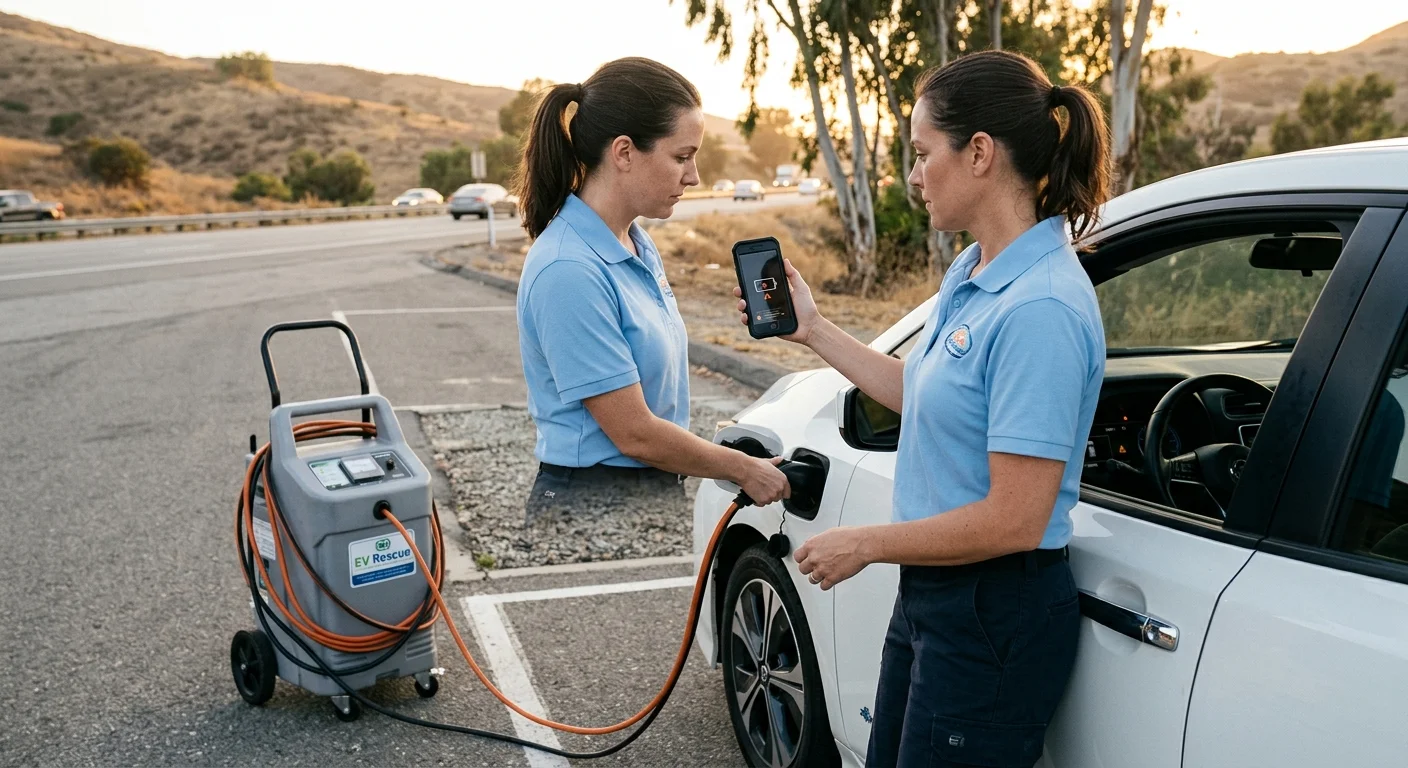
The Puget Sound region’s climate makes the second-jump scenario more common. Long, wet winters keep the cabin heat on for weeks. Short hops around Seattle or Bellevue put the same load on the 12V without giving the high-voltage system time to recover it. A 12V that would have lasted through spring in a milder climate fails by February here.
What “dies again” actually means
Three things can happen after a 12V jump, and they have different answers.
The car starts normally and runs fine for days. The 12V was weak, the jump gave it surface charge, and the high-voltage system has been topping it up since. The jump solved the immediate problem. The user should still replace the 12V within the next month, but nothing else needs to change.
The car starts but throws warning messages within hours. The traction pack is fine, but the 12V is not holding charge under the car’s parasitic load. The body control module notices the voltage drop and starts logging faults. Driving the car in this state is risky; the next time it shuts off, the 12V will be too low to bring the computers back up.
The car does not start at all after the jump. The most likely culprit is that the 12V is so far gone it will not accept a charge from the high-voltage charger. The vehicle’s systems try to bring it back, fail, and the contactors stay open. The car looks exactly as dead as it did before the jump.
The second and third cases are the ones drivers describe as “dies again.” Both need more than another jump.
Why the same 12V keeps failing
Modern EV 12V batteries are AGM units, sized for the parasitic load of the infotainment, modem, alarm, and body control systems. They are smaller than the lead-acid battery in a comparable gas car because the EV does not need to crank an engine. The smaller size means less reserve, which means a battery that is past its useful life fails faster than drivers expect.
Three failure modes are common in this region:
The battery is past its service life. AGM batteries typically last four to six years. A 12V that was installed when the car was new is due for replacement now. A voltage test under load shows the weakness clearly: a healthy AGM holds above 12.4V at rest and stays above 10V under a 50 percent load test.
The battery management system is not recharging the 12V properly. Some EVs only charge the 12V when the high-voltage system is active. If the car’s drive cycle has been too short to wake the high-voltage charger, the 12V spends more time draining than charging. A longer drive usually fixes this; a battery monitor on the OBD port shows whether the 12V is actually recovering.
The 12V is being drained by a parasitic load. A short circuit in an accessory, a stuck relay, or a malfunctioning control module can drain the 12V even when the car is parked. A service-center diagnostic isolates the load. Until then, every jump is temporary.
What to record before the next jump
A driver about to attempt a second jump on the same car within a short window should record four things.
The exact symptom. “Dashboard dark, fob does nothing, no ready light” describes a 12V failure. “Dashboard lights up but car will not drive” describes a different failure. “Reduced propulsion warning” is yet another. The wording matters because the matched operator uses it to dispatch the right equipment.
The voltage reading if a multimeter is available. Below 11.5V at rest means the 12V is severely discharged. Below 10V means it is probably damaged and may not recover. A driver who records 10.4V is saving the operator diagnostic time.
The time of the first failure and the time of the second. If both happened within 72 hours and the car sat parked between them, the 12V is the likely cause. If the second failure happened during the same drive, the cause may be a charging-system fault that needs a different fix.
The ambient conditions. Cold and wet conditions in the Puget Sound region accelerate 12V drain. A driver reporting failure in February is giving the operator useful context.
When not to repeat the jump
If the second jump is followed by a third failure, the 12V is not the right target. Repeating the jump risks damaging the car’s electrical system, draining the jump pack, and stranding the driver with no working source of charge.
If the 12V is hot or smells like sulfur after the second jump, it is damaged and should not be jumped again. A damaged AGM battery can vent gas inside the cabin if it fails inside the vehicle.
If the 12V is below 8V at rest, it is past the recovery threshold. Another jump may bring the systems up briefly, but the recovery window is short. The next move is a tow to a service center for replacement.
If the dashboard shows a high-voltage isolation fault or a “service drive unit” warning, the problem is not the 12V. The right move is a flatbed tow, not another jump.
What the operator does on scene
A mobile operator working through Charge Pro SEA matches the description to one of three paths.
For a clear 12V failure with the car ready to wake, the operator connects a portable lithium jump pack to the under-hood posts, waits for the systems to boot, and confirms the 12V is holding voltage under load. If the 12V holds, the operator clears the immediate incident and recommends a service-center replacement within the week.
For a 12V that takes a charge but drops again under load, the operator may suggest a tow rather than another jump. A battery monitor on the OBD port can confirm the issue, but most mobile operators do not run that diagnostic on the shoulder.
For a 12V that is physically damaged or smells like gas, the operator declines to jump and recommends a tow.
The matched operator may also dispatch a portable Level 2 charger if the traction pack is the actual problem. The two systems are different and need different tools.
Choosing the next service
A driver whose 12V has failed twice in a week has three reasonable next steps.
Replace the 12V at a service center. This is the right call if the car is drivable and the home or driveway is accessible. The new battery is an AGM unit; the BMS may need to be told the new battery is installed via a scan tool, depending on the manufacturer.
Call a mobile rescue. This is the right call if the car is in a place that is not drivable, or if the driver does not want to risk the next failure on the way to a shop. The matched operator jumps the 12V, confirms it is holding, and follows up with a recommendation for replacement.
Schedule a tow. This is the right call if the 12V is damaged, the dashboard shows a non-12V fault, or the operator declines to jump. The tow destination is a service center, not a charger.
For a broader look at why 12V failures cascade through EV systems, our what happens when an EV 12V battery dies post walks through the symptoms in order.
When to call us
If the 12V has died twice in a week and the car is dark or throwing warnings, Charge Pro SEA connects Puget Sound drivers with licensed independent local operators who carry portable jump units and the right diagnostic mind-set. Call (206) 202-7018 to reach a local EV rescue operator.