Your battery gauge just ticked below 20 miles somewhere past North Bend, and the next charger is showing the distance to the pass summit. I-90 catches more metro EV drivers off guard than any other freeway in the region, and it happens for reasons that are completely predictable once you know the corridor.
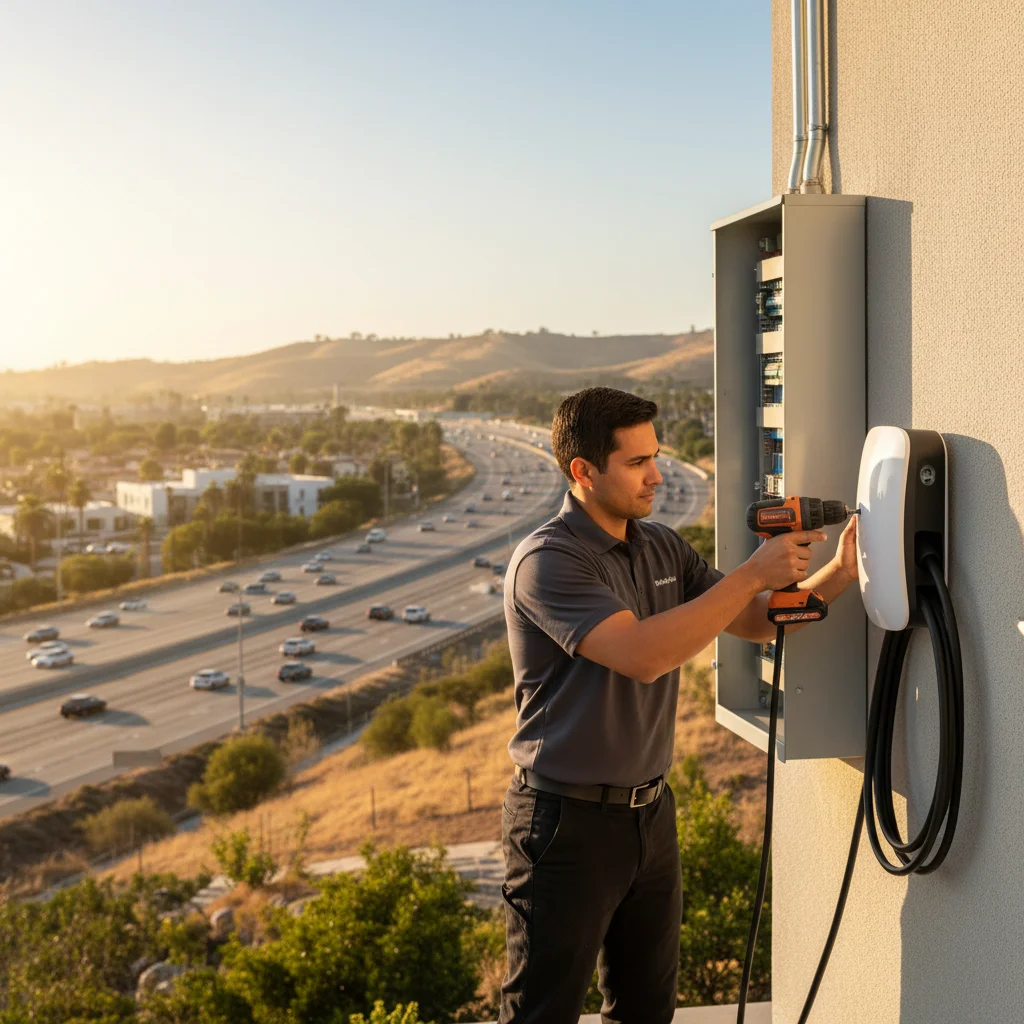
Why I-90 strands more EVs than drivers expect
I-90 is the metro’s main east-west artery across the Cascades, and it carries a meaningful share of EV drivers between Bellevue, Issaquah, North Bend, and the mountain pass. That combination creates a lot of battery management decisions happening at highway speed.
The grade is the quiet killer. Eastbound I-90 climbs roughly 3,022 feet to Snoqualmie Pass summit, with steady grades starting around the North Bend exits and not letting up for miles. Drivers who calibrate their range on flat Bellevue streets do not account for the sustained elevation gain. A Tesla Model Y or Hyundai Ioniq 5 showing 35 miles of range at the Preston interchange can lose that buffer faster than the dashboard math suggests once it hits the longer grade.
Cold compounds the loss. The pass sits well below freezing for much of the winter, and even shoulder-season cold snaps push cabin heat and battery thermal management into overdrive. The drain comes from heater and defrost load, not a hard freeze. AAA has measured cabin heat pushing range loss to roughly 40% at 20F. The Recurrent data shows EVs retaining about 78% of range at 32F. None of that surprises anyone who has commuted across the pass in winter, but it surprises the driver who tested range on a sunny Seattle afternoon.
What chain rules and WSDOT add to the picture
Chain and traction requirements on Snoqualmie Pass arrive storm by storm, not on a fixed calendar. WSDOT publishes current requirements on its pass page and through 511. RCW 46.37.420 and WAC 204-24 cover the underlying authority, but the practical rule is to check before you drive. Stranded EVs sit on the shoulder in chain-up zones, blocking the very traffic the chain rule is meant to keep moving, and that gets complicated fast.
The same WSDOT IRT (Incident Response Team) crews that handle flat tires and running-out-of-gas calls on state highways patrol I-90 across the pass. Published WSDOT materials mention running out of gas as a callout. Whether they assist an EV specifically is not stated in current materials. Do not assume the IRT truck that stops to check on you can deliver a 240V charge. Treat their presence as a safety check, not a rescue.
What to do if you strand between North Bend and the summit
If your battery drops to a critical level on I-90 east of North Bend, the first priority is getting off the travel lane safely.
Pull as far right as possible. The shoulder between North Bend and the summit varies in width. Hug the guardrail or the dirt edge. Every foot of buffer between your car and the travel lane matters at 70 mph.
Turn on your hazard lights immediately. This is not optional. It signals your status to other drivers and to WSDOT and CHP patrol units before they are close enough to see you are stopped.
Exit on the passenger side if you can. On a right shoulder stop, getting out on the driver’s side puts you between your car and live traffic. Use the passenger door and walk to the area behind the right rear of the vehicle, away from the lane.
Stay in or near the car, do not walk the shoulder. WSDOT and CHP will reach you. Walking along the I-90 shoulder is more dangerous than waiting.
Call 911 or WSP dispatch to report your location. Give them your mile marker if you can find one on a nearby post, or your cross-street from the nav. WSP covers I-90 across the pass. This gets a non-emergency check dispatched to your location and officially logs you in the system.
WSP’s primary concern is getting you off the shoulder quickly. A mobile EV roadside assistance call that brings enough charge to clear the climb or reach the next exit is usually the fastest resolution.
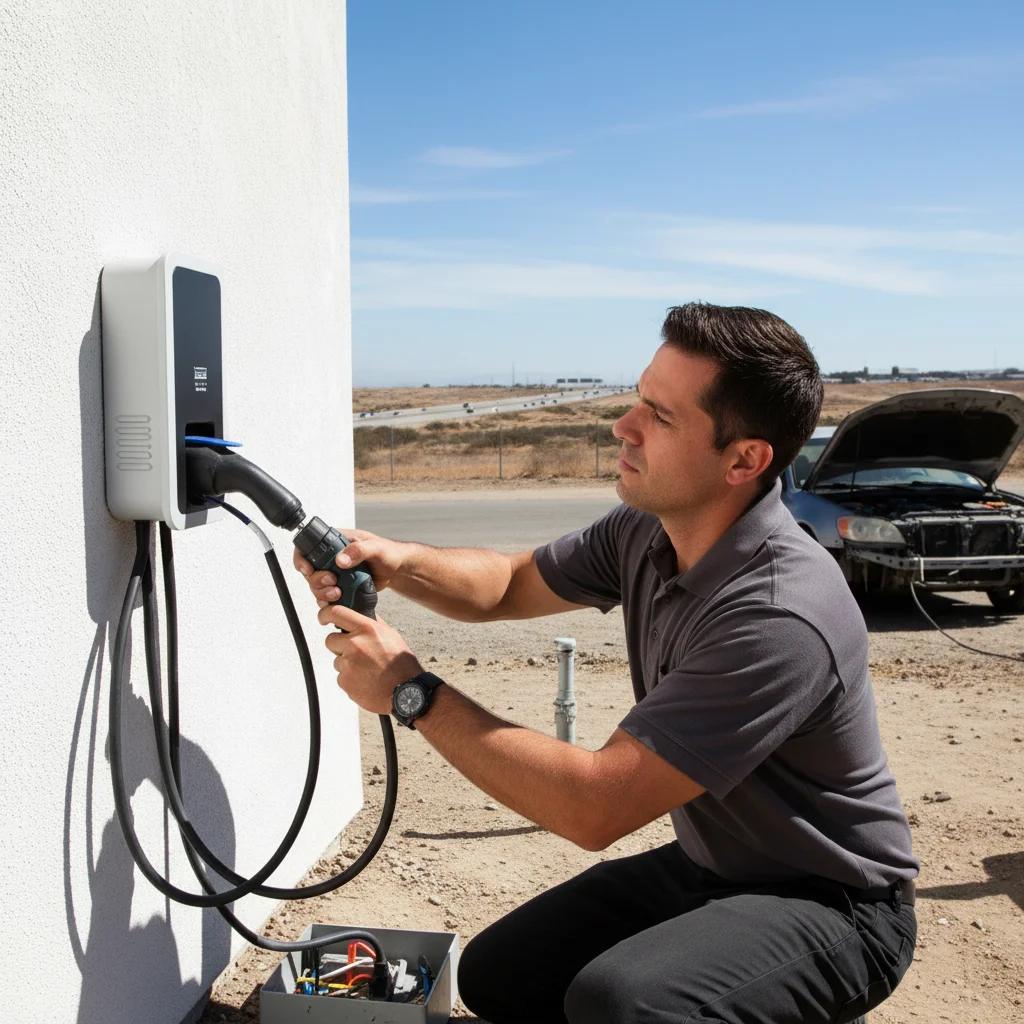
Mobile coverage across the pass corridor
Operators serving the I-90 corridor stage across the Eastside and Snoqualmie Valley. When you call from between North Bend and the summit, we take your location, mile marker, last exit you passed, or cross-street from nav, and connect you with the nearest available operator, who gives you an honest ETA based on current traffic and pass conditions. If there is chain-up activity on eastbound I-90, we will tell you that upfront.
The operator’s mobile rig carries Level 2 capability for compatible vehicles and DC fast for others. For most stranded-range situations on the shoulder, the operator delivers enough charge to get you safely off the highway and to a real station. Our out-of-charge recovery service is built exactly for this scenario, not a tow, not a jump pack, but kilowatts delivered to your car on the shoulder.
If you are a regular I-90 commuter between Issaquah, North Bend, and the pass, it is worth having our number saved before you need it. Our EV roadside assistance covers all makes, Tesla, Rivian, Ford, Hyundai, Kia, GM, and every other EV on the road right now.
For drivers in Issaquah specifically, our Issaquah EV roadside assistance guide covers the local launch pattern. If you are coming from Bellevue, the same information applies.
How to call for help and what to tell dispatch
The faster you give our dispatcher clean information, the faster we can get an operator moving toward you. Here is exactly what to say when you call:
Your location. “I am on eastbound I-90, just past the North Bend exit, on the right shoulder.” Mile markers are even better if you can spot one. Nav coordinates work. “Somewhere near the pass” takes extra time to resolve.
Your vehicle. Year, make, model, and color. “2024 Tesla Model Y, white” or “2023 Hyundai Ioniq 5, blue.” This tells us which charging hardware to bring.
Your battery state. “I am at 5% and the car is still on” versus “the car shut down completely” are different situations. If the 12V has died and the car is fully unresponsive, tell us, that changes the response.
Whether you are safe on the shoulder. If you are in a difficult spot, partial lane blockage, poor visibility, near a curve, say that. We pass the info to WSP if a safety check is warranted.
Whether WSP is already on scene. If a patrol unit is with you, let us know. We coordinate with them on shoulder approach.
Our general guide on what to do if you run out of charge on a freeway covers the broader protocol if you want the full picture. For I-90 specifically, the North Bend to Snoqualmie Pass stretch is where range misjudgments concentrate, and it is where we have built our response around.
If you are stranded on I-90 with a dead or nearly dead battery, whether your car shut down on the shoulder or you barely limped to a surface street exit, call (206) 202-7018 and we will connect you with a local operator.