EV roadside assistance in the Puget Sound region covers more ground than the name suggests. A dead traction pack, a dead 12V, a charge port that will not release, a tire that went flat on I-90, and a software fault that will not let the car shift into drive are all in scope. The right provider depends on which of those you are actually facing.
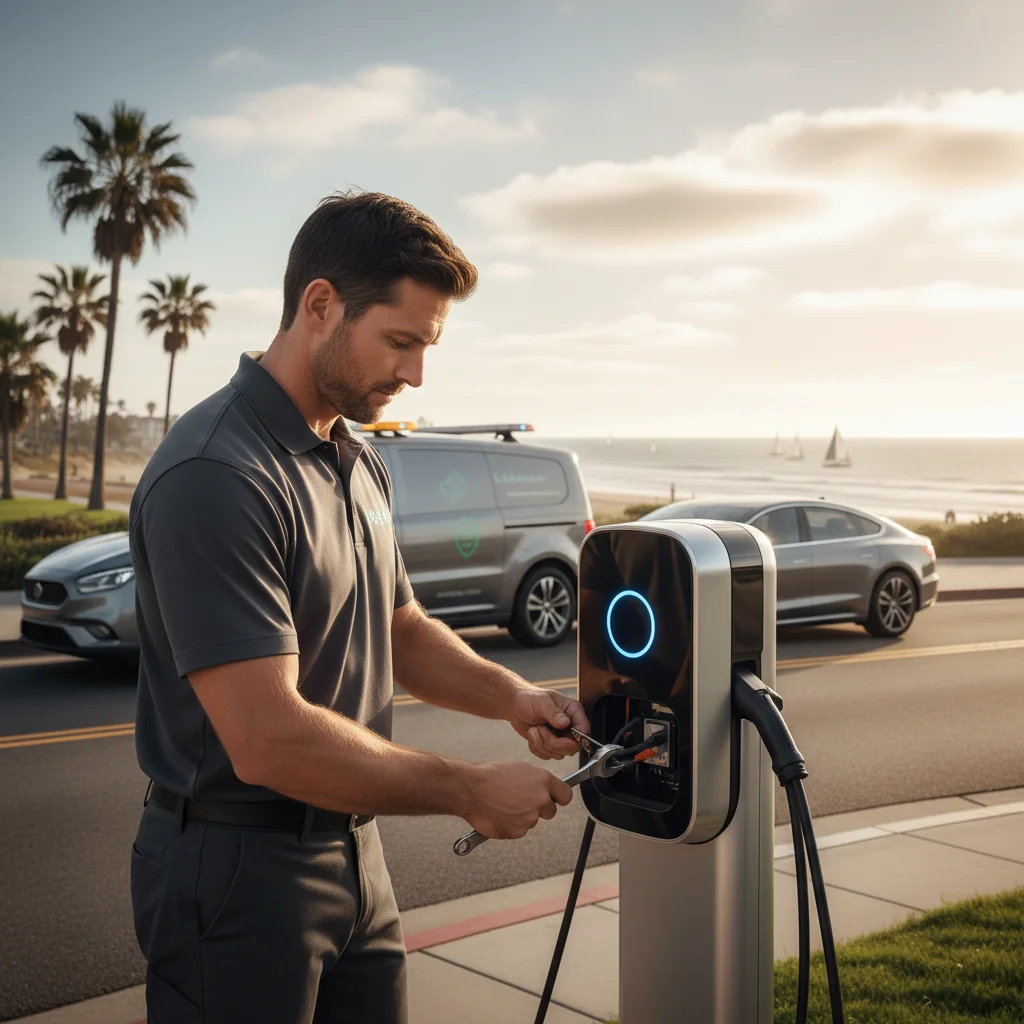
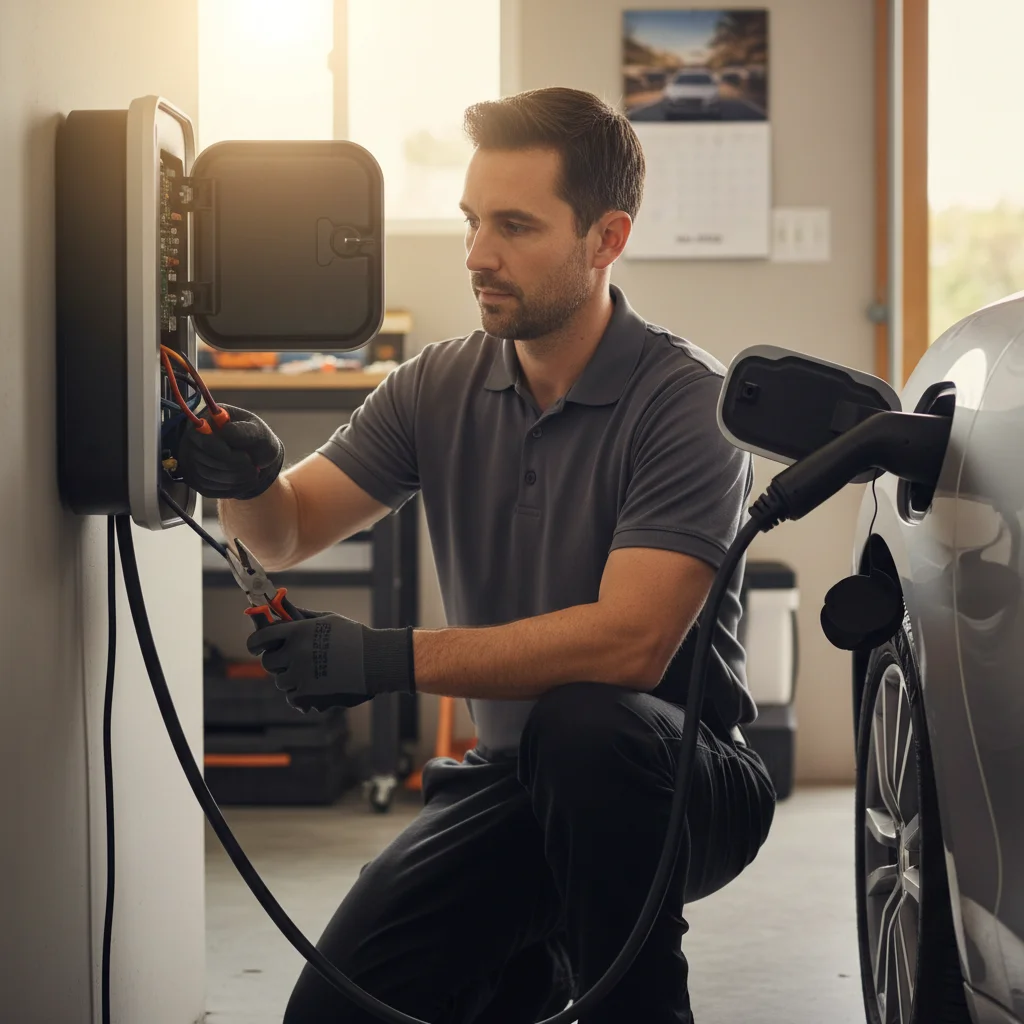
This guide walks through the failures that actually strand EV drivers in this region, the providers that respond, and the choices that shape the outcome.
What strands EV drivers in this region
Five failure modes cover most of the incidents we see.
Dead 12V auxiliary battery. Every modern EV has a 12V that powers the computers, the contactors, the infotainment, the cabin latches, and the parking systems. When it dies, the car looks completely off even with a fully charged traction pack. Cold, wet, short-hop commutes are the most common precipitating factor. A driver whose commute is 3 miles in 38-degree rain puts the cabin heater on for a third of each drive and never lets the high-voltage system recover the 12V. After a few days, the 12V drops below its operating threshold and the next start attempt is a no-start.
Traction pack at zero. The pack can be depleted by a missed charge, a longer-than-expected trip, a stuck heater, or a software fault. The car drops into reduced propulsion mode and then turtle mode. The cabin stays powered briefly so the driver can pull off the road. The car then shuts down.
Charge port stuck or damaged. A frozen latch, a cable that does not release, or an inlet that has failed can leave a driver unable to disconnect or unable to start a session. The fix is usually a manual release, but the manual release location varies by brand.
Flat tire. EVs are heavier than comparable gas cars, and the low-profile tires common on Tesla Model Y, Model 3, and similar models are vulnerable to pothole damage. The region has its share of potholes in February.
Software fault or high-voltage isolation warning. Less common but more serious. A warning that the car will not let the driver ignore means a service-center diagnostic, not a roadside fix.
The free state option: WSDOT Incident Response Team
WSDOT runs an Incident Response Program on state highways. The published coverage area is about 1,300 centerline miles, roughly 18 percent of state-owned roads. The team patrols I-5, I-90, I-405, SR 167, SR 16, and other state highways during peak hours. Their job is to clear incidents quickly and keep traffic moving.
The published materials describe helping with flat tires, running out of gas, and minor mechanical issues. They do not mention EVs. That is an observed absence: WSDOT’s copy does not say IRT will not help an EV, and it does not say IRT will help only the 12V. A driver pulled over on a state highway can dial 911 from the road and ask what the local IRT crew can do in that moment.
IRT does not bring mobile Level 2 charging. If the traction pack is empty and the next charger is far, IRT cannot put range back in the car. They can help with traffic control and a flat tire, and they can coordinate a tow. The driver pays the tow directly.
Tesla owners: the app-based flow
Tesla Insurance and the Tesla app both offer roadside help for Tesla owners. The app-based request covers 12V, flat tire, lockout, and tow-to-nearest-Supercharger. The tow is the only “out of charge” option through Tesla’s flow.
A driver whose pack is at 4 percent and whose nearest Supercharger has a 20-minute queue has a problem the Tesla flow does not solve. The driver waits in the car, the partner tows to the next option, and the driver eventually charges. The mobile alternative is a referral service like Charge Pro SEA matching the driver with a licensed independent local operator running a portable Level 2 or DC truck.
Non-Tesla and Tesla drivers: the referral option
Charge Pro SEA is a referral line, not a service provider. We match stranded drivers with licensed, independent local EV rescue operators across King, Pierce, and Snohomish counties. The operators run mobile charging trucks, portable jump units, and flatbed tow capability for the cases that need it.
For a dead 12V, the matched operator brings a portable jump pack and revives the 12V through the under-hood jump posts. The job usually takes less than ten minutes once the operator is on scene.
For a traction pack at zero, the operator brings a portable Level 2 or DC charger, connects to the car’s charging port at the location where it sits, and adds enough range to reach a fixed charger or home. The session is short and the goal is practical.
For a flat tire, the operator coordinated a flatbed tow to a tire shop of the driver’s choice, or applies a plug kit if the tire is pluggable and the driver wants to drive away.
For a software fault or high-voltage isolation warning, the operator coordinates a flatbed tow to a service center. Mobile charging does not help in this case.
What the operator needs to know
The matched operator asks a small set of questions before dispatching. Drivers who have these answers ready get a faster response.
Vehicle make, model, model year. The matched operator confirms the connector type and the under-hood jump-post location from this. Some models have unusual port locations or jump post locations that affect the equipment the operator brings.
Connector type. CCS1, NACS (J3400), and CHAdeMO are all in use in this region. The matched operator confirms the cable that fits.
Current pack percentage and displayed warnings. A driver who reports “12 percent, no warnings, just dead” gets a different response than a driver who reports “12 percent, reduced propulsion warning, throttle limited.” The warning changes the equipment the operator brings.
Location, including the side of the freeway and the nearest exit or landmark. “I-405 northbound past Coal Creek Parkway” is useful. “On 405” is not.
Whether the car can roll, steer, and accept charging. A car that will not roll needs a flatbed, not a portable charger.
The legal layer
Washington State has three statutes that affect every EV roadside incident.
RCW 46.61.560 covers disabled vehicles on highways. A driver whose vehicle is disabled on a roadway is required to move it off the traveled portion when it is possible to do so. A dead EV on a freeway shoulder counts as disabled; the driver is required to leave the freeway at the next exit when possible.
RCW 46.61.590 requires prompt removal of a disabled vehicle. A driver who leaves a vehicle on a state highway for an extended period can be charged under this section and may be liable for towing and impound fees.
Chapter 46.55 RCW governs towing and impound. Towing fees on Washington highways are not state-controlled and vary by provider.
RCW 9.73.030 is the all-party consent rule for recorded calls. Drivers on recorded roadside lines are being recorded. The recording is admissible as evidence.
Choosing the right provider
Three questions shape the choice.
Is the failure a 12V, a traction-pack issue, or a hardware fault? 12V work is portable-jump territory. Pack issues are mobile-charging territory. Hardware faults are flatbed-tow territory.
Where is the car? A car on a wide shoulder in a residential area is easy to reach. A car on a narrow I-405 shoulder is harder and may not be reachable by a mobile truck.
How urgent is the response? A driver in a parking lot can wait for a referral match. A driver on the shoulder of I-5 at 5 p.m. on a Friday should call 911 for traffic control and a flatbed tow, not wait for mobile charging.
The three paths stack. A driver can call 911 for traffic control, call a mobile operator through Charge Pro SEA for the charging, and call a flatbed tow through the same match if the mobile option does not work.
For service-area specific guides, our EV roadside assistance in Everett, EV roadside assistance in Burien, and EV roadside assistance in Snoqualmie posts cover the local patterns.
When to call us
For a dead 12V, an empty traction pack, a stuck charge port, or a flat tire on a residential street or in a parking lot, Charge Pro SEA connects Puget Sound drivers with licensed independent local operators. Call (206) 202-7018 to reach a local EV rescue operator.