The Snoqualmie Valley is one of the most popular weekend destinations in the Puget Sound region. Hikers, snowboarders, and cabin owners drive up I-90 from Bellevue and Issaquah into North Bend, Snoqualmie, Duvall, and Carnation, then push further toward Snoqualmie Pass for the ski areas. A dead EV in this corridor is more common than drivers expect, because the grade, the elevation gain, and the cabin-weekend use case all add to the range uncertainty.
This guide covers the local stranding patterns, the pass-corridor specifics, and how Charge Pro SEA matches Snoqualmie Valley drivers with licensed, independent local operators.
What the I-90 climb does to range
I-90 climbs from sea level at Bellevue to about 3,000 feet at Snoqualmie Pass. The grade is mostly moderate, but the sustained climb combined with cold air at elevation and active cabin heat draws real-world range well below the EPA-rated number. A driver whose pack is at 50 percent at Issaquah may arrive at Snoqualmie Pass with the predicted range showing 5 to 10 percent. The same driver returning downhill sees the pack recover, partly through regen and partly through the reduced load on the way down.
The pass itself holds the highest risk for an out-of-charge event. WSDOT publishes chain and traction requirements on a storm-by-storm basis; there is no fixed calendar. A driver caught in a chain-up zone with a depleted pack is in a serious situation, and the matched mobile operator does not dispatch into an active chain-up zone.
The safer plan is to charge in North Bend or Snoqualmie before the climb and plan to charge again on the way back. Mobile rescue is a useful safety net, but the pass is not a place to test it.
What mobile rescue covers in the valley
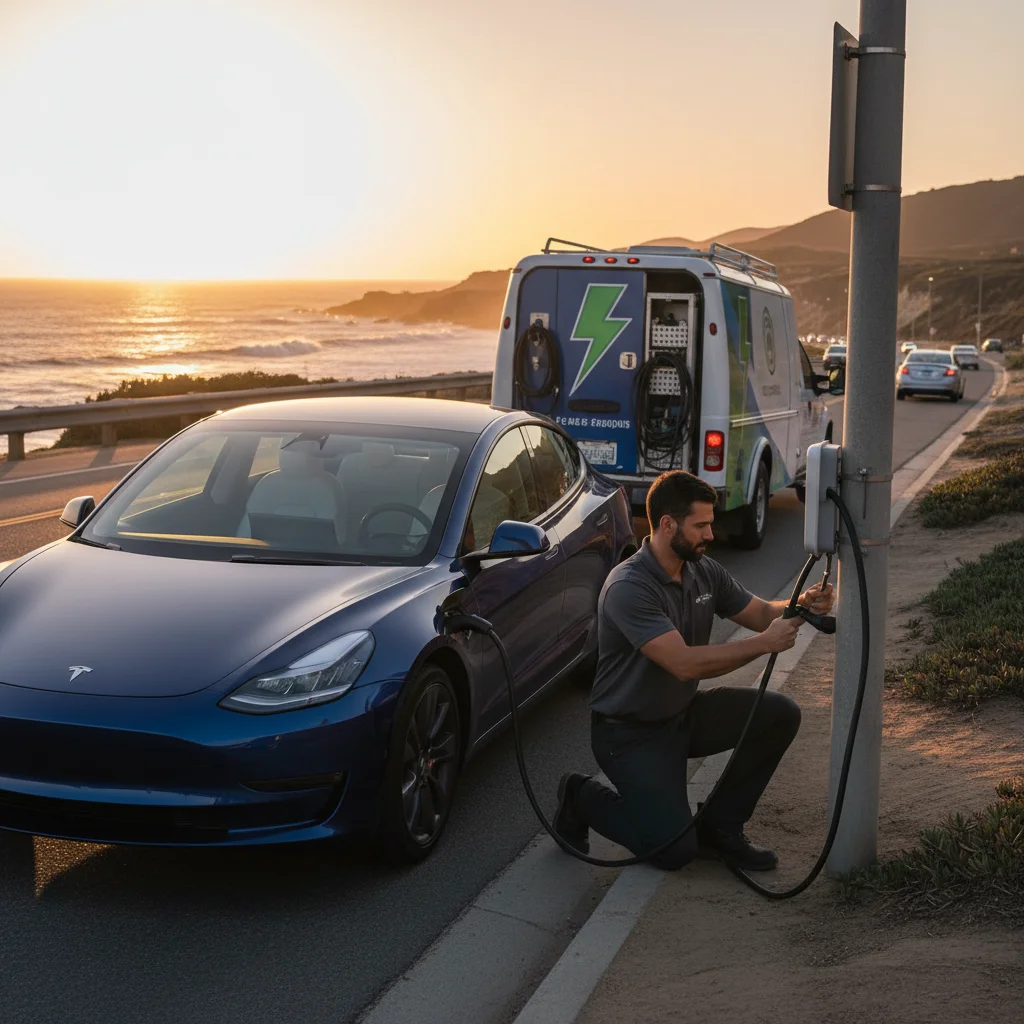
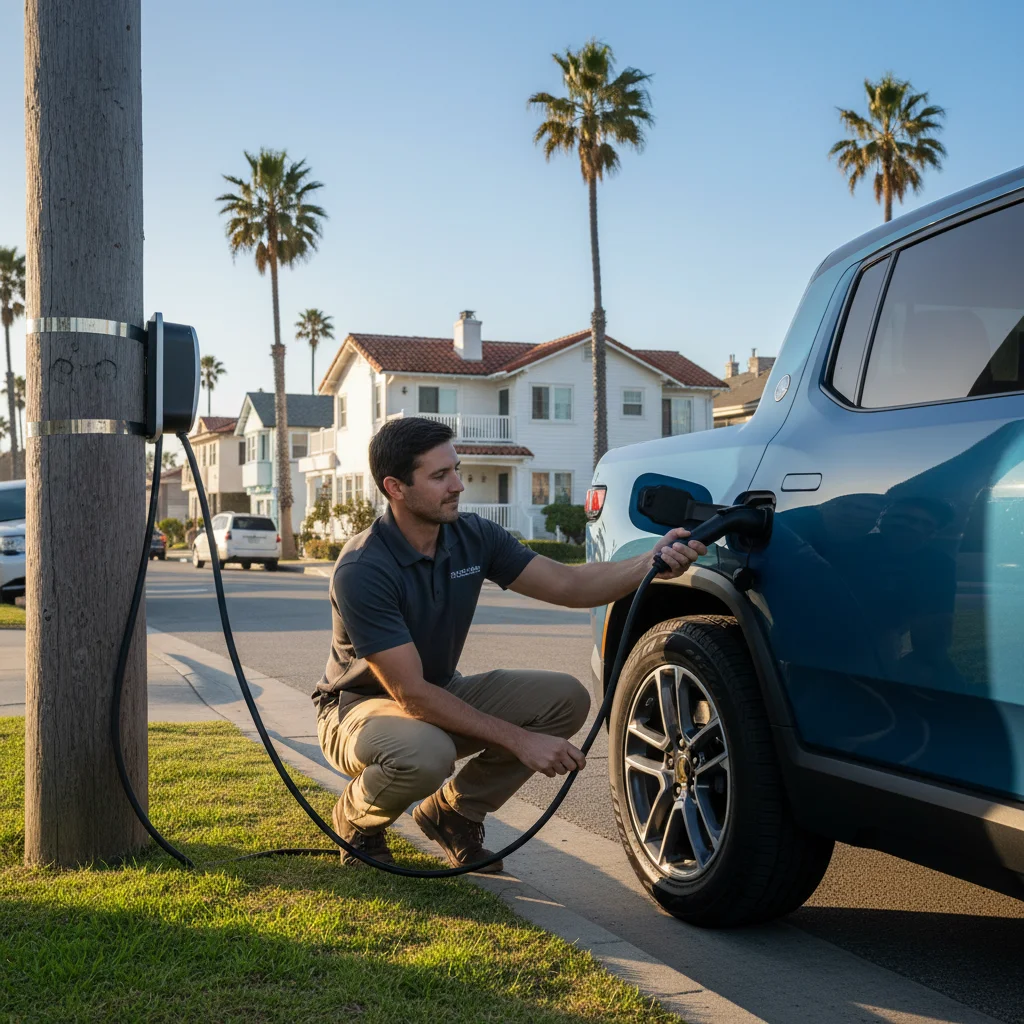
A mobile EV rescue operator working with Charge Pro SEA brings a portable Level 2 charger, a portable jump pack, or a flatbed, depending on the situation.
For a 12V failure, the operator brings a portable jump pack and revives the 12V through the under-hood jump posts. The whole job usually takes less than ten minutes once the operator is on scene.
For a traction pack at low state of charge, the operator brings a portable Level 2 charger and connects to the vehicle at the location where it sits. The session adds enough range to reach a fixed charger or home.
For a flat tire, the operator coordinates a flatbed tow to a tire shop of the driver’s choice, or applies a plug kit on the shoulder if the tire is pluggable.
For a high-voltage isolation warning or a software fault, the operator coordinates a flatbed tow to a service center. Mobile charging does not help.
The matched operator is licensed, independent, and local. Charge Pro SEA makes the referral; the operator performs the work, sets the terms, and bills the customer directly.
Why the Snoqualmie Valley sees more EV incidents than the Eastside flatlands
Three reasons combine.
The grade. The I-90 climb and the grades on local roads around North Bend and Snoqualmie pull more energy than a flat commute. Drivers who estimate range on flat-ground EPA numbers run out before the destination.
The weather. The valley sits under the snow shadow of the Cascades and is wetter and colder than the lowland cities. Cold-soak nights reduce the morning pack. A driver who parks outside in Snoqualmie for two weeks while traveling may come back to a 12V that is dead.
The cabin and trail use case. Weekend drivers leave a fully charged pack at home in Bellevue, drive to the trailhead at low state of charge, and return home with a pack that is too low to make it without charging. The trip back through the pass with a depleted pack is the most common out-of-charge pattern in the corridor.
Service area and dispatch
Operators serving the Snoqualmie Valley typically stage in Issaquah, North Bend, or Snoqualmie. The east-side staging reduces travel time up and down the valley. Dispatch density drops further east, and operators do not dispatch into active chain-up zones or during a WSDOT pass closure.
For drivers in Duvall or Carnation, the dispatch may go through operators who serve the Snoqualmie Valley and the SR 203 corridor. The matched operator confirms the location, the connector type, and the access conditions before dispatching.
For drivers stuck at the pass itself, the right move is to exit I-90 at the nearest safe lot. The lots near the summit have wider spaces for staging, and operators can reach them from the east side through Cle Elum or from the west side through North Bend. The summit lot is also the natural place to wait out a chain-up condition before calling for mobile rescue.
The utility layer in the valley
Tanner Electric Cooperative serves parts of the Snoqualmie Valley, including some addresses in Snoqualmie, North Bend, and the surrounding rural areas. PSE serves most of Issaquah and parts of the lower valley. The utility layer matters when a homeowner wants to install a permanent home charger; the dispatch layer is the same regardless of which utility serves the address.
PSE’s Up & Go Electric program is the dominant residential charger rebate in the area. PSE customers who install a Level 2 charger may qualify. Tanner Electric does not publish a comparable program at the same scale. The current status is worth confirming with the utility before contracting for a home install.
What to record before the call
Drivers about to call for help in the valley should record four things.
Vehicle make, model, model year. The matched operator confirms the connector type and the under-hood jump-post location from this.
Connector type. CCS1, NACS (J3400), and CHAdeMO are all in use.
Current pack percentage and displayed warnings. A driver who reports “12 percent, no warnings, just dead” gets a different response than a driver who reports “12 percent, reduced propulsion warning, throttle limited.”
Location, including the nearest exit or landmark. “I-90 eastbound past the North Bend exit” is useful. “On 90” is not.
Whether the car can roll, steer, and accept charging. A car that will not roll needs a flatbed, not a portable charger.
When the issue is not a dead EV
A driver whose car will not start in Snoqualmie may have a problem that is not traction-pack or 12V. The matched operator confirms the symptoms on the call and may refer to a service-center diagnostic instead of dispatching a mobile charger.
A driver whose car has been damaged in a collision should not attempt to charge. The right move is a flatbed tow to a collision center.
A driver whose charge port has been damaged should not attempt to charge. The matched operator can confirm the damage and arrange a tow.
For broader context on EV roadside assistance in the region, our EV roadside assistance Puget Sound guide covers the full picture.
When to call us
If the EV is dark, the pack is empty, or the charge port will not release in the Snoqualmie Valley, Charge Pro SEA matches drivers with licensed independent local operators. Call (206) 202-7018 to reach a local EV rescue operator.