It’s a familiar scene for any South King driver. You’re cruising south on I-5 past SeaTac, the Federal Way city limits come into view, and you see the dreaded low battery warning. You’ve miscalculated, and now the last stretch of the corridor before Tacoma is your stranding point. For EV drivers in Federal Way, this scenario is all too real.
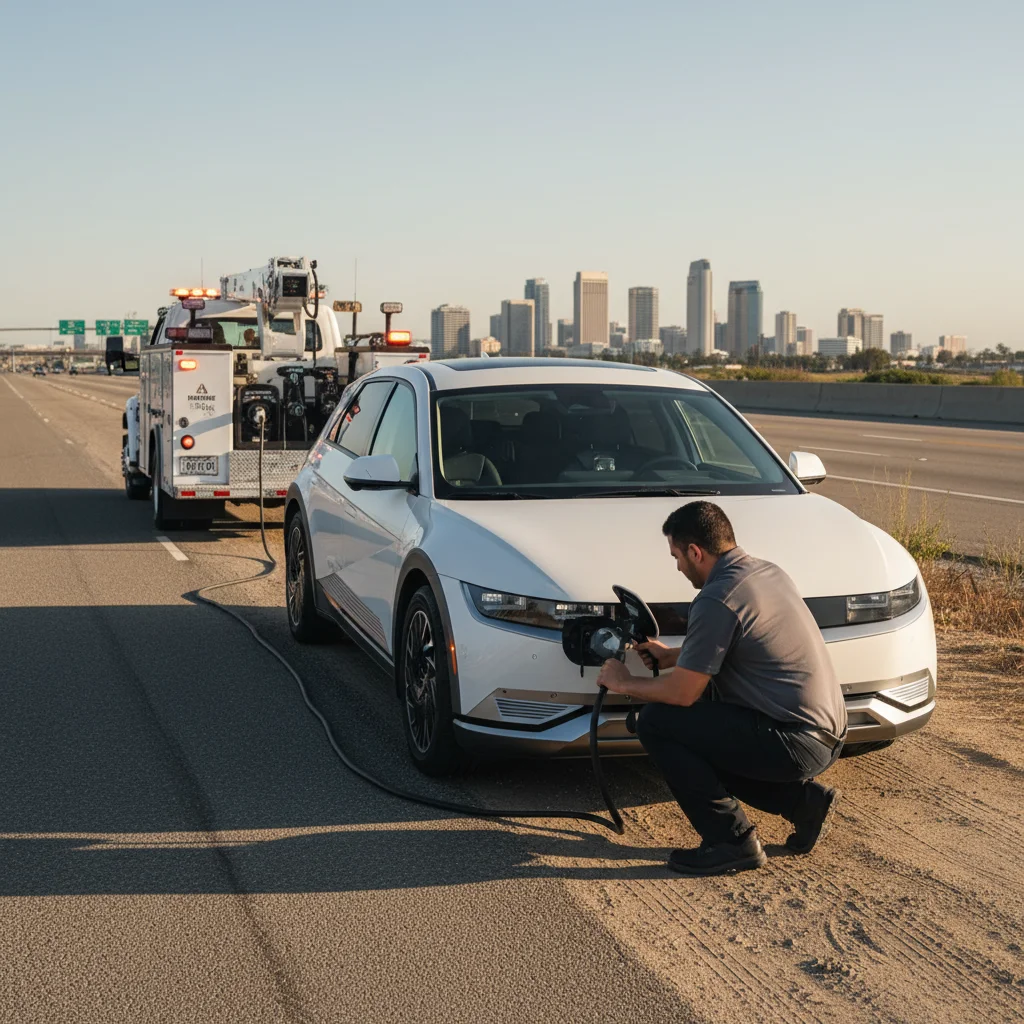
Why South King EV drivers strand at the I-5 corridor
The southern end of I-5 through South King is a magnet for out-of-charge events. It’s not just bad luck; it’s a combination of geography, traffic, and charger distribution. As you push south from Seattle through Tukwila and into Federal Way, the density of DC fast-charging stations begins to thin out. Drivers heading to Tacoma or commuting home from a SEA trip might overestimate their remaining range, assuming a convenient charger is just around the corner.
Traffic is another major factor. I-5 through Federal Way can turn into a parking lot in minutes, especially during rush hour or on a busy weekend. Stop-and-go driving, with the climate control running to combat the cold rain, can deplete an EV’s battery faster than anticipated. A trip that should have used 10 miles of range can easily consume 15 or 20.
Many drivers we connect with are unfamiliar with the area. They might be tourists heading for a day trip or Puget Sound residents who rarely venture this far south. They don’t realize that the last few exits before Tacoma have very limited public charging infrastructure. They push their luck, hoping to find a station, only to end up on the shoulder. This “last-mile anxiety” is a significant issue in the southern part of the Puget Sound region.
Federal Way hotspots
While a dead battery can happen anywhere, we see specific hotspots for EV strandings in Federal Way. Each area presents its own unique challenges.
In Federal Way, the interchange where I-5 and SR 18 converge is a major trouble spot. It’s a complex web of on-ramps and off-ramps where a moment of indecision or heavy congestion can drain precious kilowatt-hours. People finish a shopping trip at the Federal Way Commons and realize they don’t have enough charge to get home. The same goes for the commercial corridors along Pacific Highway South and South 320th Street, where traffic can be dense.
The Dash Point area presents a different kind of problem: destination drain. It’s a classic scenario where drivers have enough range to get to the waterfront, but not enough to get back. They spend the day along the Puget Sound shoreline, then face a low-battery reality. Dash Point is a fantastic coastal community, but it’s not dense with DC fast chargers. A driver might have to travel several miles east back toward I-5 or north to find a reliable, high-speed station. When you’re at 2% battery, that’s a gamble you can’t afford to lose.
SEA-adjacent calls and what we cover
Getting stranded after a SEA airport trip is one of the most stressful situations an EV driver can face. A week of business travel, a long weekend away, or a vacation that runs longer than planned all create the conditions for a 12V death. The car sits in the long-term garage floors or the SEA garage Lot P1, and the auxiliary battery slowly drains.
This is where our referral service matters most. The matched operator provides emergency EV roadside assistance throughout South King, including the SEA corridor and the I-5 south stretch. The operator rescues you from the shoulder of I-5, from a parking lot at South 200th Street, or from your apartment complex off Military Road South.
The matched operator carries a 12V jump kit rated for EV auxiliary systems. A dead 12V battery is the most common failure after a SEA trip, and the fix is a quick on-site jump. For a depleted traction pack, the operator brings a mobile Level 2 source with NACS and CCS adapters.
Our advice is simple: if your battery is critically low and you’re heading home from SEA, do not risk it. Pull off at the very last exit, find a safe place to park, like a retail parking lot, and call our referral line immediately. It is far better to get a mobile charge a short distance from the airport than to get stuck on the I-5 shoulder with no safe option.
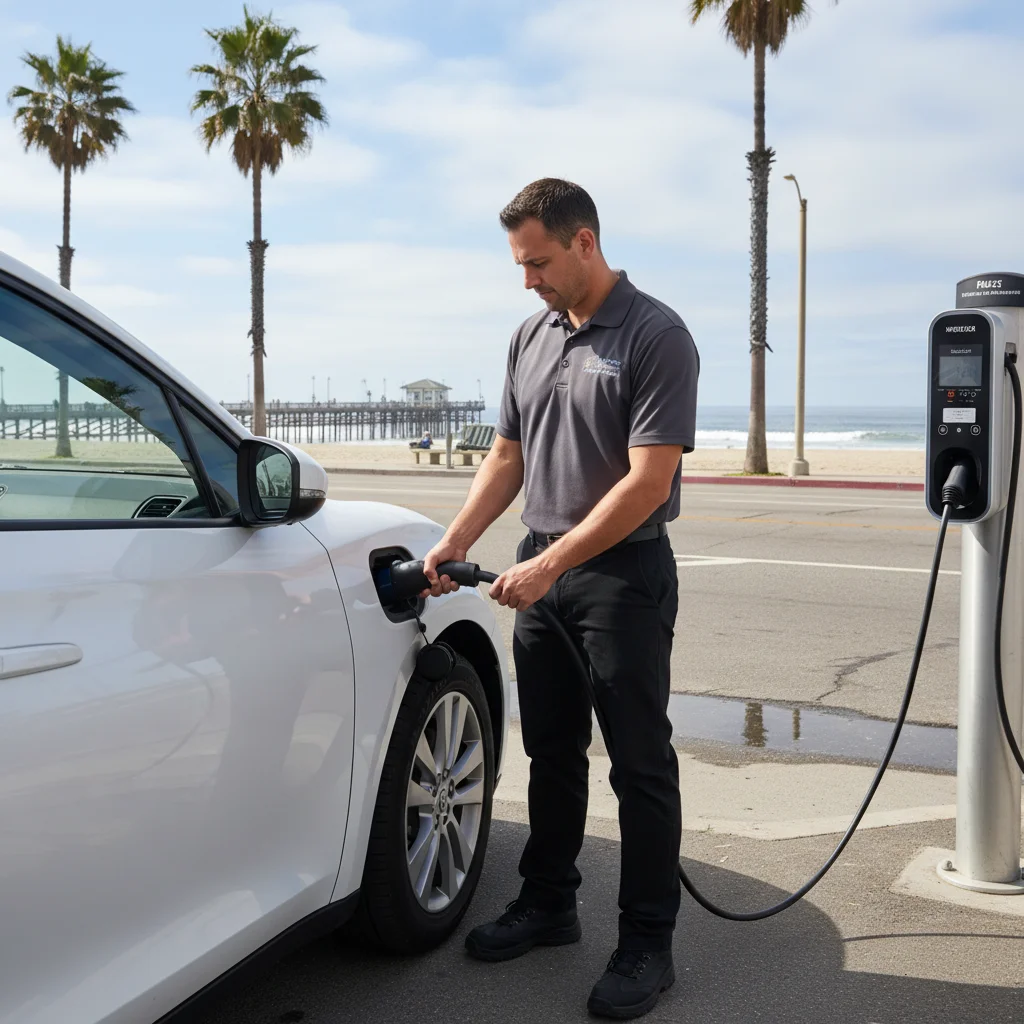
Response from South King staging
When you’re stranded, every minute feels like an hour. That’s why the operators in our network are based in South King rather than dispatched from a central location in Seattle. Our referral service maintains dedicated staging for the southern part of King and northern Pierce counties.
This means when you call our referral line from Federal Way, Dash Point, or the I-5 corridor, the matched operator is already close. Operators covering this area can hop directly onto I-5, bypassing much of the central Seattle traffic that can slow other providers down. This local staging cuts down arrival time significantly.
Our South King coverage is comprehensive. The matched operators have extensive experience navigating the unique traffic patterns and road networks from SeaTac down to the Pierce County line. This local knowledge is invaluable, especially during high-congestion periods. Our service pairs perfectly with our roadside assistance in Kent, creating a complete safety net for EV drivers across the entire South King region.
Mobile charge versus tow on I-5
If you run out of battery in Federal Way, you have two main options: call a tow truck or call for a mobile charge. On the I-5 corridor, the choice becomes even more critical.
A traditional tow involves waiting for a flatbed truck, which can often have a longer ETA. The operator has to safely load your EV, a process that carries a small but real risk of suspension or underbody damage if not done correctly. Then, you and your vehicle are taken to the nearest compatible charging station, which might not be your first choice, or to a dealership that may be closed.
Our mobile EV charging referral service offers a far more efficient solution. Instead of moving the car, the matched operator brings the charger to you. The operator’s mobile charging vehicle arrives and provides a direct Level 2 charge to your vehicle, right where you are. The matched operator adds about 10 to 20 miles of range in around 30 minutes. That’s more than enough to get you out of a difficult spot and safely to a high-speed charging station on your own terms.
For a simple out-of-charge event, a mobile charge is faster, less expensive, and significantly more convenient than a tow. You stay with your vehicle, the service is completed quickly, and you can get back to your day with minimal interruption.
When to call us
If your EV is stranded with a dead battery, a non-responsive 12V system, or you’re in a range emergency in Federal Way, we’re your first call. Don’t risk getting stuck in a dangerous or inconvenient location.
Call (206) 202-7018 to reach a local EV rescue operator.