I-5 through South King and Pierce is the long wet commute where a Tesla can hit zero. WSDOT IRT materials do not mention EVs. The local fix is a mobile operator with a 240V Level 2 source on the truck.
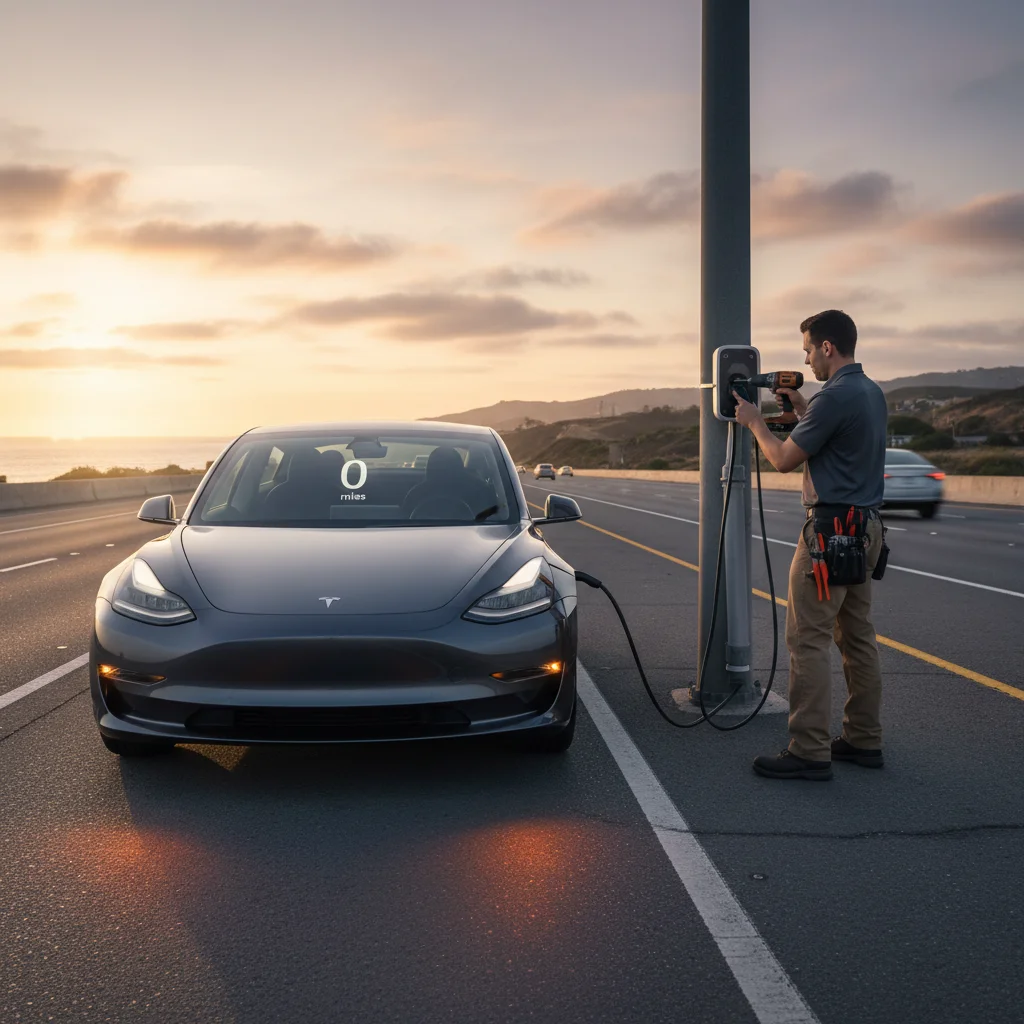
Why I-5 is the worst-case corridor
I-5 runs the length of the Puget Sound metro from Everett to Olympia. The corridor sees heavy commute traffic in South King and Pierce counties, where Boeing shifts, warehouse work, and Port of Tacoma logistics dominate the daily flow.
The trouble spots include:
- The Boeing Everett ramp during shift changes.
- The SR-18 interchange in Federal Way.
- The Tacoma Narrows approach.
- The JBLM main gate area near DuPont.
A Tesla that runs the heater for the morning commute can hit zero before the car clears the next interchange. The corridor has a shoulder for most of its length, but a Tesla that runs out in a travel lane creates a serious hazard.
What WSDOT IRT covers
WSDOT IRT responds to incidents on state highways. Their published materials describe helping motorists who have run out of gas but do not mention EVs or out-of-charge situations. The right move is to call 911 from the roadway first if the Tesla blocks traffic, then call a mobile operator for the charge.
What mobile rescue does on I-5
A mobile operator brings a 240V Level 2 source to the shoulder. Native NACS covers Teslas. CCS and J1772 adapters cover the rest of the fleet. Fifteen to thirty minutes of charging typically adds 10 to 20 miles of range, which clears the path to a working charger in the next town.
The operator runs a 12V diagnostic first. A car that powers up but will not drive is almost always a 12V failure. Jumping the 12V restores the car in minutes. If the traction pack is genuinely low, the cable goes in.
Mobile EV charging at the shoulder is faster than a tow. The operator quotes before starting and bills the driver directly. Charge Pro SEA connects you with a local operator who knows the corridor.
Why a flatbed falls short here
A flatbed tow off the highway to a Tacoma shop does not put any range in the battery. The driver still needs a charge. Mobile rescue at the shoulder is faster and cheaper, and the operator stays with the car during charging.
A Tesla that cannot roll, shift, or steer needs a flatbed. The operator will tell you that case on the phone before dispatch. Chapter 46.55 RCW governs towing and impound, and the Washington State Patrol posts the maximum impound rates.
When to call
Call (206) 202-7018 when your Tesla runs out of charge on I-5 in the Puget Sound region. Charge Pro SEA connects you with a local operator who quotes before starting and bills you directly.