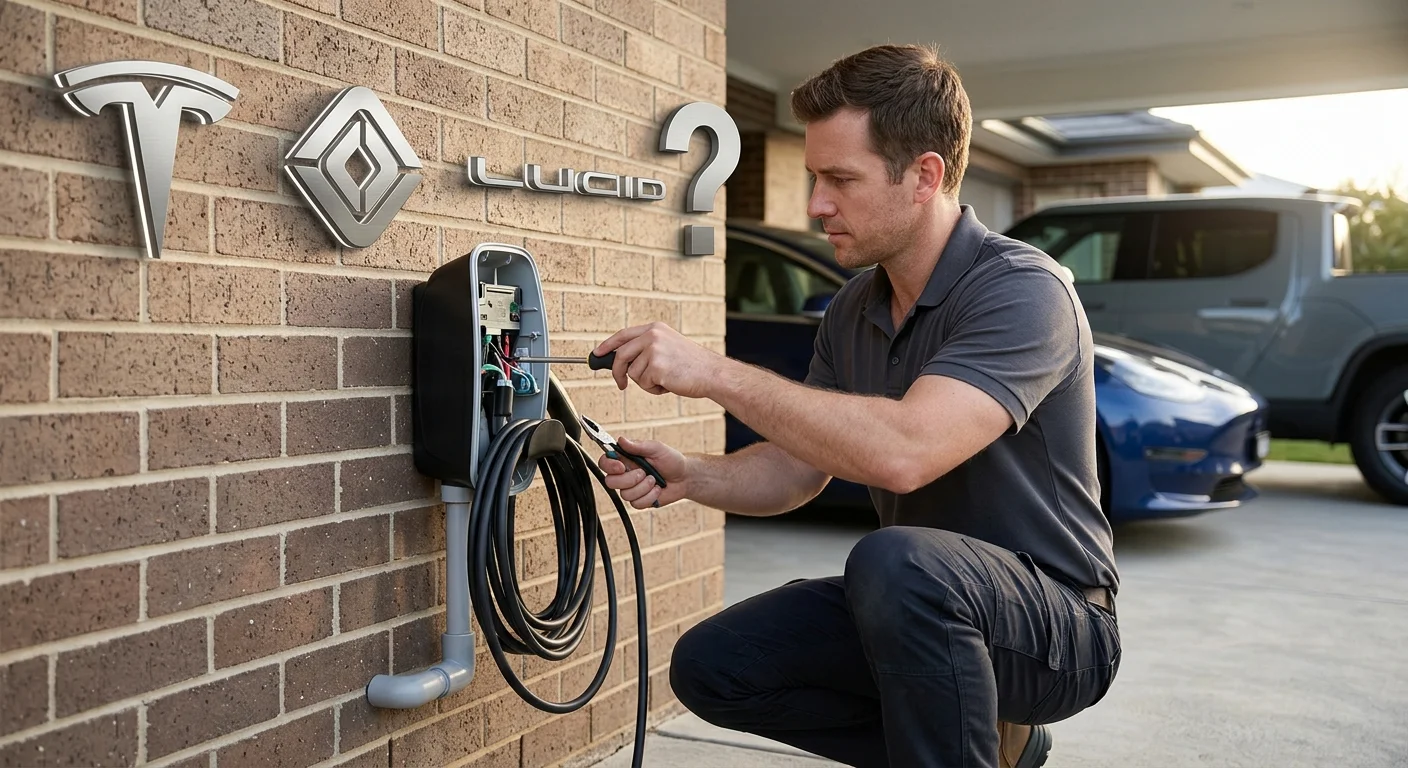
Tesla, Rivian, and Lucid each have their own roadside program. The brand programs are national; the local question is who can put 240V on the car when dispatch sends a tow. Knowing the differences saves time.
What Tesla roadside does
Tesla’s program is the longest-running of the three. Coverage depends on warranty status and model year. Towing, lockout assistance, and limited on-site repair are the standard cases.
The contractor on the other end varies by region. In the Puget Sound, the contractor is often a general tow company with flatbed trucks. The contractor does not bring a 240V Level 2 source unless dispatch notes specifically request one.
What Rivian roadside does
Rivian’s program is newer but follows a similar model. The dispatch line routes through a contracted service that handles flat tires, lockouts, and out-of-charge situations. The contractor may or may not have an EV-specific truck in the metro.
A Rivian that runs out of charge on US-2 toward Stevens Pass may get a flatbed as the default response. The flatbed tows the truck to a working charger or a service center. The driver still needs a charge at the destination.
What Lucid roadside does
Lucid’s program is the newest of the three. Coverage is narrower than Tesla’s or Rivian’s because Lucid has fewer vehicles on the road. The dispatch line routes through Lucid’s customer service team, which then coordinates with a local contractor.
A Lucid that runs out of charge in Bellevue, Seattle, or Redmond may get a longer wait time than a Tesla or Rivian because Lucid has fewer service partners. The local fix is an independent operator who carries the right cable.
The local fix for all three
The metro’s mix of independent operators handles the cases all three programs do not. A local operator who carries native NACS for Teslas, CCS, and J1772 adapters for the rest of the fleet can add 10 to 20 miles of range in 15 to 30 minutes of Level 2 charging at the curb or shoulder.
Mobile EV charging at the curb is the standard path. The operator quotes before starting and bills the driver directly. Charge Pro SEA connects you with a local operator who knows the metro.
When to call
Call (206) 202-7018 when your EV cannot reach a charger in the Puget Sound region. Charge Pro SEA connects you with a local operator who carries the right cable for your make.