A Tesla Model S with no power on a no-shoulder span like the I-90 floating bridge or the SR-99 tunnel needs a correct hook, not a roll. Towing a Model S with no power is a specific procedure that protects the motor and the power electronics.
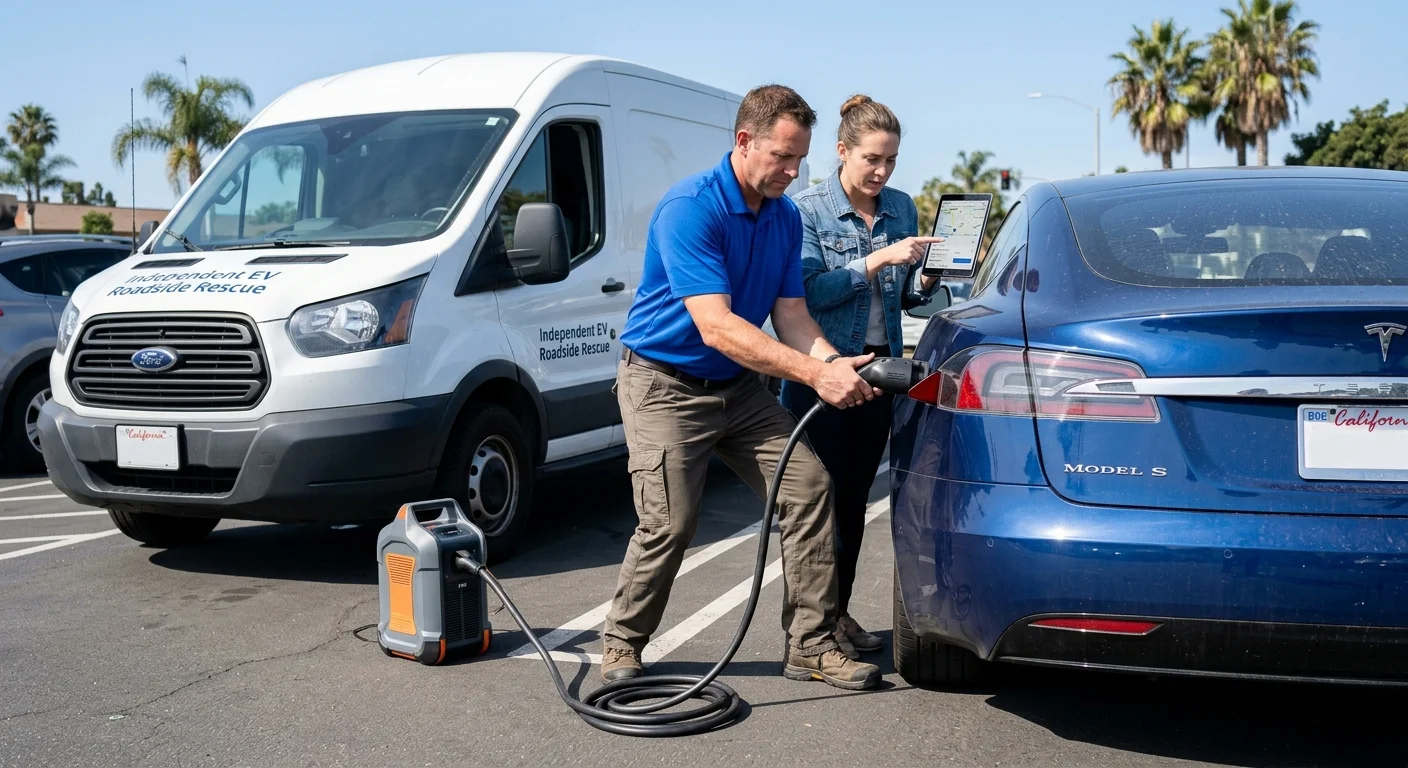
Why a wrong tow damages the car
Tesla motors generate electricity when the wheels turn. A wheel-lift tow that drags the rear wheels on the ground sends current back through the motor and can damage the power electronics. A flatbed with all four wheels off the ground avoids that risk.
Tesla publishes specific tow procedures for the Model S. The car has a tow mode that disengages the parking brake and puts the car in neutral. A no-power Model S may not respond to the in-cab procedure because the touchscreen is dead. The operator needs to access the manual override under the hood.
The checklist for a no-power tow
- Confirm the car cannot roll, shift, or steer under its own power.
- Confirm the 12V is dead. A 12V jump may restore the car enough to put it in tow mode.
- If the 12V jump works, put the car in tow mode using the touchscreen. The dashboard shows “tow mode enabled.”
- If the 12V jump does not work, locate the manual parking brake release under the hood. The owner’s manual shows the exact spot.
- Attach the flatbed winch to the front tow eye. The tow eye screws into the front bumper.
- Load the car onto the flatbed with all four wheels off the ground.
- Transport to a service center or a working charger.
What the operator needs
The tow operator needs a flatbed rated for the Model S’s weight. The Model S weighs about 5,000 pounds. A flatbed rated for the weight is non-negotiable.
The operator needs the Model S’s front tow eye and the parking brake release tool. The owner’s manual shows both. A wrong attachment can damage the bumper or the tow eye socket.
What to do on the bridge or tunnel
A Model S that dies on the I-90 floating bridge span or in the SR-99 tunnel creates an immediate hazard. RCW 46.61.590 requires prompt removal. WSDOT IRT covers both corridors. Their published materials describe flat tires and out-of-gas situations but do not mention EVs. The right move is to call 911 from the roadway first.
A Model S that can roll, shift, or steer can be moved to the shoulder or the nearest exit. A Model S that cannot accept any input needs a flatbed.
Mobile EV charging at the shoulder is faster than a tow when the car can accept a charge. The operator quotes before starting and bills the driver directly. Charge Pro SEA connects you with a local operator who knows the bridges and tunnels.
When to call
Call (206) 202-7018 when your Model S cannot reach a charger in the Puget Sound region. Charge Pro SEA connects you with a local operator who knows the right procedure for your vehicle.