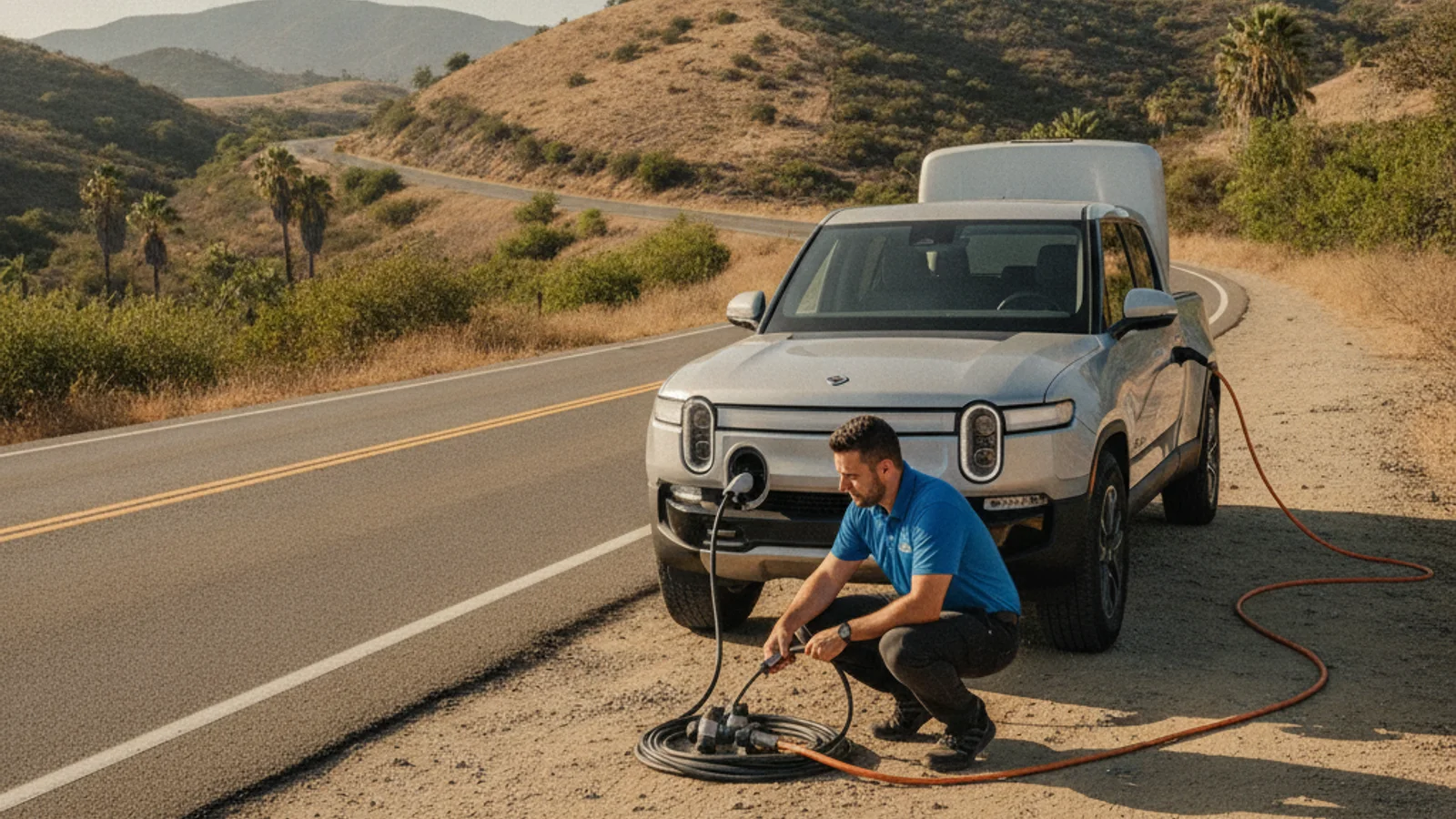
A Rivian R1T or R1S uses CCS for fast charging and J1772 for Level 1 and Level 2. Rescue trucks in the Puget Sound bring a 240V Level 2 source with native NACS plug for Teslas, plus CCS and J1772 adapters for the rest of the fleet, including Rivian.
What the Rivian uses
The R1T and R1S both use CCS in the US. The connector plugs directly into a DC fast charger or a Level 2 post with a CCS connector. The Rivian’s onboard charger accepts Level 2 AC up to 48 amps on most configurations.
Level 1 charging uses the J1772 connector and a standard 120V outlet. Level 1 is slow and is not a roadside rescue option. Level 2 is the standard roadside option.
What the mobile rescue truck carries
A mobile rescue truck in the Puget Sound carries a 240V Level 2 source with native NACS for Teslas, CCS, and J1772 adapters for the rest of the fleet. The operator confirms the connector type before dispatch.
For a Rivian, the operator connects the CCS adapter. The handshake with the truck takes a few seconds. The truck accepts Level 2 AC up to its onboard charger’s capacity. Fifteen to thirty minutes of charging typically adds 10 to 20 miles of range.
What the operator needs to know
The driver should have the Rivian’s model, year, and current state ready when calling. The operator asks:
- Can the truck roll, shift, or steer?
- Is the dashboard dark or lit?
- What is the current pack percentage, if available?
- Has the truck thrown any warning messages?
The operator quotes the work before starting. The driver can accept or decline.
Mobile EV charging at the curb is the standard path. The operator quotes before starting and bills the driver directly. Charge Pro SEA connects you with a local operator who knows the metro.
When to call
Call (206) 202-7018 when your Rivian cannot reach a charger in the Puget Sound region. Charge Pro SEA connects you with a local operator who quotes before starting and bills you directly.