Running low on charge on SR-167 between Renton and Puyallup happens more often than most drivers expect, because the corridor combines a sustained highway commute, warehouse shift change traffic, and HOT lane patterns that change every driver’s available shoulder at the worst moment. If your EV is out of charge on this stretch right now, pull fully onto the right shoulder, turn on your hazards, and call (206) 202-7018 to reach an operator who delivers real kilowatts on the shoulder.
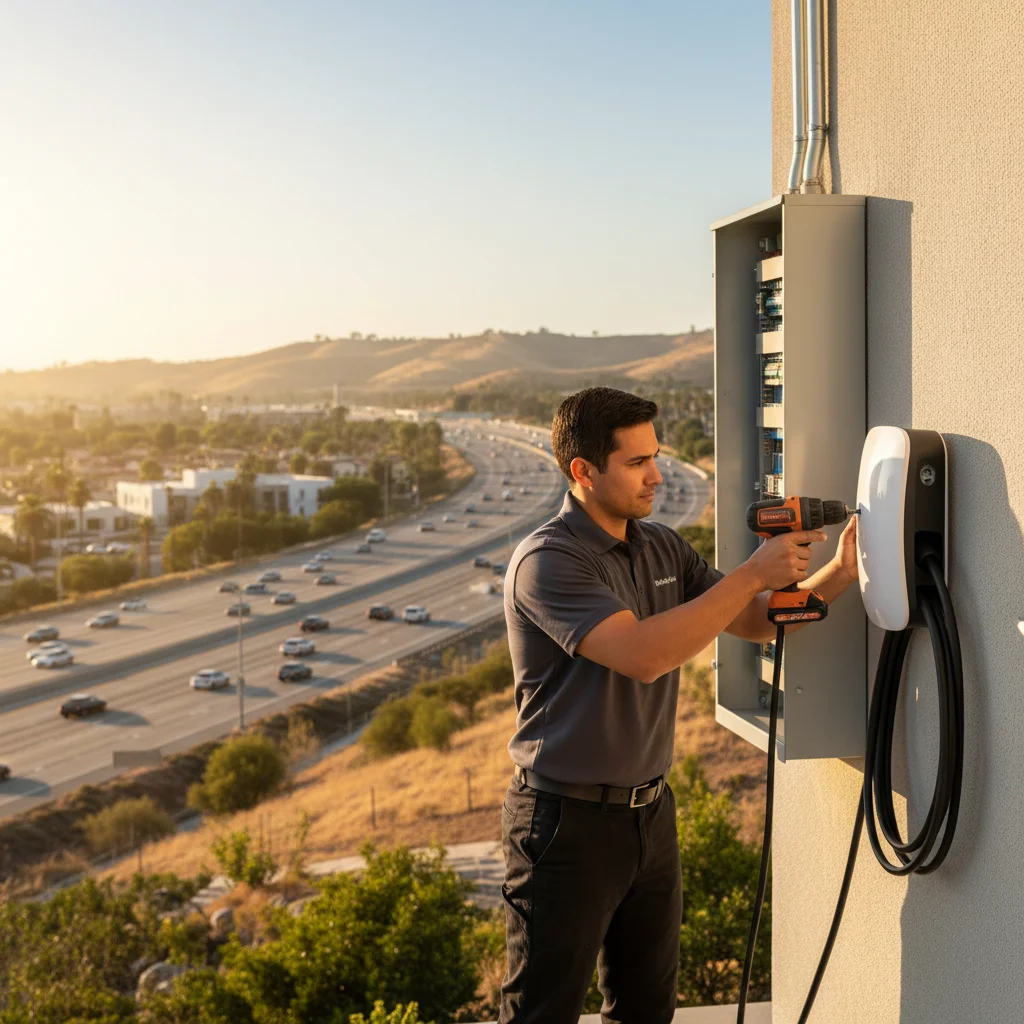
Why SR-167 strands more EVs than I-5 or I-405
SR-167 runs south from Renton through Kent, Auburn, and Pacific before crossing into Pierce County and ending near Puyallup. It is the metro’s main alternative to I-5 for South King and Pierce commuters, and it carries a lot of EV traffic because every city on the corridor has high EV density. That density alone creates more battery decisions happening at speed.
The corridor’s mix of conditions works against range in ways drivers do not always anticipate.
Sustained speed and HOT lanes. SR-167’s HOT lane configuration means drivers sometimes sit in stop-and-go general purpose lanes while the HOT lanes roll. The stop-and-go plus the eventual burst to highway speed adds unpredictable load that the dashboard math does not always track well.
Warehouse shift traffic. The corridor between Kent and Pacific carries constant freight movement tied to the distribution centers off SR-18 and the industrial blocks near Auburn. Trucks merging at lower speed and braking unpredictably keeps EV drivers in traffic longer than the open road would.
Weather and heater load. Rain is the constant here, not snow. Wet roads and damp cabin air push drivers to run the defroster at higher settings, and the cabin heat load shows up in range the same way it does on I-90, just less dramatically because the grades are gentler.
A road that thins out past Puyallup. South of the city, SR-167 gives way to local roads and surface streets. A driver who did not realize how thin the corridor was going to get can end up with a low pack and a long walk to the nearest station.
Where drivers run out of charge on this corridor
Most stranded calls on SR-167 cluster in predictable spots based on driving patterns.
| Segment | Why batteries run out here |
|---|---|
| Renton to Kent | Commuters who did not charge the night before, mixed in with HOT lane slowdowns |
| Kent to Auburn | Stop-and-go during shift changes at the warehouse district |
| Auburn to Pacific | Drivers trying to reach a charger off the freeway and falling short |
| Pacific to Sumner | The road narrows and shoulder width varies, leaving a low pack with no place to wait |
| Sumner to Puyallup | Final push before the corridor becomes surface streets, drivers misjudging how much range they have left |
The surface-street stranding is one of the most common patterns. A driver sees their range dropping on SR-167, takes the nearest exit thinking a charger will be close, and finds that the nearest usable station is still several miles away. The last few percent of battery disappears in surface-street traffic, and they sit on a city block instead of a freeway shoulder.
Safe-shoulder protocol on SR-167
If your battery drops to zero or near-zero while you are still on the freeway, the first priority is getting off the travel lane safely.
Pull as far right as possible. SR-167 has usable right shoulders in most sections, but the width changes. Do not assume the shoulder is wide. Hug the right edge, whether that is a guardrail, a dirt verge, or a painted line, and get every tire as far right as you can.
Turn on hazard lights immediately. Do this before you have fully stopped. Hazards running while you are decelerating gives traffic behind you time to react.
Exit from the passenger side if you have stopped on the right shoulder. Getting out on the driver’s side puts you between the car and live traffic. Use the passenger door, then stay behind the right rear corner of the vehicle. Do not walk along the shoulder.
Call WSP at 911 or call us at (206) 202-7018. WSP dispatch for SR-167 in South King and Pierce operates through the same regional communications centers as the rest of the state. Give them your location: the nearest mile marker, the last cross-street or exit you passed, and which direction you were traveling. Calling both WSP and us in parallel is fine, we coordinate with law enforcement on approach.
Stay with the vehicle. SR-167 shoulders between Pacific and Sumner do not have regular foot traffic or nearby businesses. Waiting in or very close to your car is safer than walking.
How mobile rescue reaches the SR-167 corridor
SR-167 sits inside the metro’s primary service area, and operators stage across the Eastside and South King. For most calls on SR-167 between Renton and Puyallup, dispatch times depend on traffic on the corridor itself and where the nearest operator is staged when you call. For calls past Sumner toward the surface streets, we can still reach you, but the operator gives you an honest ETA that accounts for the distance and current road conditions.
The rescue rigs in our network carry a 240V Level 2 outlet with NACS and CCS adapters. Operators deliver enough charge to the stranded vehicle to get it safely off the shoulder and to the nearest real charging station. That is typically enough range to reach the next working station, whether that is in Kent, Auburn, or downtown Puyallup.
We cover every EV make and model: Tesla, Hyundai, Kia, Ford, Chevrolet, Rivian, BMW, Mercedes, VW, and all others. Our out-of-charge recovery service is built specifically for stranded range situations, not a tow, just kilowatts delivered to you on the spot.
For non-Tesla EVs that need specific handling, our non-Tesla EV rescue service has you covered regardless of connector type.
What to tell dispatch when you call
The faster we get clean location information, the faster we move. When you call (206) 202-7018, tell us:
Where you are. “SR-167 southbound, just past the 277th Street exit, right shoulder” is ideal. If you do not have a cross-street, your phone’s GPS location or the nearest mile marker works. “Somewhere near Sumner” takes extra time to resolve.
Your vehicle. Year, make, model, color. “2024 Hyundai Ioniq 5, blue” tells us which hardware we need before the operator arrives.
Your battery state. Is the car still on, or has it shut down completely? A car at 2% that is still running is a different situation than one with a dead 12V where the doors will not open normally.
Road conditions around you. Narrow shoulder, poor visibility, near a curve, partial lane blockage: tell us. We pass safety context to WSP if warranted.
Our general guide on what to do if your EV runs out of charge on a freeway covers the broader protocol. For SR-167 specifically, the combination of HOT lane dwell, warehouse shift traffic, and the corridor thinning past Sumner means range surprises happen to experienced EV drivers, not just new ones.
Frequently asked questions
What should I do if my EV dies on SR-167 south of Sumner?
Pull fully onto the right shoulder, turn on hazard lights, and exit from the passenger side. Call WSP to report your location, then call us at (206) 202-7018. The SR-167 corridor past Sumner thins out and there are no nearby chargers, so staying with your vehicle and waiting for mobile rescue is the right move. We can reach most points on that stretch, and the operator gives you a straight ETA when you call.
Does mobile EV charging work on SR-167?
Yes. SR-167 runs through our primary service area, including Renton, Kent, Auburn, Pacific, and the run toward Puyallup. We send the nearest available operator, and most of that corridor is within reach. Operators’ mobile rigs carry both NACS and CCS connectors, so they work for Tesla and non-Tesla EVs alike.
Why does SR-167 drain EV batteries faster than I-5?
Two main factors: traffic patterns and cabin load. SR-167 carries sustained stop-and-go during warehouse shift changes and HOT lane transitions, which uses more energy than free-flowing I-5. Drivers also run the defroster and cabin heat more in the wet weather, which adds to the load. The combination catches drivers who calibrated their range habits on open highway.
Can I call for EV roadside help anywhere on SR-167?
Yes. We cover the full SR-167 corridor through South King and Pierce, including the communities along the route: Renton, Kent, Auburn, Pacific, Sumner, and Puyallup. Call (206) 202-7018 from wherever you are and an operator will dispatch.
If you are stranded on SR-167 right now, call (206) 202-7018 and we will connect you with an operator who brings a mobile rig to your location and delivers enough charge to get you back on the road without a tow.