A non-Tesla EV can stall even when a Tesla charging option appears nearby. In Everett, the next step depends on your location, charge port, and whether the high-voltage pack is actually empty.
Why the Tesla button won’t fit every Everett EV
A mobile power source and your EV still need a compatible connection. The shape of the plug matters, but it isn’t the only detail an operator needs.
Level 2 AC charging uses SAE J1772 or J3400, also called NACS. Many drivers associate NACS with Tesla. A J1772 or CCS adapter is the usual way a compatible non-Tesla EV accepts Level 2 power from a NACS source.
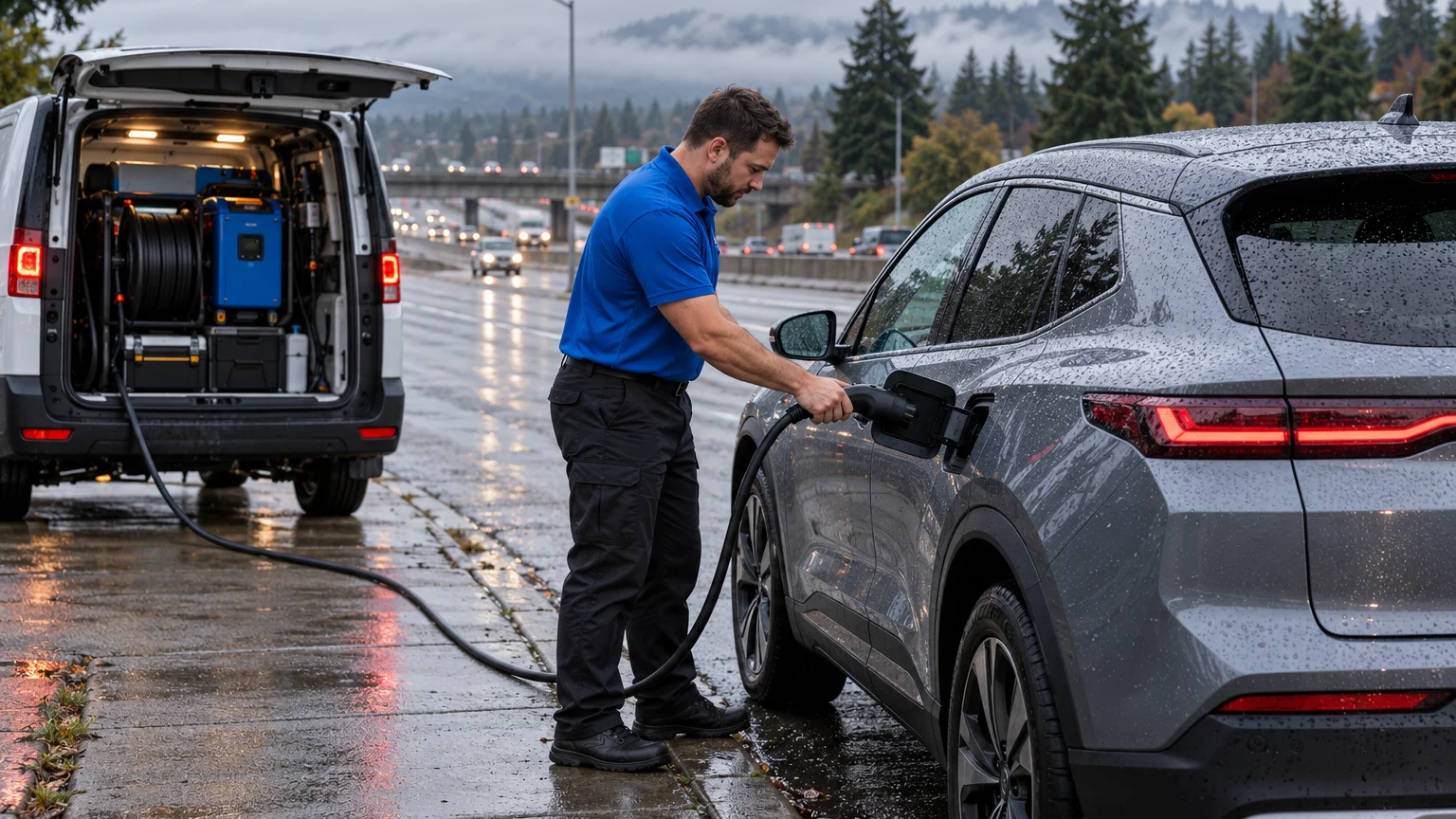
The rescue equipment used for this service includes a Tesla Cybertruck with an integrated 240V, 9.6 kW bed outlet. It has a NACS plug and a CCS adapter. That describes the available equipment, not automatic compatibility with every EV.
Vehicle ports have changed between brands and model years. The Hyundai IONIQ 5 offers a clear example. The 2025 and later IONIQ 5 has a native NACS port. That fact doesn’t establish the port on an earlier model. An operator still needs the model year before deciding what connection may work.
Don’t rely on the logo, app, or connector appearance alone. Send the exact make, model, year, and charge-port type. If you don’t know the port type, provide a clear photo of the open inlet. Include every visible section of the inlet and the vehicle’s current dashboard message.
Our non-Tesla EV rescue service connects Everett drivers with licensed, independent local operators. Charge Pro SEA doesn’t perform the charging, own the rescue equipment, or set the operator’s price. The operator confirms compatibility, quotes the work, and bills you directly.
That distinction protects you from a mismatched dispatch. It also helps the operator separate an empty traction battery from a different failure that charging won’t fix.
I-5, US-2, and Everett garage stalls
Your exact Everett location changes how an operator can approach the vehicle. “Everett” alone isn’t enough. A stopped EV near I-5 presents different access details than one inside a downtown garage.
Start with the road, direction of travel, and nearest exit when applicable. For a US-2 location, include which side of the roadway you’re on. Around Everett Mall Way, name the closest entrance or visible business. Along the industrial waterfront, share a marked gate, lot, or street location instead of a broad waterfront description.
A downtown garage needs different details. Send the garage name, entrance street, floor, row, and stall number. Tell the operator about posted clearance limits, controlled gates, or access instructions you can see. Don’t assume a rescue vehicle can reach your stall simply because your EV did.
Everett had 4,786 registered EVs in the Washington Department of Licensing file read on September 18, 2026. The file was updated September 15, 2026. That figure covers registered EVs in the city. It doesn’t measure roadside incidents or predict operator availability. Drivers can review Washington’s published vehicle datasets through the state open-data portal.
If you’re stopped on a state highway, roadway safety comes before charging plans. WSDOT says drivers should dial 911 to reach roadway help. Its Incident Response Team handles incidents on state highways, but WSDOT’s published material doesn’t mention mobile EV charging or out-of-charge EV service.
For broader local roadside guidance, see our Everett EV roadside assistance guide. It covers the larger decision. This page stays focused on charging compatibility for non-Tesla vehicles.
What plug details the operator needs
Good information prevents the wrong connector from reaching the wrong car. Before an operator is matched, gather the details you can safely access.
First, send the vehicle’s full identity:
- Make and model
- Model year
- Battery level shown before shutdown
- Current dashboard or app message
- Charge-port type, if known
- A clear photo of the open charge inlet
- Your exact stall, lot, street, or roadway location
Copy warning text exactly. “Battery empty,” “vehicle won’t start,” and “charging unavailable” can describe different situations. Don’t erase alerts or guess which battery failed.
An EV has a high-voltage traction pack and a separate low-voltage system. A vehicle that won’t unlock, wake, or shift may not simply need energy added to the traction pack. The matched operator can jump and load-test a dead 12V battery on site. When replacement is appropriate, the operator can quote AGM lead-acid or lithium options based on the model year. Stock and scheduling still need direct confirmation.
If the vehicle powers on and accepts AC charging, connector details become central. The operator’s mobile Level 2 source provides 240V AC at 9.6 kW. A typical 15 to 30 minute connection adds roughly 10 to 20 miles of range. That’s a derived estimate, not a guaranteed result. Vehicle efficiency, conditions, and the vehicle’s ability to accept power affect the outcome.
That charging period isn’t an arrival estimate. Charge Pro SEA doesn’t promise a response window. The matched operator confirms timing and price before work begins.
Photos help when the connector name isn’t clear. Include the inlet with any protective covers open. Photograph an adapter already in the vehicle, but don’t assume it supports the needed connection. Share the adapter’s visible labeling with the operator.
Our regional guide to non-Tesla EV rescue across Puget Sound explains the wider connector issue. Everett callers should still provide vehicle-specific details before an operator is selected.
When a mobile charge works better than a tow
Mobile charging makes sense when the traction battery is depleted, the vehicle can accept AC power, and a short charge can support the next safe move. It may avoid transporting a working EV solely because its battery ran out.
The expected rescue charge is limited. A 15 to 30 minute Level 2 connection adds roughly 10 to 20 miles of range. Treat that as enough for a planned next step, not a full recharge. Before charging begins, identify a reachable destination that fits the available range. Don’t assume the added range will match the estimate exactly.
A tow may be the better option when the vehicle won’t accept a charge. The same applies when a fault message points beyond simple depletion. Charging also may not solve a dead low-voltage system, a damaged charge inlet, a stuck connector, or a vehicle that can’t be moved after power returns.
Location matters too. A mobile charging setup needs access to the vehicle and its charge port. A tight downtown stall, controlled garage, I-5 shoulder, or industrial waterfront gate can affect that access. Describe those conditions before the operator heads toward you.
Ask the operator to confirm three points before starting:
- The connector or adapter matches your vehicle.
- Mobile Level 2 charging fits the reported problem.
- The quoted charge should support your intended next step.
The operator sets the price and bills you directly. Charge Pro SEA doesn’t publish a brand fee, waive operator charges, or offer a warranty. Ask for the operator’s quote before authorizing work.
Our mobile EV charging service explains how drivers are connected with local operators. If charging isn’t suitable, say that you need towing options instead. The goal isn’t to force mobile charging into every breakdown. It’s to match the remedy to the vehicle, connector, location, and fault.
When to call us
Call when a non-Tesla EV runs out of charge in Everett and you can provide its model year, location, and port details. A local operator can then confirm whether mobile charging fits the situation or whether you should arrange a tow.
Call us at (206) 202-7018 and we’ll connect you with a local EV rescue operator.