The SR 520 bridge tolls in both directions and has no usable shoulder. A car that runs the pack dry crossing from Medina to Kirkland becomes an immediate hazard. RCW 46.61.590 asks the driver to arrange prompt removal when a vehicle stops on a traveled lane. Mobile rescue is the answer when the car can still roll or steer to the nearest ramp.
Where Kirkland calls come from
Kirkland holds 8,487 registered EVs. The bench sits dense around the waterfront, the Google campus, and the downtown core. Lakefront apartments on Rose Hill, Juanita, and Houghton all feed the same commuter corridors. Tesla is about 44 percent of the King County total, and Kirkland tracks that share.
The trouble spots are predictable. SR 520 eastbound from Seattle carries the morning tech commute, and a thin buffer on a 35F morning means the last mile into the Yarrow Point exit can drop to zero. Westbound at 6 p.m. with the heater running drains the same packs. Lake Washington Boulevard, Juanita-Woodinville Way, and NE 68th Street collect the side-street stalls.
Cross-lake trips from Seattle add the bridge toll, the Mercer Street weave, and the I-5 split. Drivers run the heater for the cabin during the long slowdown. By the time the car reaches the Kirkland side, range can already be lower than the dashboard estimate predicted.
What mobile rescue does
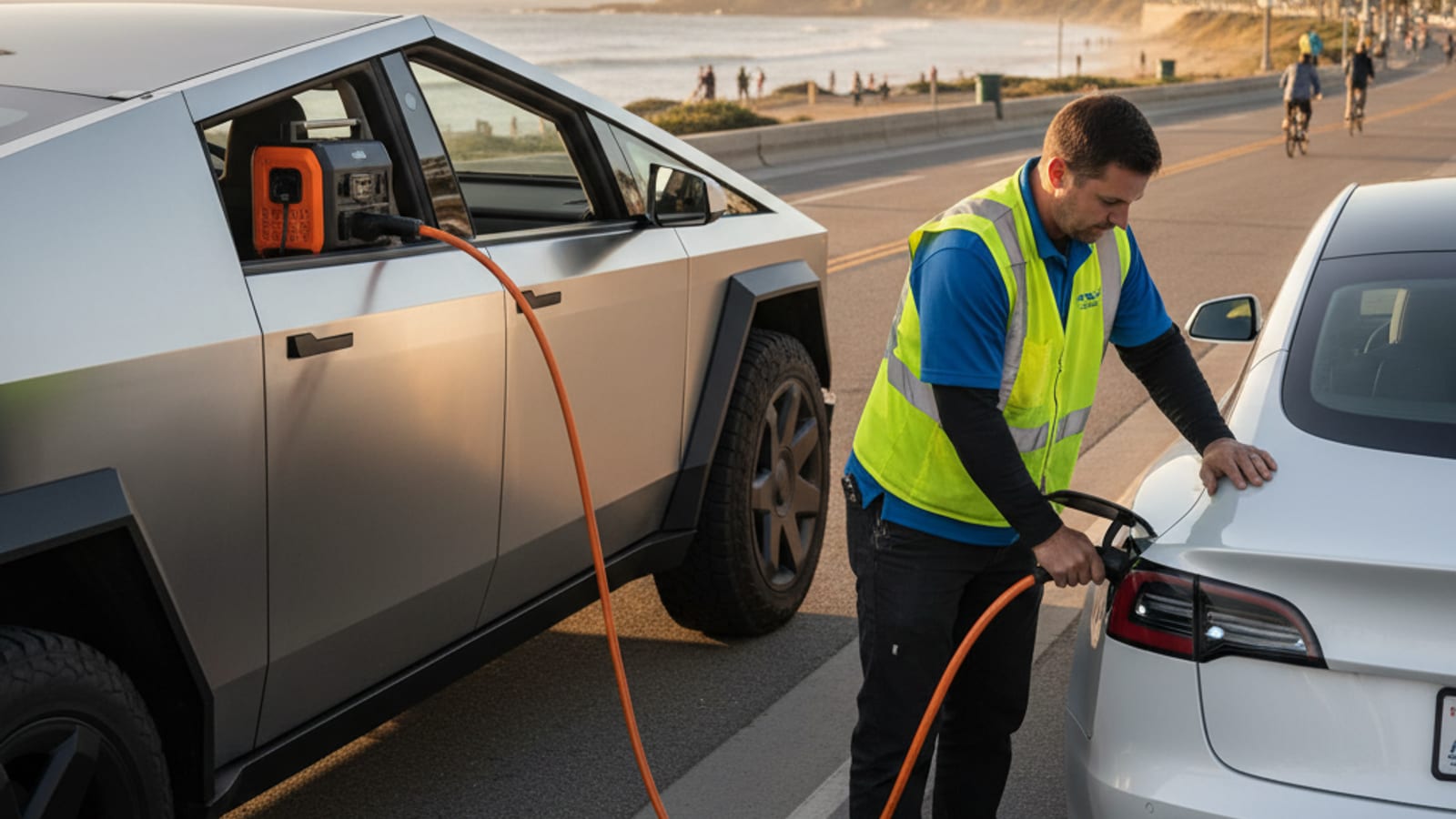
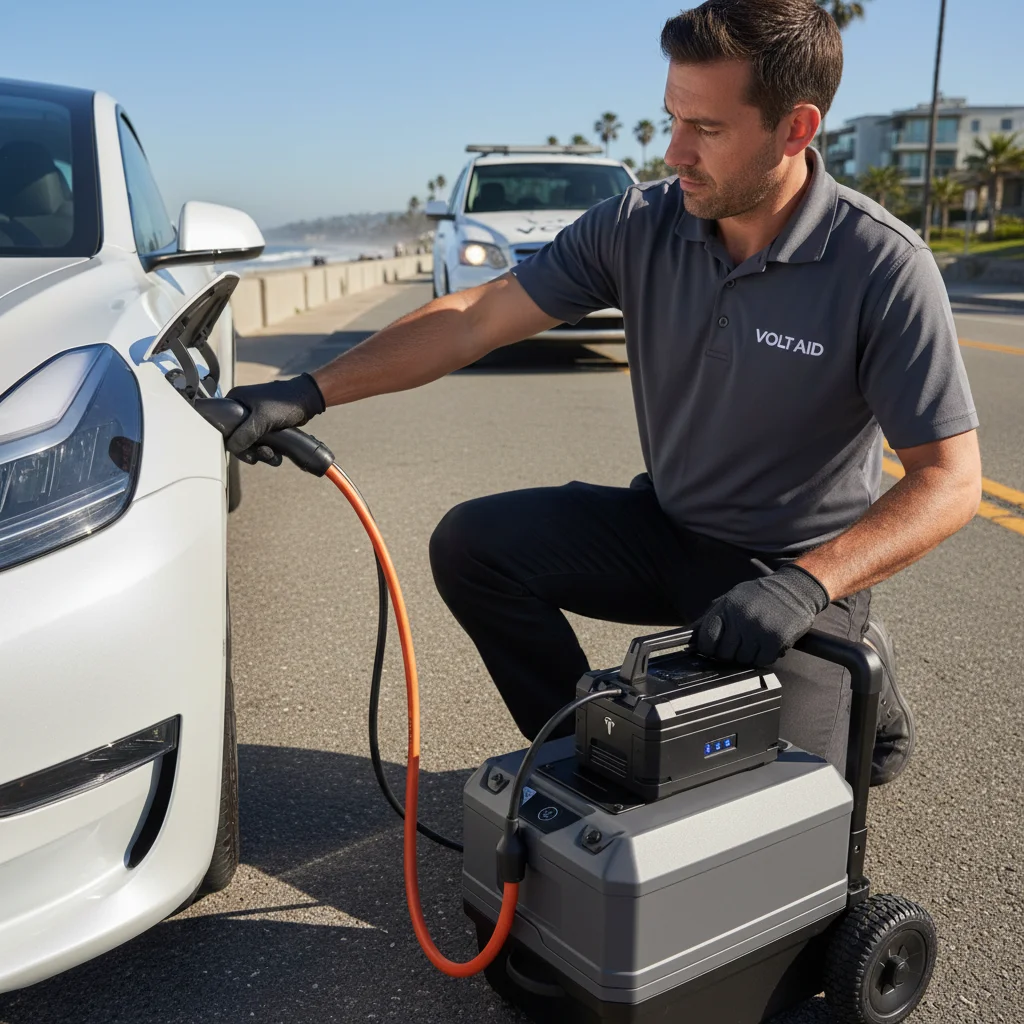
A mobile operator brings a 240V Level 2 source to wherever the car sits. Native NACS covers Teslas, and CCS and J1772 adapters cover the rest of the King County fleet. Fifteen to thirty minutes of charging typically adds 10 to 20 miles of range, which is enough to reach a working charger in Kirkland, Bellevue, or Redmond.
The operator runs a 12V diagnostic first. Wet overnight sits in unheated Kirkland garages are common, and the pre-1980 housing share across King County sits at 46.6 percent. Many of those older garages are not climate-controlled. A weak 12V can mimic an empty pack in the cold. Jumping the 12V often restores the car before any Level 2 charging is needed.
Mobile EV charging at the car is the most common service path here. The operator quotes before starting and bills the driver directly. Charge Pro SEA connects you with a local operator who knows the Eastside.
Bridge, tunnel, and shoulder rules
The I-90 floating bridge span has no usable shoulder. A dead EV there is a serious problem, and WSDOT IRT may be the first responder. The published IRT materials describe helping motorists who have run out of gas but do not mention EVs or out-of-charge situations. The right move is to call 911 from the roadway, then call a mobile operator for a charge.
The SR-99 tunnel is the same situation. A stalled EV inside the bore blocks traffic and creates a hazard. WSDOT dispatches incident response teams for these events, but a 240V source is not what they carry.
For surface streets, RCW 46.61.560 allows a disabled vehicle to stop on the roadway outside incorporated cities and towns when stopping is unavoidable. Inside the city limits, local parking rules apply. Kirkland Police non-emergency lines handle most stalled-car reports when an operator is already on the way.
Why a tow is the wrong tool
A flatbed tow off the bridge to a Bellevue shop does not put any range in the battery. The driver still needs a charge somewhere. Mobile rescue at the shoulder is faster, cheaper, and lets the driver keep the car in the right place.
Tesla’s own roadside program covers towing but does not guarantee a Level 2 source. The contractor Tesla dispatches in this metro often arrives as a general tow. A mobile operator who brings a 240V source with native NACS and a CCS or J1772 adapter is the only path that puts miles back in the pack.
When to call
Call (206) 202-7018 when your EV cannot reach a charger in Kirkland or anywhere on the Eastside corridor. Charge Pro SEA connects you with a local operator who quotes before starting and bills you directly.