Driving an electric vehicle in Arlington offers quiet efficiency and clean power, but it also comes with unique challenges. The expansive, rural landscape of north Snohomish County means longer distances between charging stations. When your EV battery runs low, or you experience another issue, finding reliable help fast matters.
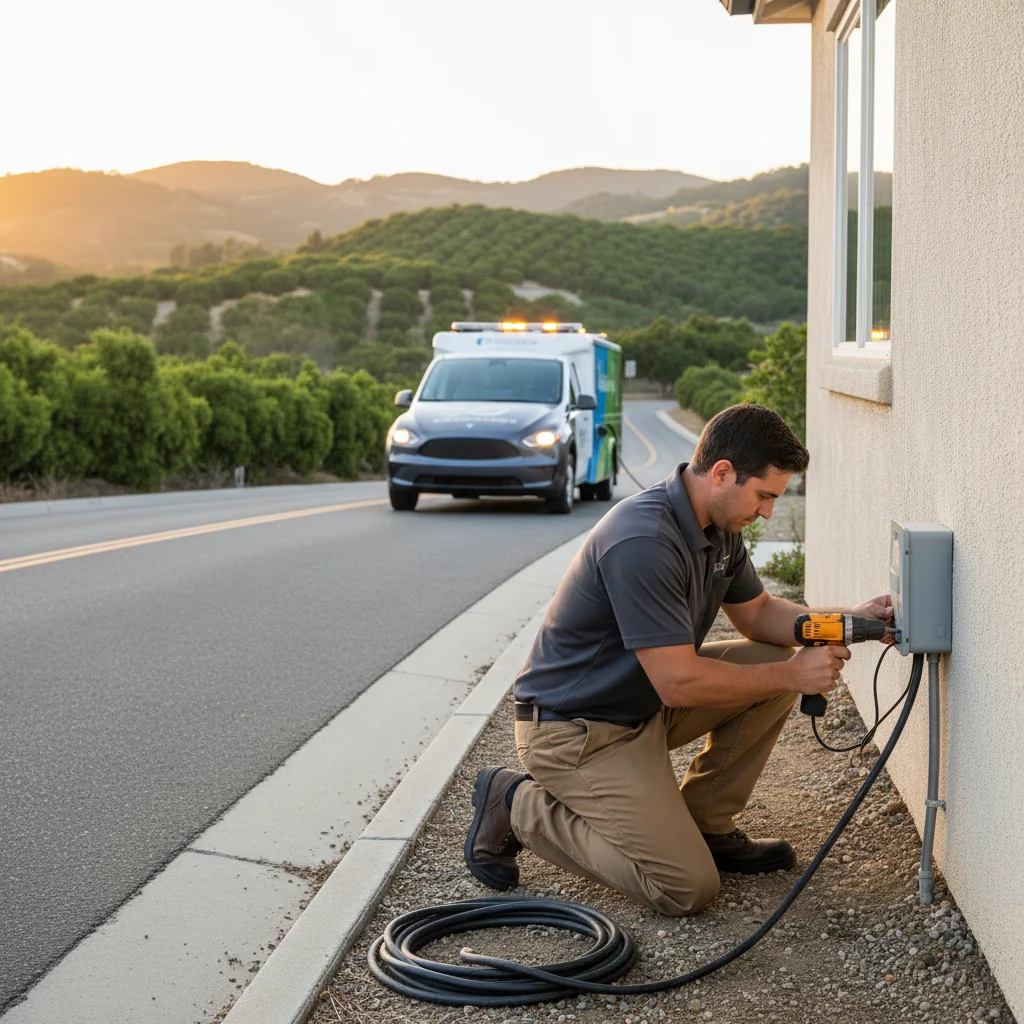
Why Arlington EV drivers strand more than they expect
Drivers in Arlington often underestimate the specific demands this part of the metro places on an EV battery. Unlike urban environments with charging options around every corner, rural north Snohomish County requires more planning. You are typically traveling longer distances to reach amenities, work, or even just the freeway. These extended trips, combined with the rolling terrain and elevation changes inherent to Arlington and the Smokey Point industrial corridor, can deplete your battery faster than you might anticipate.
It is not uncommon for residents or visitors to find themselves with a critically low charge far from a public charger. The Cascade Industrial Center around Smokey Point keeps growing, and a fleet driver or a commuter on I-5 north of Marysville can hit the foothills before they realize the range estimate is wrong. That is where dedicated EV roadside assistance becomes indispensable.
A common pattern involves drivers making a quick trip from the Smokey Point industrial park to a meeting in Everett, assuming their remaining range is sufficient, only to find themselves short by a few miles on a quiet stretch of SR-530 toward Darrington. Charge Pro SEA connects those drivers with operators running mobile charging rigs who know the area.
I-5, SR-9, and SR-530 corridor pattern
Navigating specific routes in Arlington highlights why EV range anxiety can quickly turn into a real problem. Think about the drive north on I-5 past the Arlington Municipal Airport, especially the stretch where the freeway climbs and falls through the glacial ridges. Or consider SR-530, the Arlington-Darrington Highway, which runs east into the foothills where charging thins out completely. These are not flat, straight urban roads. The constant ups and downs require more energy from your EV’s battery.
Many drivers also use SR-9 as a connector between Arlington and the rest of Snohomish County, a route that can feel isolated with few quick charging stops. You might be heading out for a commute, a day trip to the outlets at Smokey Point, or returning home after a long journey, and these roads become unexpected battery drainers. A significant decline in charge can happen without you noticing until it is too late.
The matched operator we connect you with knows the ins and outs of these corridors, including specific exits and common slowdown points. We can quickly navigate to your location, whether you are right on the I-5 shoulder or a few blocks into a neighborhood off a main thoroughfare.
Rural roads, weak cell coverage, and what to do
One of the most significant challenges for EV drivers in rural north Snohomish County is the unpredictable nature of cell service. While you might have full bars in Arlington’s downtown or at the airport district, venture onto a quiet residential street or take a back road toward the foothills, and your signal can drop to nothing. This weak cell coverage complicates things dramatically if you find yourself stranded with a dead battery or other issue. It means calling for help can be difficult, or even impossible, precisely when you need it most.
If you are out of charge and unable to get a signal, try moving your vehicle to the nearest high point if it is safe and you have enough residual power. Sometimes just a few yards can make a difference. Always carry a fully charged phone and a portable power bank, especially when traveling through less populated areas. If all else fails, you may need to flag down a passing motorist for help or walk to an area with better reception.
When you do reach the referral line, our dispatchers are trained to understand the local topography and common dead zones. We use our local staging and knowledge to pinpoint your location accurately, ensuring swift help for any EV, even where coverage is spotty.
Coverage across north Snohomish County
When your EV runs out of charge in Arlington, you need a quick response, not a prolonged wait for a truck coming from far away. The referral line strategically matches you with mobile EV charging operators who cover north Snohomish County and the I-5 corridor up to the Skagit line.
The operators we work with in this part of the county know the back roads of the Smokey Point industrial area and the main arteries of Arlington. When you call for emergency EV roadside assistance, we match your message to the closest operator carrying the right charging connections for your vehicle. That matters most on a less-traveled road or during a snowstorm, when a general roadside network has the least coverage out here.
Mobile charge vs tow for rural north Snohomish drivers
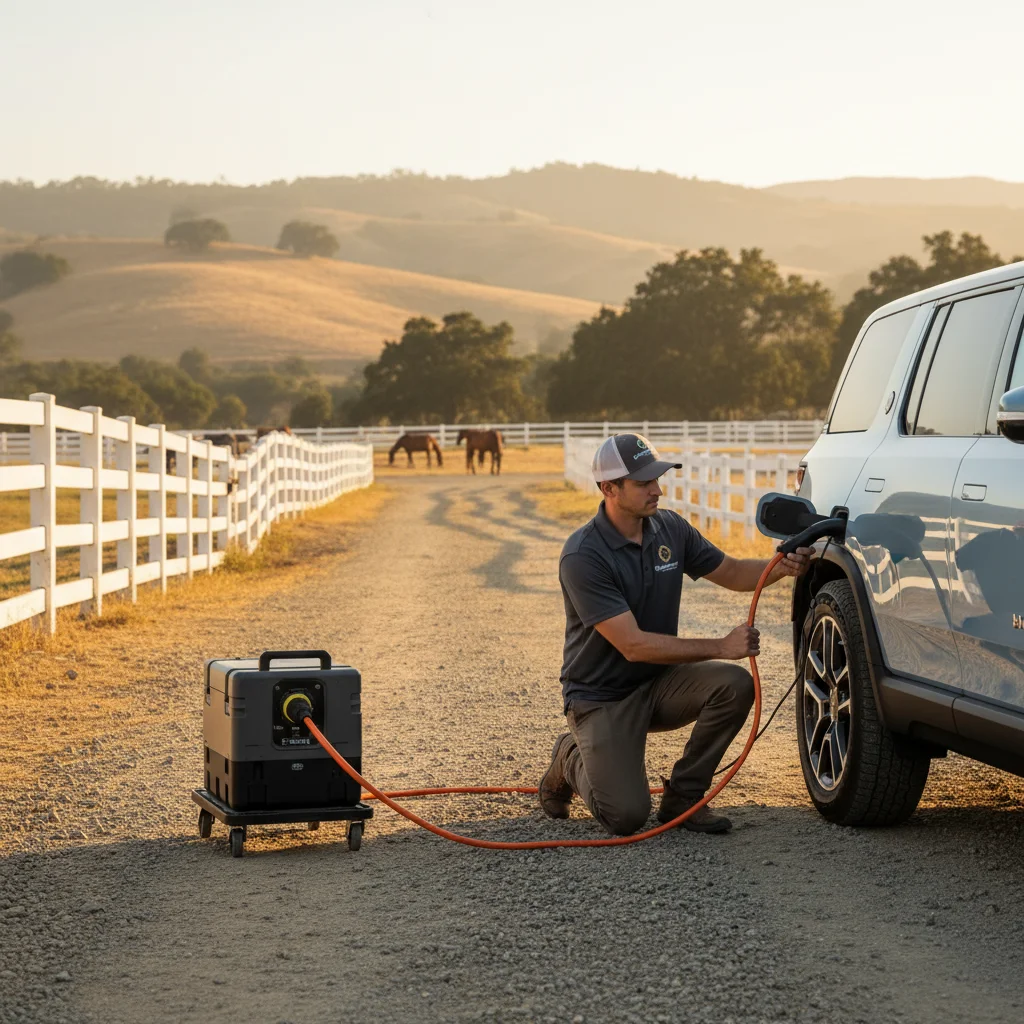
Facing a dead EV battery in Arlington presents a critical choice: get a mobile charge or call for a tow. For rural drivers, mobile EV charging often stands out as the better solution. When the matched operator arrives, they provide a direct 240V charge to your vehicle, giving you enough power to reach the nearest public charging station or even your home. This process is usually much quicker than waiting for a tow truck, getting loaded, transported to a distant charger, and then waiting for your car to power up.
Towing an EV, especially in rural areas, can also be more complicated. Not all tow truck operators are equipped to handle EVs safely, and finding an available flatbed can take longer. After the tow, you still face the challenge of finding a working charger. With our out-of-charge EV recovery service, you get the immediate power you need right on the spot. This saves you time, hassle, and the potential added cost of a tow.
When to call us
When your EV battery dies unexpectedly, or you face any other roadside issue in Arlington or the surrounding north Snohomish County, do not wait. You need quick, professional help from a team familiar with the unique demands of rural I-5 driving.
Call (206) 202-7018 and we will connect you with a local EV rescue operator.