It is a scenario every electric vehicle driver has considered. You misjudge the distance, a planned charger is out of service, and you see the battery percentage dip into the single digits. Then it hits zero. You are stranded on the shoulder of I-405 in Bellevue. A decade ago, this meant a flatbed tow truck was your only option. Today, there is a much better solution: the EV charging truck.
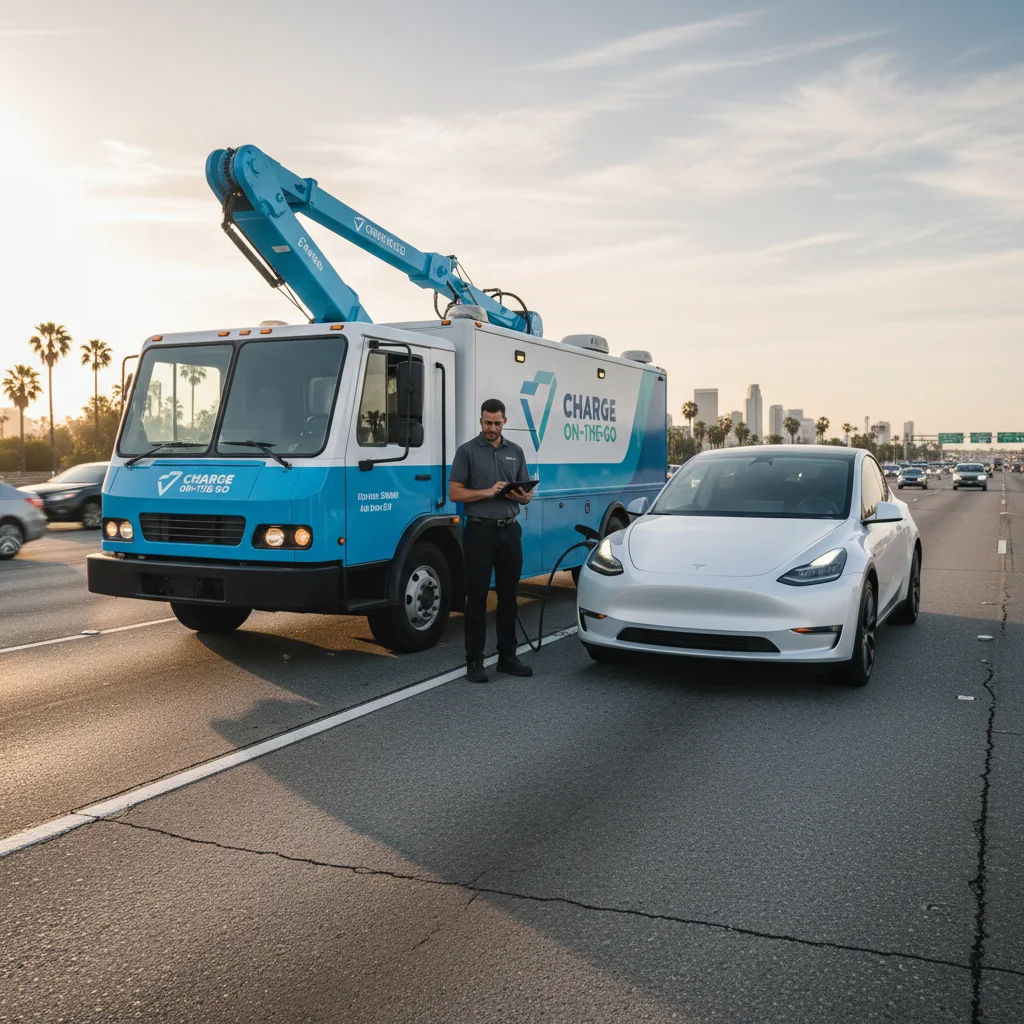
This specialized vehicle is essentially a mobile 240V charger, designed to get you back on the road without the hassle and potential damage of towing. Here is how it actually works, from the battery bank inside the rig to the range a session delivers.
What an EV charging truck actually is in 2026
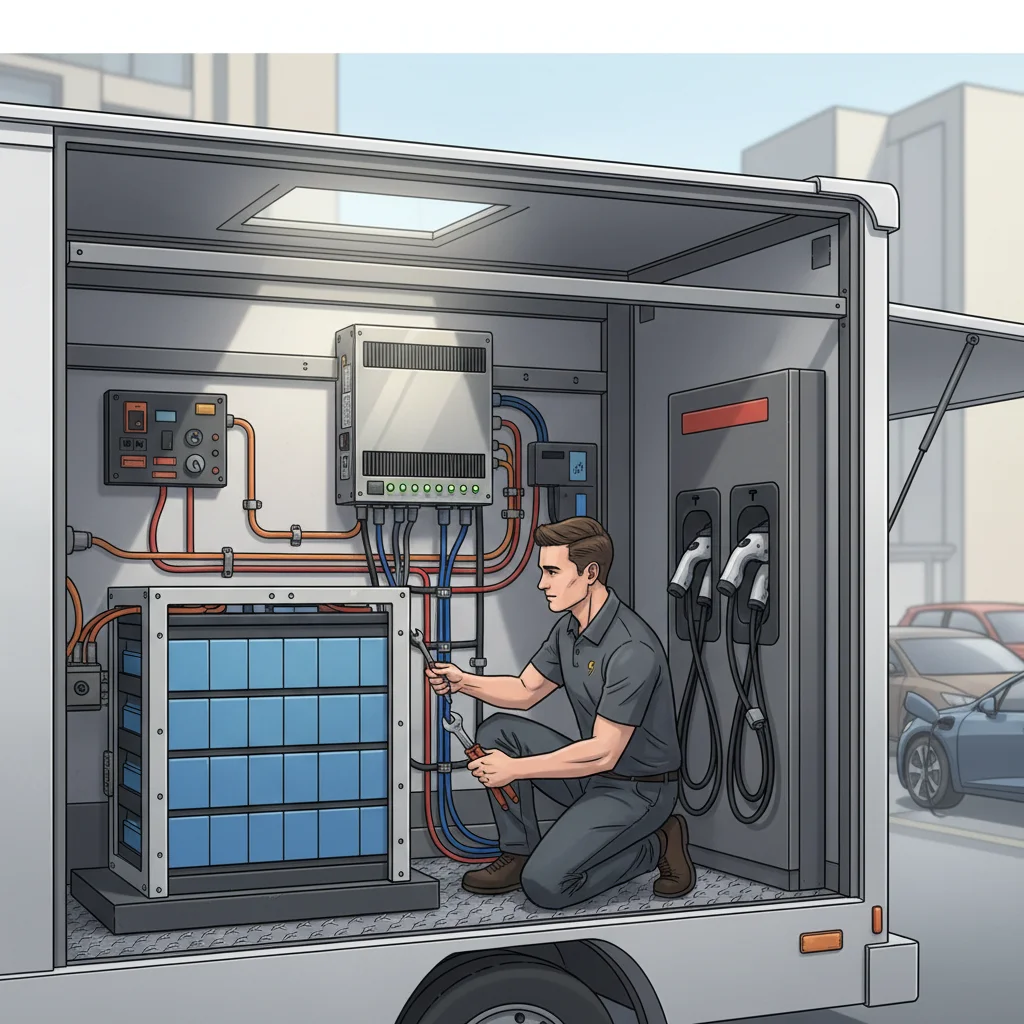
An EV charging truck is a purpose-built vehicle equipped with a large battery pack, a power inverter, and the hardware needed to deliver a 240V Level 2 charge to a stranded electric vehicle. Think of it as a giant, powerful battery bank on wheels, the modern equivalent of bringing a can of gasoline to a friend who ran out of fuel.
The base vehicles are often commercial-grade electric vans or trucks, like a Ford E-Transit or a retrofitted F-150 Lightning. The key is that the entire system is self-contained. It does not need to plug into the grid to work. It arrives at your location with stored energy ready to transfer directly to your car’s high-voltage battery.
This technology has moved from a niche concept to a critical piece of roadside assistance infrastructure. As EV adoption grows across the Puget Sound region, the need for a faster, more efficient rescue solution than a tow truck has become obvious. A mobile charge is safer for the complex electronics and all-wheel-drive systems in many EVs and gets drivers moving again in a fraction of the time. The I-5 corridor through South King and Pierce is one of the heaviest commute stretches, and a dead EV on that shoulder needs help that does not depend on a flatbed crossing the wrong direction.
Onboard battery vs onboard generator: the two designs
Not all mobile charging stations for electric vehicles are created equal. They generally fall into two categories based on how they generate or store the electricity they deliver.
Onboard battery (Battery Electric Service Equipment)
This is the cleanest and most common design used by modern EV rescue services, including the operators we connect you with. These trucks carry a large onboard lithium-ion battery pack, completely separate from the one that might power the truck itself. This energy is stored and ready for immediate deployment.
The way it works: when the operator vehicle arrives, they connect a 240V Level 2 cable to your vehicle. The power flows directly from the operator vehicle’s battery pack, through an inverter to match your car’s voltage, and into your battery. The benefits are simple. It is a completely silent and zero-emissions operation. This matters when working on the shoulder of a busy I-405 commute or in a quiet Bellevue residential neighborhood.
Onboard generator
An older and less common approach involves using a generator to create electricity on-site. These trucks are typically equipped with a large diesel, gasoline, or propane-powered generator. The generator is fired up, producing AC power, which then runs through an inverter and rectifier to convert it to the DC power an EV needs for fast charging. This method is noisy and produces tailpipe emissions, which defeats one of the key benefits of driving an EV. It also adds mechanical complexity and requires carrying a separate fuel source.
How many miles of range a session delivers
The most common question we get is “how much of a charge can you actually give me?” The goal of a mobile rescue is not to charge your car to 100 percent. It is to provide enough range to get you safely to the next public DC fast charger or all the way home.
Operator vehicles carry a 240V, 9.6 kW Level 2 output. In a typical 20-minute roadside session that puts a few kWh into the pack, enough range to reach a proper fast charger rather than a full refill.
What that means in terms of miles depends on your EV’s efficiency. A Tesla Model Y or Model 3 gets around 4 miles per kWh, so a 20 kWh charge adds about 80 miles of range. A Ford Mustang Mach-E or Hyundai Ioniq 5 averages around 3.3 miles per kWh, so the same charge would add about 66 miles of range. A Rivian R1T or Ford F-150 Lightning is heavier and less efficient, typically 2 to 2.5 miles per kWh, so a 20 kWh charge delivers 40 to 50 miles of range.
In every case, this is more than enough range to escape a low-battery situation. If you are stranded on the I-90 floating bridge near Mercer Island, 50 miles of range can easily get you to fast chargers in Bellevue, Issaquah, or home to Kirkland with miles to spare. The focus is on providing a meaningful, rapid boost that solves the immediate problem.
Connector mix: NACS, CCS1, J1772, and adapters
The EV charging world has a few different plug standards, and a professional rescue service needs to be able to handle all of them. The operator vehicles are outfitted to be universal charging stations, so an operator can help any EV driver in the Puget Sound region.
NACS (North American Charging Standard) is the plug developed by Tesla. For years, it was exclusive to their vehicles, but it has now been adopted by Ford, GM, Rivian, and many other major automakers for their new models. It is a compact, easy-to-use connector that handles both AC and DC charging. Operator vehicles carry native NACS cables ready to go.
CCS1 (Combined Charging System) is the dominant DC fast charging standard for nearly all non-Tesla EVs in North America, including Hyundai, Kia, Volkswagen, and BMW. It is a larger plug that adds two big DC pins below the standard J1772 connector. Operators carry native CCS1 cables to serve these vehicles directly.
J1772 is the universal standard for Level 1 and Level 2 AC charging in North America. Operators carry adapters to ensure compatibility with any vehicle or situation that might arise.
By having the right native plugs and adapters on every EV operator vehicle, we eliminate any guesswork. Whether you are driving a brand new Rivian with a NACS port or a five-year-old Chevy Bolt with CCS1, the operator can connect and start charging the moment they arrive.
How dispatch works in the Puget Sound region
When you run out of charge, you need help fast. The dispatch process is built around speed and accuracy for drivers across the metro.
You call the line. The dispatcher takes your location and your vehicle details, then matches the closest available operator vehicle carrying the right equipment for your connector and your situation. The operator confirms an honest window and heads to your location. You stay in the car with hazards on if you are on a shoulder, or in a safe spot if you are in a parking lot or driveway.
This system is the core of our mobile EV charging service. It is a simple process built to turn a stressful situation into a minor inconvenience.
When to call us
If your EV battery is completely drained and you cannot reach a charging station, do not call for a tow. A mobile rescue charge is faster, avoids the potential risks of loading your car onto a flatbed, and gets you back on your journey in minutes.
Call (206) 202-7018 and we will connect you with a local EV rescue operator.