The most common reason an Acura ZDX won’t start in the Puget Sound region is a dead or weak 12V auxiliary battery, not the 400-volt Ultium traction pack. The 12V wakes up the modules that authorize the high-voltage system to engage. When it drops too low, the ZDX goes dark, the fob stops responding, and the car looks stranded even with a nearly full main battery.
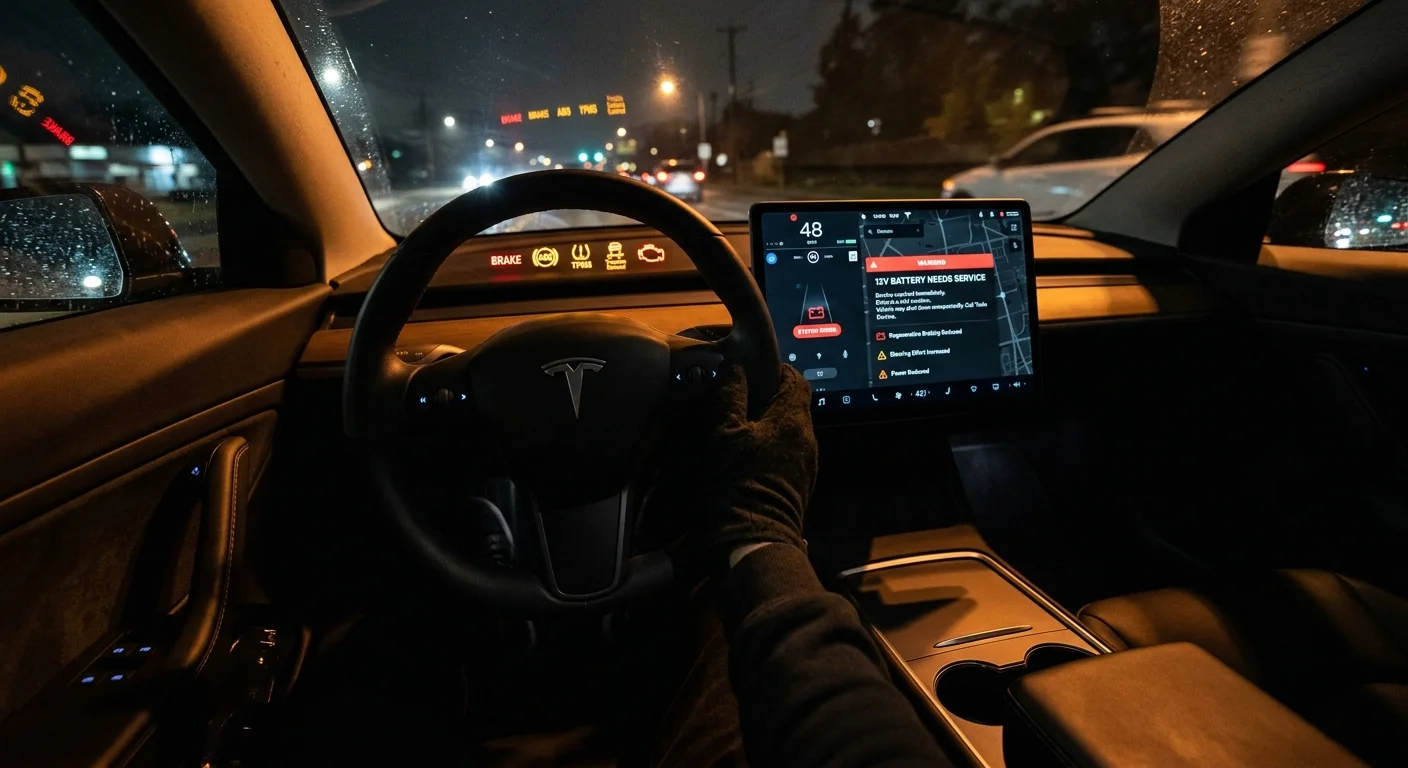
Cool, wet mornings are when this happens
A ZDX in Bellevue or Issaquah often sits in a damp garage through weeks of fall rain, with the cabin heater and defrost cycling on during morning commutes. The 12V battery doesn’t last forever. Most of the ZDX no-starts we see across King County trace back to a 12V that drained during a long wet stretch rather than the main pack running low. A driver who plugged in overnight and shows a full pack on the dash can still wake up to a dead car because the small battery that wakes the big battery never recovered.
The same pattern shows up around SEA airport. A ZDX parked in one of the SEA garage stalls for a week of business travel loses 12V charge to Sentry-like monitoring and keyless entry polling. The owner returns, the traction pack reads 80%, and the car won’t unlock. The 12V, not the Ultium pack, is the entire problem.
The ZDX rides on GM’s Ultium platform
Acura co-developed the ZDX with General Motors, and it shares the Ultium BEV3 architecture with the Honda Prologue, the Chevy Blazer EV, and the Cadillac Lyriq. The 102 kWh usable pack sits on a 400-volt system. None of that changes how the accessory electronics work. Every ZDX still depends on a small 12V battery to bring the car to life.
Battery size does not save the day. The pack can read 100% and the car still won’t respond if the 12V is dead. The 12V is a conventional lead-acid or lithium battery, similar to what’s under the hood of a gas Acura, and it powers the low-voltage electronics that close the contactors connecting the main pack to the rest of the car. No 12V power means no contactor closure, so the ZDX can’t start, can’t charge, and often can’t even unlock.
What to check before you call anyone
A few signs point straight at the 12V before you reach for the phone:
- The dash, interior lights, and infotainment are dim or completely dead
- The key fob has been acting weak or unresponsive from a distance over the past week or two
- The car sat for more than a couple weeks without being driven or plugged in
- No relay clicks when you press the brake pedal
If your ZDX shows the first and third items together, the 12V is almost certainly the cause. A jump from a lithium jump pack connected to the under-hood terminals usually restores it. The terminals sit in roughly the spot you’d expect on a gas Acura, with labeled jump points nearby. Never connect to the orange high-voltage cabling.
If the cabin is fully dark and the fob won’t unlock the car, you’ll need to get inside first. The ZDX stores a physical key blade inside the fob. Use it in the driver’s door cylinder before you try to access the hood.
How a mobile EV charging referral call goes for a ZDX
If you can’t jump the ZDX yourself, or the car still won’t enter Ready mode after a successful jump, the issue is bigger than a discharged 12V. Charge Pro SEA connects ZDX owners with licensed, independent local EV rescue operators across King, Pierce, and Snohomish counties. The matched operator arrives with a lithium jump pack rated for EV auxiliary systems and a mobile Level 2 source if the traction pack also needs help.
Operators work through the same checks you’d run at home. They confirm the 12V voltage, attempt a clean jump through the labeled posts, and verify whether the contactors close once the auxiliary system recovers. If the jump brings the car back, you’re back on the road. If it doesn’t, the operator explains what the symptoms point to and recommends transport to a dealer diagnostic scan.
When the main pack is actually empty
A ZDX that genuinely ran the traction pack down behaves differently. The 12V is fine, the dash powers up normally, and the range gauge reads near zero or shows a turtle icon. That’s not a 12V failure. That’s a charge situation, and the fix is mobile Level 2 charging on-site rather than a jump.
Our mobile EV charging service handles that case directly. The matched operator delivers enough range to reach a DC fast charger or your home charger, usually in 15 to 30 minutes. The ZDX’s 800V charging architecture accepts high current, so the boost is meaningful.
Puget Sound patterns worth knowing
A few recurring ZDX situations come up across our region.
Extended driveway sits. A ZDX left in a Sammamish or Bothell driveway for two weeks without a charge cycle is the single most common 12V drain we see on this platform. The fix is a straightforward jump.
Heater-heavy winter mornings. A driver who pre-heats the cabin from the app on cold Auburn or Federal Way mornings draws steady current off the 12V while the car is “asleep.” Over a week of that pattern, the auxiliary battery can dip below the threshold that wakes the contactors.
SEA airport trips. Long-term parking in the SEA garage drains the 12V through monitoring systems. Park in the long-term floors and return to a ZDX that won’t respond.
If your ZDX won’t start anywhere in the Puget Sound region, call (206) 202-7018 to reach a local operator.