A Tesla with no power is a serious problem in the wrong place. The I-90 floating bridge span has no usable shoulder. The SR-99 tunnel has no usable shoulder. A Tesla that dies on either structure creates a hazard. The right tow is a flatbed with the car loaded correctly, not a wheel lift.
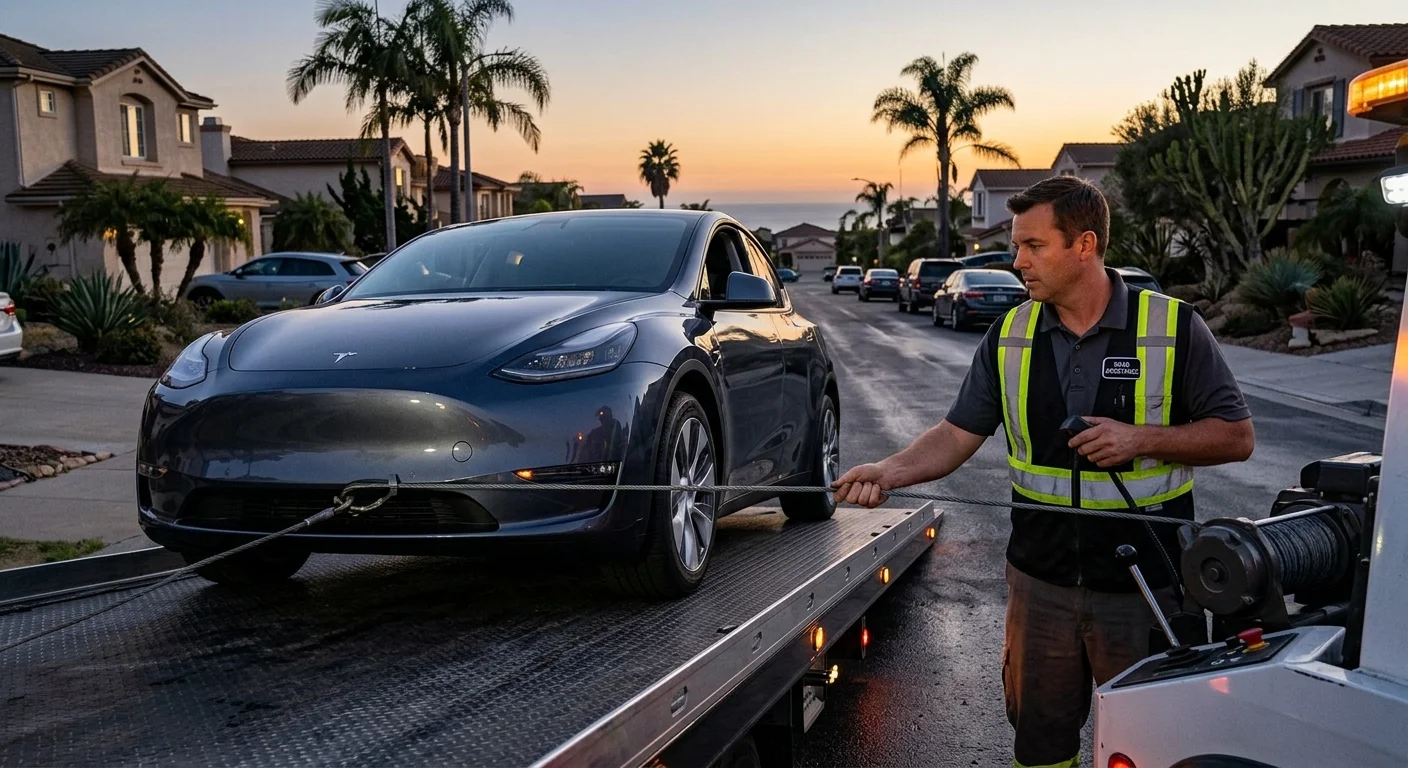
Why a wrong tow damages the car
Tesla motors generate electricity when the wheels turn. A wheel-lift tow that drags the rear wheels on the ground sends current back through the motor and can damage the power electronics. A flatbed with all four wheels off the ground avoids that risk.
Tesla publishes specific tow procedures for each model. The Model S and Model X have a tow mode that disengages the parking brake and puts the car in neutral. The Model 3 and Model Y have a similar procedure. The tow operator must follow the model’s procedure exactly.
A no-power Tesla may not respond to the in-cab tow mode procedure because the touchscreen is dead. The operator needs to access the manual override under the front trunk or under the hood. The owner’s manual shows the exact spot.
What the operator needs
The tow operator needs a flatbed that can handle the Tesla’s weight. Model S and Model X weigh about 5,000 pounds. Model 3 and Model Y weigh about 4,000 pounds. A flatbed rated for the weight is non-negotiable.
The operator needs the Tesla’s specific tow eye or attachment point. Model S and Model X have a front tow eye that screws into the front bumper. Model 3 and Model Y have a similar attachment under the front bumper cover. A wrong attachment can damage the bumper or the tow eye socket.
The operator needs to know whether the parking brake is engaged. A Tesla with a dead 12V cannot release the parking brake electronically. The manual release is under the front trunk or accessed through a specific panel.
What to do on the bridge or tunnel
A Tesla that dies on the I-90 floating bridge span or in the SR-99 tunnel creates an immediate hazard. RCW 46.61.590 requires prompt removal. WSDOT IRT covers both corridors. Their published materials describe flat tires and out-of-gas situations but do not mention EVs. The right move is to call 911 from the roadway first.
A Tesla that can roll, shift, or steer can be moved to the shoulder or the nearest exit. A Tesla that cannot accept any input needs a flatbed. The operator should arrive with the correct flatbed and the correct attachment for the model.
Mobile EV charging at the shoulder is faster than a tow when the car can accept a charge. The operator quotes before starting and bills the driver directly. Charge Pro SEA connects you with a local operator who knows the bridges and tunnels.
Why a wheel-lift is the wrong tool
A wheel-lift tow that drags the rear or front wheels can damage the motor and the power electronics. Tesla explicitly prohibits wheel-lift towing in the owner’s manual. The repair cost for damaged power electronics can run into thousands of dollars. A flatbed is the right tool, every time.
If the tow operator arrives with a wheel-lift and refuses to switch to a flatbed, refuse the tow and call a different operator. The cost of a second dispatch is less than the cost of damaged power electronics.
Chapter 46.55 RCW governs towing and impound, and the Washington State Patrol posts the maximum impound rates. A driver who pays for a wrong tow may have a hard time recovering the cost.
When to call
Call (206) 202-7018 when your Tesla cannot reach a charger in the Puget Sound region. Charge Pro SEA connects you with a local operator who knows the right procedure for your model.