Search Tesla Model 3 battery replacement cost and you will find wildly different numbers, from a few hundred dollars to well into five figures. Both can be true at once, because a Model 3 has two separate batteries and most posts do not say which one they mean. Before any figure is useful to you, it has to trace to a written quote for your specific car.
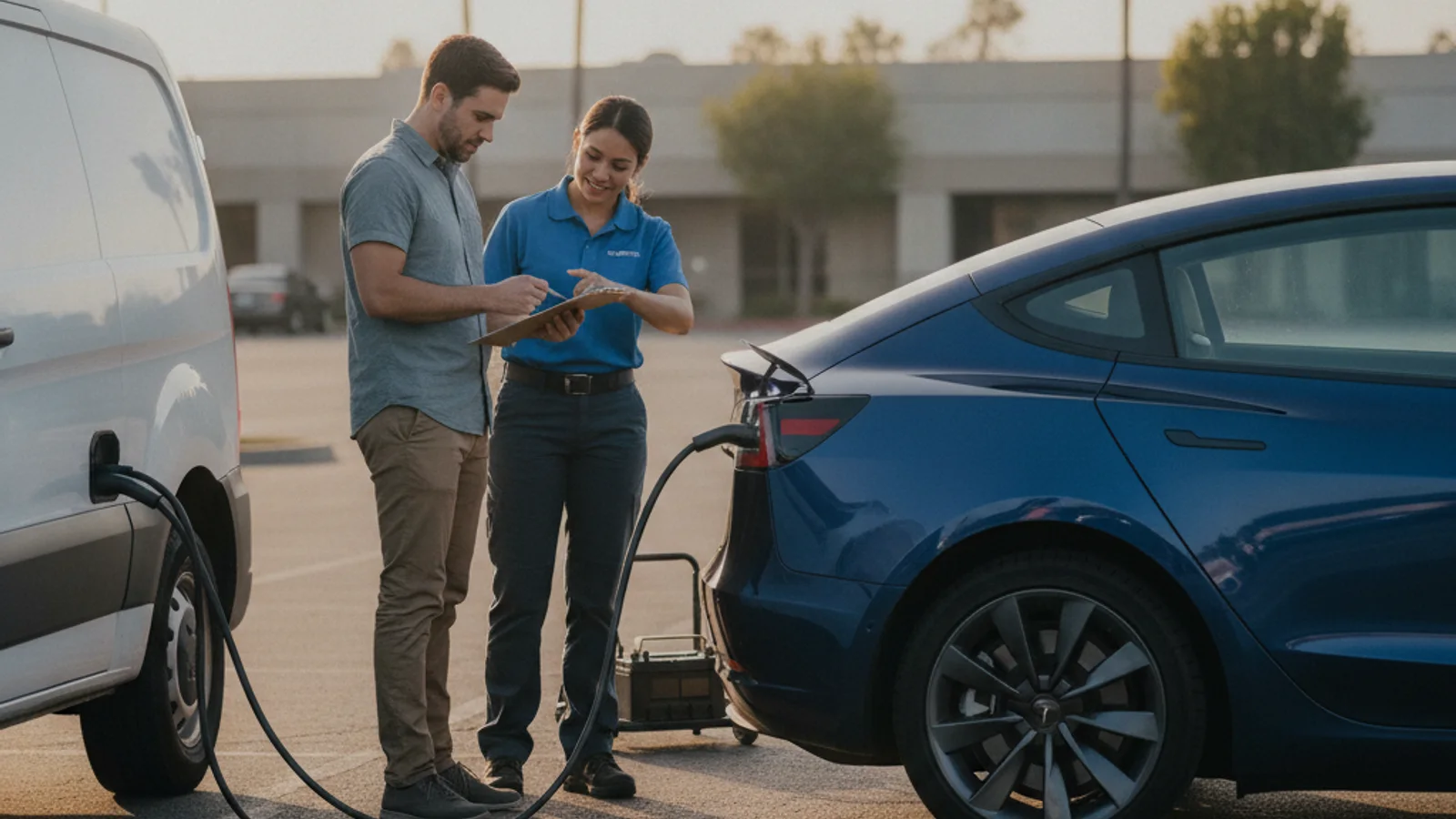
Identify which Model 3 battery the quote covers
A Model 3 carries a main traction battery pack that stores the energy driving the wheels, and a much smaller low-voltage battery that wakes the car up, runs the displays, and operates the door handles and locks. They fail for different reasons, get diagnosed differently, and cost nothing alike to address. Our breakdown of symptoms that point to the main pack versus the low-voltage battery walks through how to tell them apart before you call anyone.
This distinction is the first thing to nail down whenever you see a number online. A forum post about my Tesla battery cost rarely says which battery the poster meant, and the two numbers are not close. If a shop or a Tesla service advisor gives you a verbal figure, ask them to state in writing which component the estimate covers. A number with no named part behind it is not a quote, it is a guess dressed up as one.
Current Model 3 vehicles may also use a different low-voltage battery chemistry than earlier ones, and the exact type installed in your car affects what a shop needs to stock before it can do the work. Do not assume your Model 3 matches a chemistry described in a general article. Ask the shop or Tesla service to confirm the low-voltage battery type installed in your specific vehicle, by VIN, before requesting a quote for that part.
Treat any number that does not specify the battery, the part, and the vehicle it applies to as background noise, not a figure you can plan around.
What can change a main-pack quote
A main traction-pack repair is one of the most variable line items a Tesla owner can face, and several factors change what a shop or Tesla service will actually charge before a single number gets written down.
Model and trim matter, since Model 3 configurations differ from Model S, X, and Y and from each other by production year. Whether the failure is isolated to a section of the pack or affects the whole assembly matters too. A qualified technician can sometimes address a specific module or cell group without swapping the entire pack, and that distinction alone can separate very different bills. Whether the vehicle is still inside a manufacturer warranty window changes the number to zero for a covered failure, and whether the damage came from a collision or water intrusion routes the claim toward auto insurance instead of warranty.
Labor complexity is its own variable. Some service centers can complete pack work faster than an independent shop still building out Tesla-specific expertise, and labor rates differ by location. None of that produces one figure that applies to every Model 3, which is exactly why a forum number and your quote can look nothing alike without either one being wrong.
The only way to collapse all of that variability into a real answer is a written, itemized estimate for your VIN, stating the specific failure, the parts involved, and whether warranty or insurance applies.
What can change a low-voltage quote
The low-voltage battery is a far more common repair, and it has its own set of variables that change what you will pay, separate from anything driving a main-pack number.
Which chemistry your specific Model 3 uses is the first variable, since parts availability and part cost differ by chemistry and by supplier. Whether the failure is a straightforward end-of-life swap or a symptom of a deeper electrical fault is the second, and only a technician who has actually tested the vehicle can tell the difference. A battery that keeps failing after a fresh jump points toward something beyond the battery itself, and that diagnostic step changes the scope of the job. Labor and whether you use Tesla service, an independent EV shop, or a mobile technician round out the list.
If your Model 3 is dead right now and you cannot get it to respond at all, a Tesla 12V battery jump is a separate question from a replacement quote. A jump restores enough power to get the car communicating and, often, to a shop for a real diagnosis. It does not tell you whether the low-voltage battery needs replacing or was simply drained, and it is not a substitute for the shop’s written estimate once the car is responsive again.
Our detailed comparison of main-battery and low-voltage symptoms is worth reading before you request either kind of quote, so you can describe the actual symptom to the shop instead of a guess.
Check Tesla’s current warranty and service estimate
Warranty terms and coverage windows change over time and by model, and a Tesla owner’s forum post from a year or two ago may not describe your car’s current coverage. No warranty term or coverage detail for this repair could be confirmed against a current primary source at the time this guide was written, so none is stated here. The only source that can tell you what your specific Model 3 is covered for, right now, is Tesla itself.
Check your coverage two ways. First, your Tesla account or app shows the vehicle’s warranty status tied to your VIN, including whether the vehicle is still inside its original coverage window. Second, ask the Tesla service advisor to state your current warranty status in writing as part of any estimate, rather than relying on a general statement about Tesla’s battery warranty that may not match your car’s build date or mileage.
Once warranty status is confirmed, request a written service estimate that states the diagnosis, the specific part or component involved, whether the repair is covered, and the out-of-pocket cost if it is not. If you are working with an independent EV shop instead of Tesla directly, ask the same three things: diagnosis, part, and price, all in writing before you authorize anything. A verbal ballpark is not a quote, and neither is a number you read on a forum written about a different car.
If a repair facility cannot produce an itemized written estimate, treat that as a reason to get a second opinion, not a reason to guess.
Washington incentive context that changes the math
Washington’s clean-vehicle sales-tax exemption expired in mid-2025, and no open statewide incentive program for new EV buyers is currently active. The earlier exemption capped qualifying new vehicles at a price threshold and grandfathered lease agreements signed before the cutoff through July 31, 2028. The point that matters for a pack replacement is the secondary one: a pack replacement is not a vehicle purchase, so the exemption never applied to it in the first place.
What this means in practice is that a Tesla Model 3 pack replacement in the Puget Sound is an out-of-pocket repair, not a rebate story. The bill is what the shop writes. The shop’s estimate either gets covered by insurance (if the failure came from a covered event like a collision) or by the car’s warranty (if it is still inside the original coverage window) or by you. There is no statewide program waiting at the end of the repair that will offset the cost, and assuming one exists will lead to a planning error.
If you are weighing whether to replace the pack on an out-of-warranty Model 3 versus selling the car, the absence of a state incentive actually simplifies the comparison. The repair is a pure cost-benefit calculation against the car’s market value. Get a written estimate, compare it to the car’s trade-in, and decide.
When roadside help applies before repair
Sometimes the immediate problem is not a repair decision at all, it is a car that will not respond right now. If your Model 3’s low-voltage battery has failed to the point where the frunk will not open, the doors will not unlock, or the touchscreen stays dark, that is a job for Tesla roadside rescue before it is a job for a service estimate. Getting the car responsive again is a separate step from deciding what the eventual repair costs.
If the dashboard instead shows a depleted traction battery and the car will not move under its own power, the roadside question is different: whether the vehicle can reach charging or needs transport. Our EV charging guide covers charging options across the metro, and the right choice can depend on where you are. A Model 3 stopped near the Eastside in Bellevue or Kirkland has different nearby charging access than one stuck on I-5 through Federal Way or out toward Tacoma in Pierce County. Say where you are and what the dashboard shows when you request help, rather than assuming one Puget Sound location is like another.
Roadside help and a repair quote answer two different questions. One gets the car and driver safe and, if possible, moving again. The other tells you what a specific battery problem will cost to fix, once a shop has actually looked at the car. Do not let a roadside fix stand in for a diagnosis, and do not wait on a diagnosis if the situation on the road needs attention first.
When to call us
Call if your Model 3 will not power on, will not unlock, or has stopped moving with a depleted battery and you need help now, before any repair quote is even on the table. Call (206) 202-7018 to reach a local operator.