Before anything else, this is not the same question as “how much is a Tesla 12V battery,” which is far more common and far less expensive. A full out-of-warranty replacement of a Tesla’s main high-voltage battery pack is a five-figure repair, and it’s a repair most owners never actually face, because the pack is designed and warrantied to outlast the rest of the car.
Why this repair is expensive
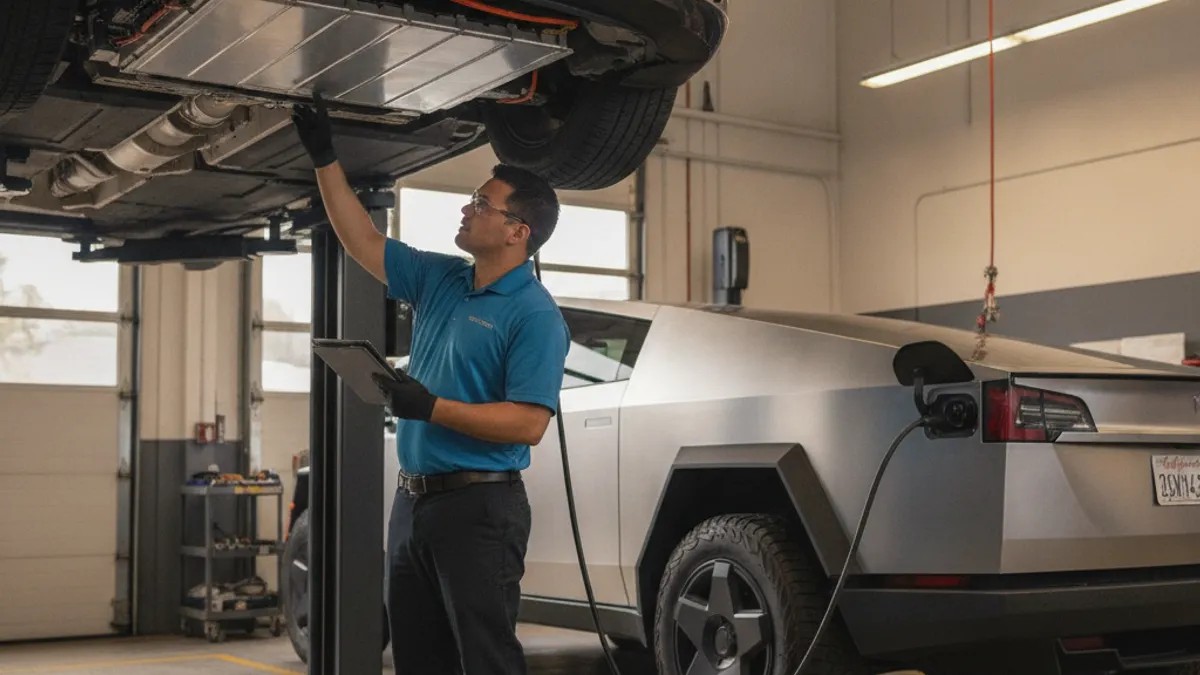
The main battery pack is one of the most complex and costly components in the entire vehicle. It’s not a simple part swap like a 12V battery. A full pack replacement involves removing the vehicle’s underbody structure, disconnecting hundreds of individual cell modules, and installing and calibrating a new pack, all performed by Tesla service or an authorized shop. The pack itself, before labor, is the single most expensive component Tesla builds into the car.
Reported out-of-pocket costs for a full pack replacement, based on owner accounts and independent shop estimates, commonly land well into five figures, and can run higher depending on the model and pack size. These are rough market figures, not a fixed price. Actual quotes vary by model, labor rates, and whether any parts of the pack can be repaired rather than fully replaced.
Getting a real quote instead of a forum number
If you’re facing an actual battery issue, the only number that matters is a direct diagnosis and quote from Tesla service or a qualified independent EV shop for your specific vehicle. Owner-reported figures online are a useful sense of scale, but they vary by model, model year, and what exactly failed, and none of them substitute for an inspection of your car.
For owners in the Puget Sound region, the relevant Tesla service options include travel to a Tesla service center or a Tesla-approved mobile technician visit. Independent EV shops in Seattle and Bellevue sometimes handle warranty repairs and out-of-warranty service, and they may quote differently than the factory. Confirm any quote is for your specific vehicle before authorizing work.
Why most owners never pay this
Two things keep this cost mostly theoretical for the average Tesla owner. First, Tesla’s Battery and Drive Unit Warranty covers 8 years and a meaningful mileage cap depending on the model, and most defect-driven failures happen, if they happen at all, within that window.
Second, outright pack failure is uncommon. Most packs degrade gradually and modestly over hundreds of thousands of miles rather than failing outright. A full replacement is typically the result of accident damage, water intrusion, or a genuine manufacturing defect, not ordinary wear.
Partial repairs versus full pack replacement
Not every battery issue requires swapping the entire pack. In some cases, a failed individual module or cell group within the pack can be repaired or replaced without a full pack swap, which costs meaningfully less than a complete replacement. Whether that’s an option depends on the specific failure and is something only Tesla service or a qualified independent EV shop can diagnose. This is not something a roadside or mobile charging service is equipped to evaluate.
Our role as a referral service stops at the shop door. The matched operator in our network gets a dead Tesla to a working state through a 12V jump or a mobile Level 2 charge. Anything beyond that, including a traction battery assessment, requires a shop with the right diagnostic equipment. The WSDOT Incident Response Team operates on state highways but does not perform EV battery diagnostics.
Does insurance cover a battery replacement
If the battery was damaged in a collision or a flood, your comprehensive or collision auto insurance is usually the relevant coverage, not Tesla’s warranty, since warranty covers defects, not damage from an accident. Insurers increasingly understand EV battery repair costs, but claims involving a full pack replacement tend to move slower and get more scrutiny than a typical bodywork claim, given the size of the number involved.
If your Tesla is damaged and the battery may be affected, get the vehicle assessed by Tesla or a qualified EV-certified shop before assuming the pack itself needs full replacement, since a damaged pack isn’t always a total-loss situation.
What actually drives the price within that range
Not every full pack replacement costs the same. The model matters, since a Model S or X pack is larger and more expensive than a Model 3 or Y pack. Labor complexity matters too, since some service centers can complete the job faster than independent shops still building out EV expertise. And whether any part of the pack can be repaired rather than fully swapped changes the final bill significantly. This is why owner-reported numbers online vary as widely as they do, and why a direct quote for your specific car matters more than any single figure you’ll find on a forum.
The 12V battery is a completely different repair
If you’re here because your Tesla won’t power on, there’s a good chance the actual problem is the 12V auxiliary battery, not the main pack. A dead 12V battery can make the car appear completely dead, no screen, no door handles responding, even with a fully charged main pack underneath. That repair runs a few hundred dollars, not a five-figure sum, and it’s the far more common reason a Tesla ends up stranded.
Our Tesla 12V battery jump referral service connects Tesla owners across the Puget Sound region with operators who know the safe jump sequence. The matched operator arrives, restores the 12V system, and lets the DC-DC converter recharge the auxiliary battery off the main pack.
When to call us
If your Tesla won’t power on and you’re not sure whether it’s the 12V or the main pack, call (206) 202-7018. We’ll connect you with a local operator who can diagnose the situation on-site and tell you honestly whether the fix is a quick 12V jump or a transport to a service center.