Gig Harbor sits on the peninsula west of Tacoma Narrows. The Narrows Bridge tolls eastbound into Tacoma. The peninsula roads climb up and down as drivers move between the harbor and the interior. A car that runs the pack dry on a grade has limited options for a safe stop.
Where Gig Harbor calls come from
Gig Harbor holds 3,270 registered EVs, the third-highest bench in Pierce County. The cluster sits along the harbor and the inland residential streets. Tesla is about 44 percent of the King County total, and Gig Harbor tracks a similar share.
The trouble spots include the Narrows Bridge eastbound toll traffic, the peninsula grades on SR-16, and the rural roads into the Key Peninsula. A 35 to 45F commute with the cabin heat running drops the buffer fast. A driver who returns from a Tacoma or Seattle commute in the rain often arrives with the last 10 miles gone.
Peninsula Light serves Gig Harbor and the Key Peninsula. The utility publishes its own EV program. Newer subdivisions often have roughed-in 240V service. Older homes need a panel upgrade before a Level 2 install fits.
What mobile rescue does on the Narrows
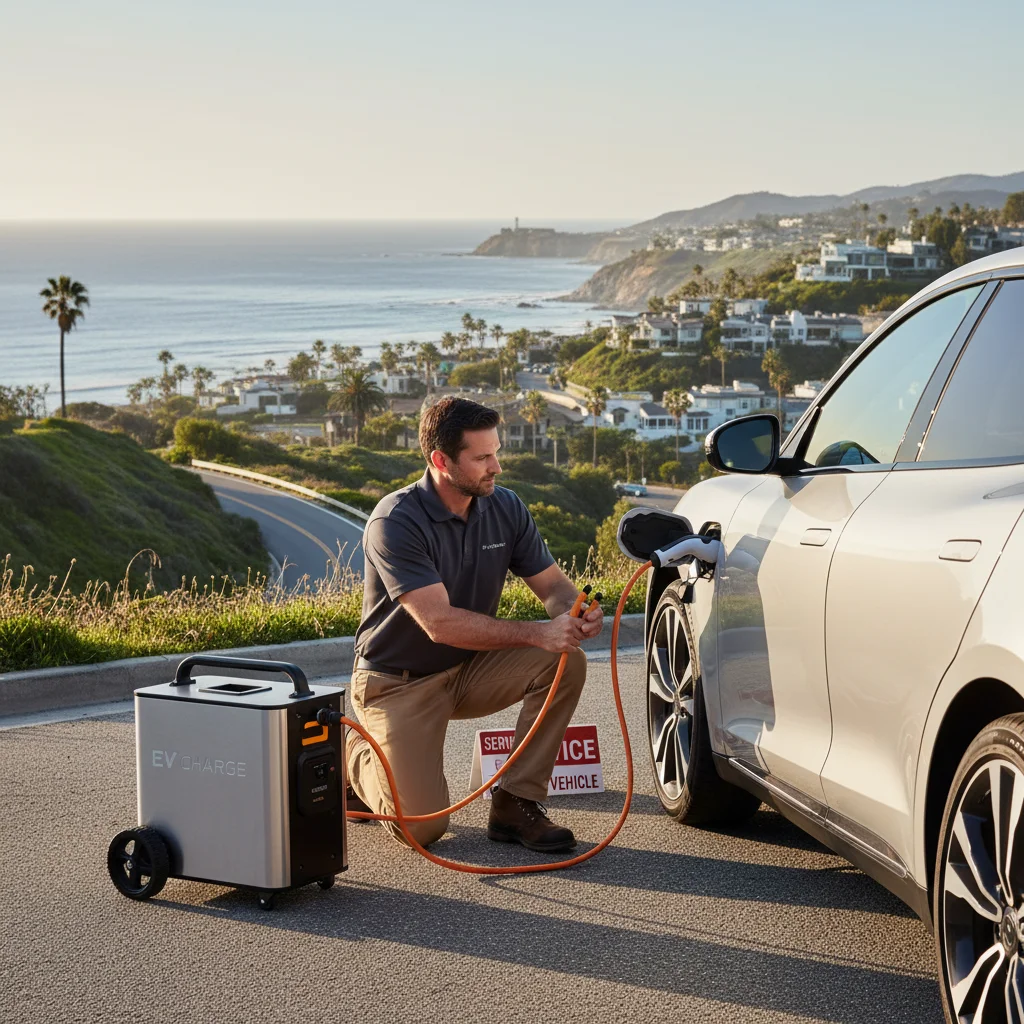
A mobile operator brings a 240V Level 2 source to the shoulder. Native NACS covers Teslas. CCS and J1772 adapters cover the rest of the bench. Fifteen to thirty minutes of charging typically adds 10 to 20 miles of range, which clears the path to a working charger in Gig Harbor or Tacoma.
The operator runs a 12V diagnostic first. A car that powers up but will not drive is almost always a 12V failure. Jumping the 12V restores the car in minutes. If the traction pack is genuinely low, the cable goes in.
For a stop on the active shoulder of SR-16, the operator pulls in carefully and sets up behind the car. WSDOT IRT covers this corridor. The published IRT materials describe flat tires and out-of-gas situations but do not mention EVs. The right move is to call 911 from the roadway first if the car blocks traffic, then call a mobile operator for the charge.
Mobile EV charging at the shoulder is faster than a tow. The operator quotes before starting and bills the driver directly. Charge Pro SEA connects you with a local operator who knows the corridor.
Why a flatbed falls short here
A flatbed tow off the highway to a Gig Harbor shop does not put any range in the battery. The driver still needs a charge. Mobile rescue at the shoulder is faster and cheaper, and the operator stays with the car during charging.
A car that cannot roll, shift, or steer needs a flatbed. The operator will tell you that case on the phone before dispatch. Chapter 46.55 RCW governs towing and impound, and the Washington State Patrol posts the maximum impound rates.
Local utilities
Peninsula Light serves Gig Harbor and the Key Peninsula. PSE covers some inland pockets. Each utility publishes its own EV program. Confirm the program that serves the address before installing a home charger.
When to call
Call (206) 202-7018 when your EV cannot reach a charger in Gig Harbor or anywhere on the SR-16 corridor. Charge Pro SEA connects you with a local operator who quotes before starting and bills you directly.