A Hyundai Ioniq 5 that refuses to release the charge cable is a common roadside call in the Puget Sound. Months of rain freeze cables and latches at public posts. The fix is usually a manual release, not a service visit.
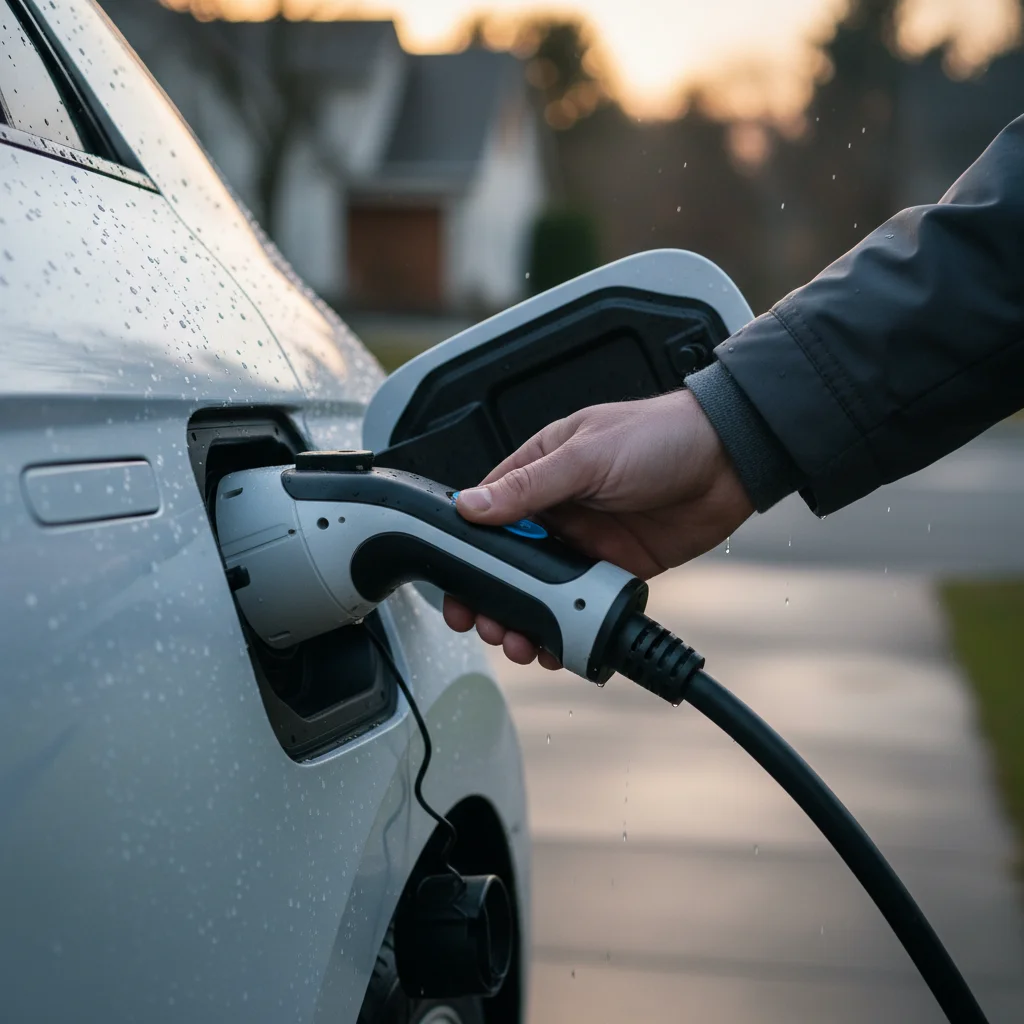
Why it gets stuck
The Ioniq 5 uses a CCS connector for DC fast charging and a J1772 connector for Level 1 and Level 2. Both have a manual release that the driver can trigger from inside the car or by a service tool. Cold weather, moisture in the port, and a software fault mid-session can leave the latch closed even after the charging session ends.
In the Puget Sound, the local pattern is a wet 35 to 45F morning followed by a cold-soaked port. The latch freezes slightly or stays sticky from condensation. The cable pulls but does not release. The driver may see a fault light on the dashboard or a charging error in the Bluelink app.
Apartment renters in Bellevue, Kirkland, and Redmond see the most calls. Pre-1980 housing across King County sits at 46.6 percent, and many of those older apartment garages are not climate-controlled. The car’s port sits exposed to the rain and the cold.
What to try first
The Ioniq 5 has a manual release that pulls from inside the car. The exact location varies by model year, but the typical path is:
- End the charging session in the Bluelink app or on the public post screen.
- Unlock the car doors. Many EVs lock the cable when the car is locked.
- Try the release button on the cable itself.
- If the cable still does not release, locate the manual release lever inside the car. The owner’s manual shows the exact spot.
If the manual release does not work, the latch may be iced. A driver can warm the port with a hand for a few minutes and try again. Do not use force on the cable. Forcing the connector damages the port and the cable, which is an expensive repair.
When to call for help
A driver who cannot release the cable after the manual release and a short wait should call a mobile operator. Operators in the metro carry the per-model release tools and the experience to free a stuck latch without damaging the port. The call usually takes 10 to 20 minutes on site.
Mobile EV charging covers this case in addition to out-of-charge stops. The operator quotes before starting and bills the driver directly. Charge Pro SEA connects you with a local operator who knows the metro.
Why the public post matters
Public charging posts vary in latch design. Some release on the cable, some release on the post screen, and some require both. A driver who ends the session on the car but not on the post can leave the latch locked. Always end the session on the post first, then on the car.
Cold rain adds another wrinkle. The Ioniq 5’s port may show a fault if moisture gets into the connector during a session. The car may refuse to release the cable as a safety measure. A driver who sees a charging fault should end the session, wait a few minutes for the port to dry, then try the manual release.
When the port is damaged
A driver who pulls hard on the cable and bends the connector pin needs a shop visit, not a roadside release. A damaged port is an electrical safety issue and should not be driven with a connector half-inserted. Arrange a flatbed to a licensed shop.
When to call
Call (206) 202-7018 when your Ioniq 5 charge cable will not release in the Puget Sound region. Charge Pro SEA connects you with a local operator who quotes before starting and bills you directly.