The Hyundai Ioniq 5 battery capacity is 58.0 kWh gross on the Standard Range and 77.4 kWh gross on the Long Range, with roughly 54.0 kWh and 74.0 kWh usable respectively. Usable capacity is the number that decides range, because Hyundai holds back a buffer at each end of the pack to protect cell life. EPA range works out to 220 miles on the Standard Range, 303 miles on the Long Range RWD, and 260 miles on the Long Range AWD.
The Hyundai Ioniq 5 quickly became a favorite among Puget Sound EV drivers. Its distinctive retro-futuristic design and impressive charging capabilities make it a common sight from Bellevue to Tacoma. For any electric vehicle owner, understanding the battery is fundamental. Knowing your Hyundai Ioniq 5 battery size and its real-world implications helps manage range, plan trips, and avoid unexpected strandings. This guide explains everything you need to know about the Ioniq 5’s battery, its capacity, and how it performs in the Pacific Northwest’s unique driving environment.
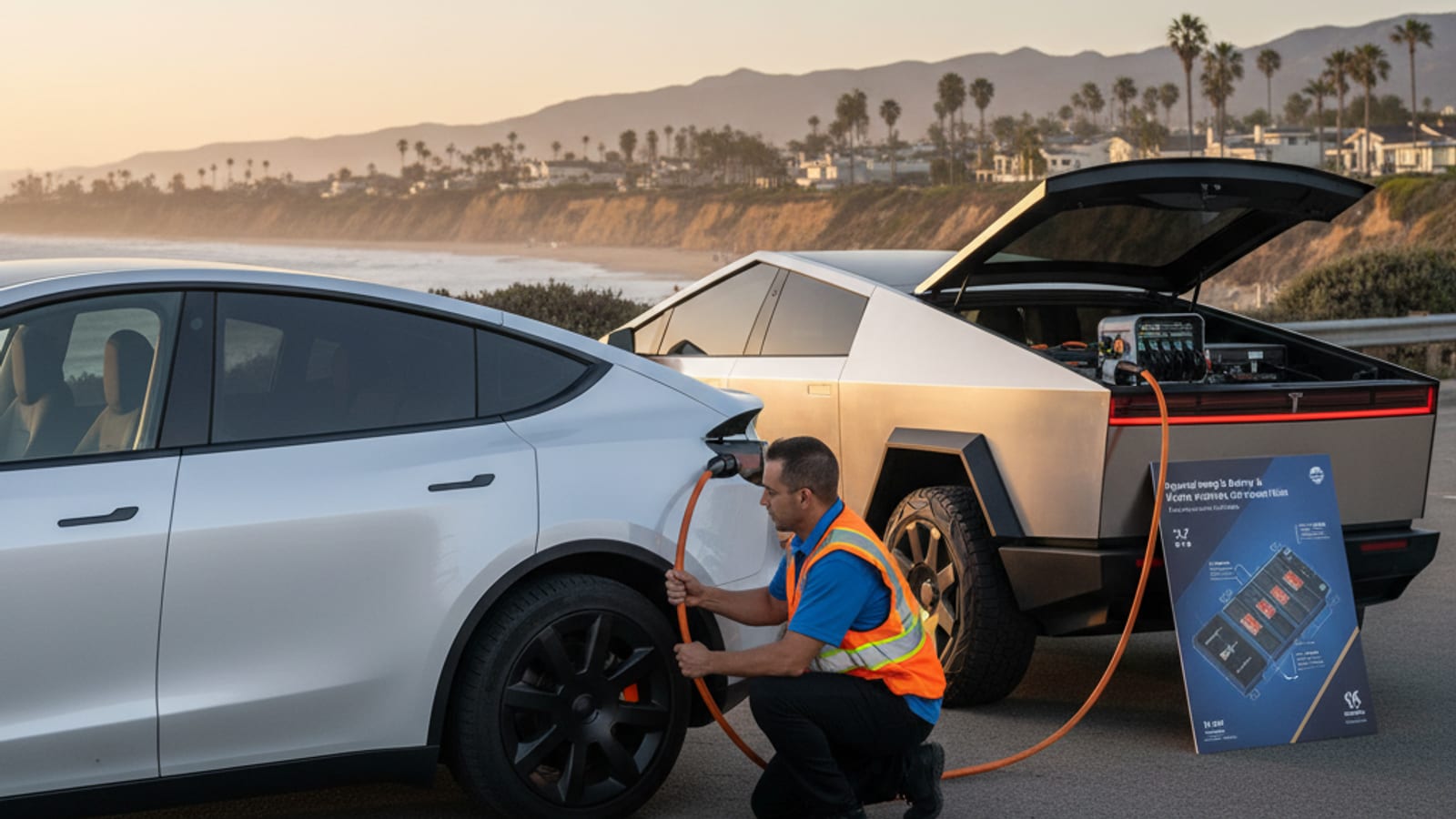
Hyundai Ioniq 5 battery options: a closer look
Hyundai offers the Ioniq 5 with two primary battery configurations. These options cater to different needs, balancing initial cost with extended range. Both battery packs use advanced lithium-ion technology. They integrate with the Ioniq 5’s 800-volt electrical architecture, a feature typically found in more expensive EVs. This architecture allows for remarkably fast DC fast charging speeds.
Standard range battery
The Standard Range Ioniq 5 comes with a smaller battery pack. This option is ideal for drivers with shorter commutes or those who primarily use their EV for city driving. It offers a balance of affordability and sufficient daily range.
- Gross Capacity: 58.0 kWh
- Usable Capacity: Approximately 54.0 kWh
- Motor: Typically paired with a single rear-wheel drive motor
- EPA Estimated Range: Around 220 miles
While it has a lower range, the Standard Range still benefits from the Ioniq 5’s fast charging. This means quicker top-ups when you find a DC fast charger. For Puget Sound residents primarily driving within urban areas, this battery size often provides more than enough daily range.
Long range battery
The Long Range Ioniq 5 is the more popular choice, especially in a region like the Puget Sound with its high EV adoption and varied driving terrain. This battery significantly extends the vehicle’s range, making longer commutes and road trips much more feasible. It’s particularly useful for those heading out toward Snoqualmie Pass or US 2 toward Stevens Pass, where charging infrastructure is sparse.
- Gross Capacity: 77.4 kWh
- Usable Capacity: Approximately 74.0 kWh
- Motor: Available with both RWD and all-wheel drive configurations. AWD models offer more power but slightly less range.
- EPA Estimated Range:
- RWD: Around 303 miles
- AWD: Around 260 miles
The larger battery pack provides greater flexibility. It reduces range anxiety when navigating longer stretches of I-5, I-405, or I-90. This is especially true when crossing from Seattle to the Eastside across the I-90 floating bridge.
Hyundai Ioniq 5 battery specifications table
Understanding the numbers helps clarify the differences between the Ioniq 5’s battery options. Here’s a breakdown of key specifications.
| Feature | Ioniq 5 Standard Range (RWD) | Ioniq 5 Long Range (RWD) | Ioniq 5 Long Range (AWD) |
|---|---|---|---|
| Gross Battery Capacity | 58.0 kWh | 77.4 kWh | 77.4 kWh |
| Usable Battery Capacity | ~54.0 kWh | ~74.0 kWh | ~74.0 kWh |
| Drivetrain | RWD | RWD | AWD |
| EPA Estimated Range | 220 miles | 303 miles | 260 miles |
| Horsepower | 168 hp | 225 hp | 320 hp |
| Torque | 258 lb-ft | 258 lb-ft | 446 lb-ft |
| AC Charging (Level 2 Max) | 10.9 kW | 10.9 kW | 10.9 kW |
| DC Fast Charging (Max) | Up to 239 kW | Up to 239 kW | Up to 239 kW |
| 0 to 60 mph | 7.4 seconds | 7.3 seconds | 4.7 seconds |
EPA estimates and charging speeds can vary slightly based on specific trim, environmental conditions, and driving habits.
Understanding battery capacity and range
Battery capacity, measured in kilowatt-hours, directly relates to how much energy an EV can store. Think of it like a fuel tank. A larger kWh number means a larger tank and generally more range. However, range isn’t just about battery size. Many factors influence how far your Ioniq 5 can travel on a single charge.
What is usable capacity?
You’ll notice two capacity figures: gross and usable. Gross capacity is the total energy the battery can hold. Usable capacity is the portion of the battery that the vehicle makes available for driving. Manufacturers intentionally buffer the battery, meaning they don’t allow it to charge to 100% or discharge to 0%. This practice helps protect the battery’s longevity and performance over its lifespan. For the Ioniq 5, the usable capacity is typically about 95% of the gross capacity. This buffer is a good thing for your battery’s health.
Factors influencing real-world range
The EPA estimated range is a useful benchmark. However, your actual range will vary. Here’s what affects it:
- Driving style: Aggressive acceleration and high speeds consume more energy. Maintaining a steady speed on freeways like I-5 or I-405 helps conserve range.
- Temperature: The Puget Sound region sits in the 35 to 45 range for months through the winter. Recurrent Auto data shows EVs retain roughly 78% of range at 32F, and AAA shows cabin heat can push losses to about 40% at 20F.
- Terrain: Uphill climbs require more energy. The I-90 eastbound climb toward Snoqualmie Pass summit at 3,022 feet is a sustained elevation gain that meaningfully affects range.
- Accessory use: Heating, air conditioning, and infotainment systems draw power from the battery.
- Tire pressure and type: Properly inflated tires reduce rolling resistance.
- Payload: Carrying more weight reduces range.
Real-world range in the Puget Sound: what to expect
The Puget Sound region presents a unique set of challenges and advantages for EV drivers. While the area boasts high EV adoption, understanding local conditions is key to maximizing your Ioniq 5’s range.
Impact of the climate on range
- Wet Winters: The lowlands sit in the 35 to 45 range from November through March. Cold-soak reduces battery efficiency, and cabin heating is the biggest range draw on a typical winter commute. Planning your charging stops for colder months is essential.
- Mild Coastal Climate: Fortunately, the Puget Sound’s mild coastal climate means EVs rarely face extreme cold-weather range loss. Unlike regions with harsh winters, Ioniq 5 owners here don’t typically see the 20 to 30% range reduction associated with sub-freezing temperatures. This is a big advantage for drivers in Bellevue, Kirkland, and the Seattle waterfront.
Elevation changes and range consumption
The Puget Sound’s diverse geography includes flat coastal plains, the Cascade foothills, and significant mountain ascents.
- I-90 climb to Snoqualmie Pass: The eastbound journey on I-90 toward Snoqualmie Pass involves a sustained climb of over 3,022 feet of elevation. This elevation gain requires heavy range consumption. Drivers heading to North Bend or further east should account for this. Always start with a good charge.
- US 2 toward Stevens Pass: The elevation of Stevens Pass summit is commonly cited at 4,061 feet, though that figure is approximate. The climb up US 2 from Monroe or Sultan is steady and pulls measurable range.
- Regenerative braking: While uphill driving uses more energy, the Ioniq 5’s excellent regenerative braking helps recover some of that energy on descents. This is particularly effective coming down from Snoqualmie back toward the lowlands.
Range infrastructure and charging gaps
The Puget Sound has a reasonable public charging network in the urban core, but coverage is uneven.
- Charging gaps: East King County, the Snoqualmie Valley, and the Stevens Pass corridor have significantly fewer chargers. Range anxiety is a real concern on these roads.
- Popular road trips from the Puget Sound:
- Snoqualmie Pass: Mountain driving and limited chargers near the summit make a full charge essential before starting the climb.
- Stevens Pass: The US 2 route through Gold Bar and Skykomish requires careful planning for a Long Range Ioniq 5.
- Olympia or Portland: Accessible via I-5, which has better charging options along the way.
Understanding these local nuances helps Ioniq 5 owners better predict their real-world range. It allows them to plan charging stops effectively, preventing unexpected out-of-charge situations.
Charging the Ioniq 5: speeds and infrastructure
The Hyundai Ioniq 5 stands out for its charging capabilities, largely due to its 800-volt architecture. This advanced system allows for some of the fastest charging speeds available in a non-Tesla EV.
Level 1 (120V) home charging
- Speed: Extremely slow. Adds only about 2 to 4 miles of range per hour.
- Use Case: Best for occasional overnight trickle charging or emergencies when no other option is available. It’s not a practical daily charging solution for the Ioniq 5’s battery size.
Level 2 (240V) home charging
- Speed: The Ioniq 5 can accept up to 10.9 kW on Level 2 AC charging. This translates to adding roughly 35 to 40 miles of range per hour.
- Charging time: To fully charge a Long Range Ioniq 5 from empty to full would take approximately 7 to 8 hours.
- Local specifics: PSE runs the Up & Go Electric program for residential customers across the Eastside, South King, and parts of Pierce and Snohomish counties. SnoPUD runs its own residential EV charger rebate for most of Snohomish County. Seattle City Light offers a residential rebate plus the Multifamily EV Charging Program. Tacoma Power offers a residential Level 2 rebate for customers inside Tacoma. Confirm the current program status with your utility before installation.
DC fast charging (DCFC)
This is where the Ioniq 5 truly shines. Its 800-volt system allows for remarkably rapid charging at compatible DC fast charging stations.
- Speed: The Ioniq 5 can accept peak charging rates of up to 239 kW.
- Charging time: Under ideal conditions, the Ioniq 5 can charge its battery from 10% to 80% in about 18 minutes.
- Connectors: The Ioniq 5 uses the CCS connector. With an adapter, it can also use NACS chargers.
- Local public charging: Public DC fast chargers are available across King, Pierce, and Snohomish counties, with denser coverage in the Seattle and Bellevue cores and sparser options in the Snoqualmie Valley.
Regularly using DC fast charging is convenient but can generate more heat in the battery than Level 2 charging. For everyday use, Level 2 home charging is often preferred for battery health and cost.
Maximizing your Ioniq 5’s battery life and range
Proper care helps extend the life and efficiency of your Hyundai Ioniq 5’s battery. These practices are especially useful for Puget Sound drivers who experience varied conditions.
- Avoid extreme charging/discharging: Try to keep your battery charge between 20% and 80% for daily driving. Only charge to 100% when you need the full range for a long trip.
- Preconditioning: Use the Ioniq 5’s preconditioning feature while plugged in. This brings the battery to an optimal temperature before you drive.
- Maintain tire pressure: Properly inflated tires reduce rolling resistance.
- Use regenerative braking: The Ioniq 5 has excellent regenerative braking, including i-Pedal for one-pedal driving. Maximize its use, especially on downhill sections.
- Drive smoothly: Avoid aggressive acceleration and hard braking.
- Minimize high-speed driving: On freeways like I-5 or I-405, speeds above 70 mph significantly reduce range.
By following these tips, Ioniq 5 owners can ensure their battery performs optimally for years to come.
When your Ioniq 5 runs out of charge
Despite the Ioniq 5’s impressive range, running out of charge can still happen. This is particularly true on less-serviced routes or during unexpected detours. Imagine running low on power on I-90 east of Issaquah, or on US 2 heading toward Stevens Pass.
Our referral service connects you with operators who handle mobile EV roadside rescue for all electric vehicles, including your Hyundai Ioniq 5. The matched operator arrives with a commercial-grade mobile Level 2 source and adapters for both NACS and CCS. The matched operator delivers enough range to get you safely to the nearest public charging station or your home.
Whether you’re stuck on I-5 near Federal Way, I-405 near Bellevue, or US 2 near Gold Bar, we cover the entire Puget Sound region.
When to call us
Don’t let range anxiety ruin your drive. If your Ioniq 5 needs a charge anywhere in the Puget Sound region, call (206) 202-7018 to reach a local EV rescue operator.