North Bend sits at the base of the I-90 climb toward Snoqualmie Pass. The town is the last gas and coffee stop for pass commuters. A driver who rolls in with a thin buffer is asking for trouble on the climb. The right move is to charge in North Bend, not gamble on the summit.
Why North Bend is the critical stop
Snoqualmie Pass sits at 3,022 feet per WSDOT. That figure is verified. The climb from North Bend covers about 2,100 vertical feet over six miles. Cold rain, wet snow, and chain-control announcements change the math by storm. RCW 46.37.420 and WAC 204-24 govern chains and traction tires. Closures arrive storm by storm and there is no fixed seasonal calendar.
Recurrent Auto reports that across 30-plus EV models, EVs retain about 78 percent of range at 32F. AAA testing at 20F showed climate control pushing losses toward 40 percent. The I-90 climb combines elevation, cold, and cabin load into the worst-case range scenario.
Drivers who run out of charge on the climb typically stop at one of the chain-off areas or the summit lots. These are not safe places to sit for long. WSDOT may close chain-off areas during active storms, which removes the only place to put a stalled car.
What mobile rescue does on the corridor
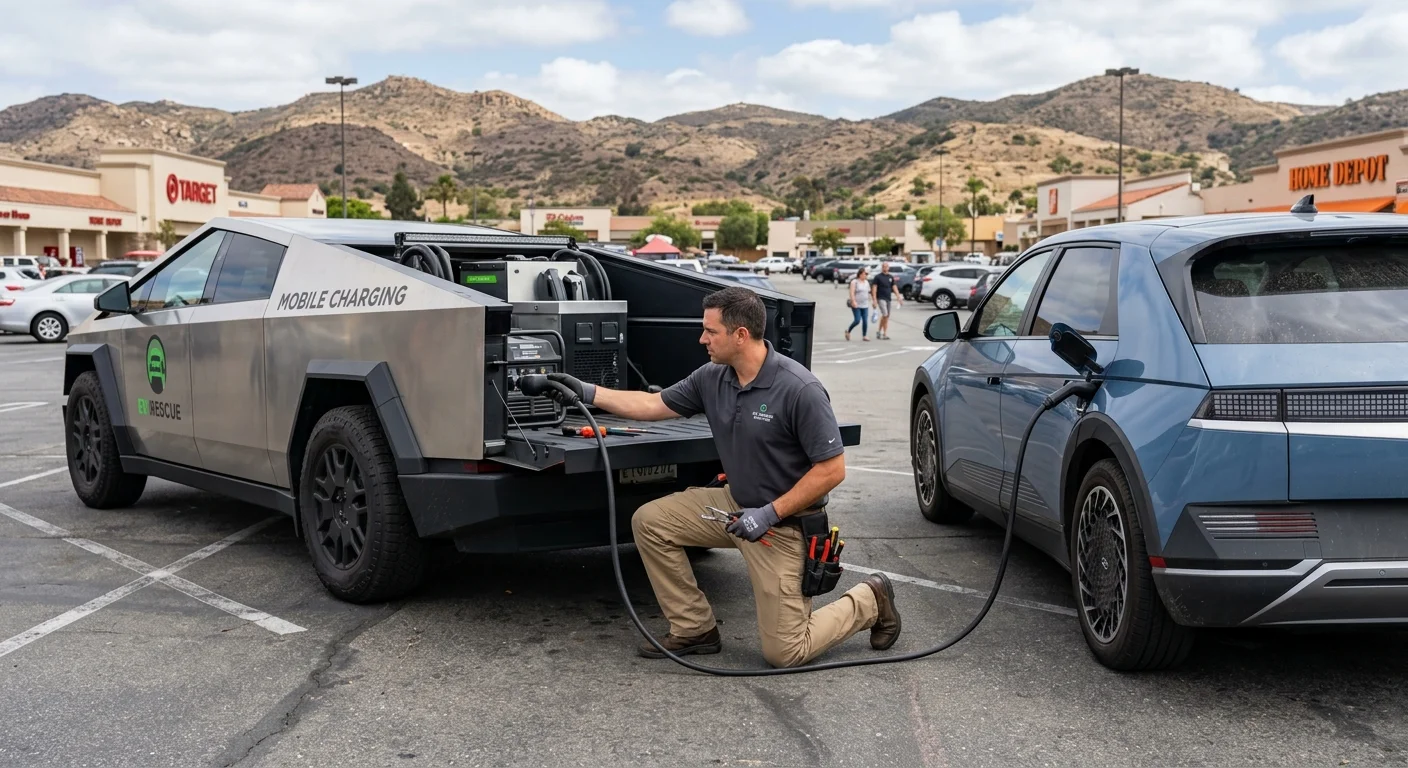
A mobile operator brings a 240V Level 2 source to the stalled car. Native NACS covers Teslas. CCS and J1772 adapters cover the rest. Fifteen to thirty minutes of charging typically adds 10 to 20 miles of range. That is enough to clear the summit or roll back down to a working charger in North Bend or Snoqualmie.
The operator first checks the 12V. Cold-soak on a long climb can drain a marginal 12V even when the main pack has range left. If the pack is genuinely low, the cable goes in. If the 12V is the real problem, the operator jumps it on the spot.
Chain-control announcements change the dispatch picture. Operators with studded tires and chain experience can sometimes reach the summit during an active storm. WSDOT IRT runs 24/7 on-call across major corridors and covers about 1,300 centerline miles. Their published materials describe flat tires and out-of-gas calls but do not mention EVs. The right move is to dial 911 from the roadway for emergency hazard, then call a mobile operator for the charge.
Mobile EV charging at the shoulder is faster than a tow. The operator quotes before starting and bills the driver directly. Charge Pro SEA connects you with a local operator who knows the corridor.
When to skip mobile and call for help
Smoke, fire, or a collision requires 911 first. A car stopped in a travel lane with hazards on is a hazard to other drivers. RCW 46.61.590 requires prompt removal. WSDOT may push a stalled car to a chain-off area or vista point, but they will not bring a Level 2 source.
A car that cannot roll, steer, or shift needs a flatbed. If the pack is dead and the 12V is also dead, the operator may need to charge the 12V before the car will accept a Level 2 connection. That takes a few extra minutes but does not change the service.
Local utilities
PSE serves most of North Bend through the Up & Go Electric program. Tanner Electric Cooperative covers some valley pockets. Each utility publishes its own EV program. Confirm the program that serves the address before installing a home charger.
When to call
Call (206) 202-7018 when your EV cannot reach a charger in North Bend or anywhere on the I-90 Snoqualmie Pass corridor. Charge Pro SEA connects you with a local operator who quotes before starting and bills you directly.