Your battery light drops to zero somewhere between the US-2 on-ramp and the climb up to Lake Stevens, and the rolling hills north of Everett feel a lot less scenic in the rain. It happens to local EV drivers more often than you would think, and a tow truck is not the right call.
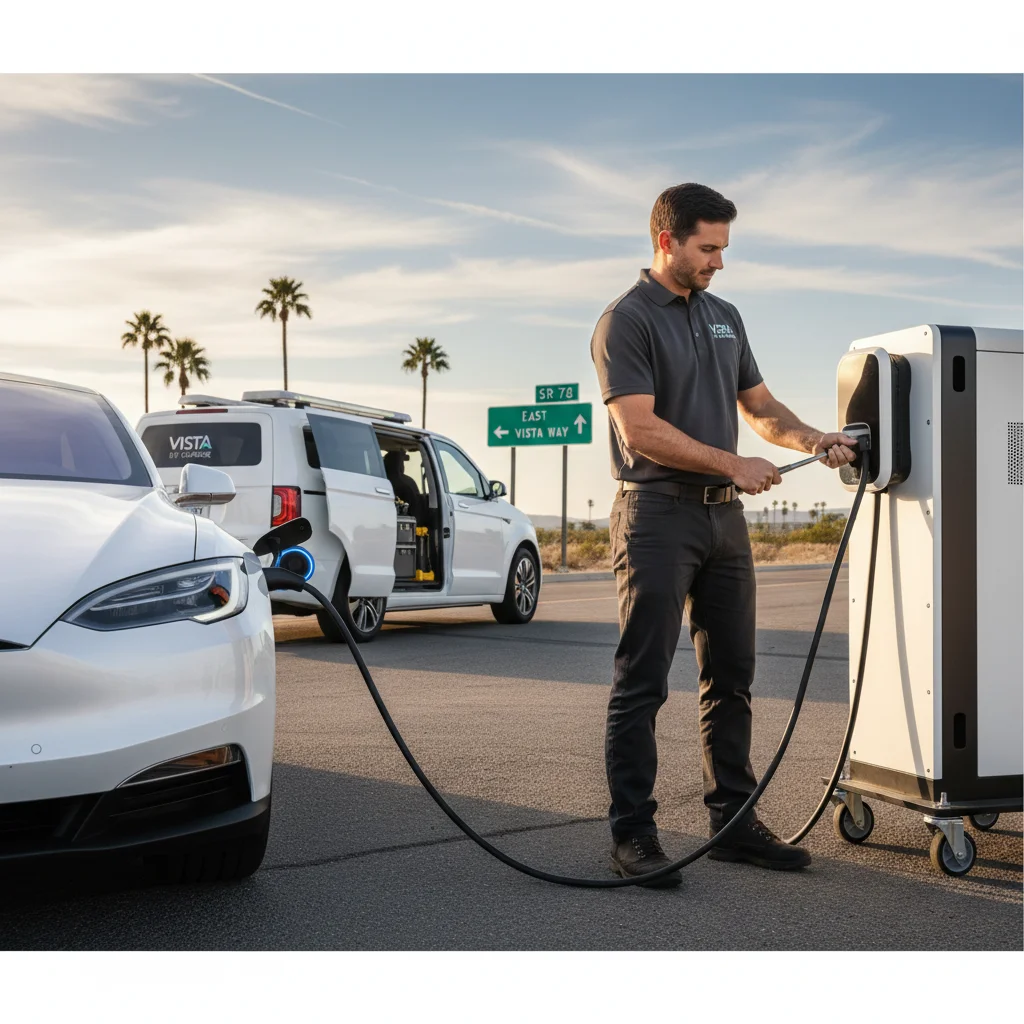
Where Lake Stevens EV drivers run out of charge
Lake Stevens sits north of Everett in Snohomish County, a residential community that has grown fast and added a meaningful number of EVs in the process. The local streets climb steadily as you head east from the lake toward the US-2 corridor, and drivers coming home from Everett on a wet winter evening find their range estimate quietly eroding faster than the trip planner predicted.
The city’s EV ownership rate has climbed steadily alongside SnoPUD’s residential EV charger rebate program, and the newer subdivisions around Soper Hill Road and the Lundeen Park area have become one of the denser pockets of EV households in north Snohomish County. More EVs on the road means more range miscalculations, more dead 12V batteries sitting in driveways, and more drivers who need help before a tow truck shows up.
The most common scenarios we see in Lake Stevens:
- Freeway shoulder stops on US-2 between the SR-204 interchange and the Snohomish city limits
- Residential dead batteries in Soper Hill driveways where the car simply will not unlock or start
- Mid-errand drops near the Lake Stevens shopping center, where a quick stop turned into a longer stay
If any of those sound familiar, our emergency EV roadside assistance is set up exactly for this.
US-2 and the climb up to Lake Stevens
US-2 through the Lake Stevens area is a deceptively demanding stretch. Drivers heading east toward Snohomish or west toward Everett often underestimate the sustained grade that begins near the SR-204 interchange. The climb is not steep, but it is long, and regenerative braking cannot help you on the way up. By the time you are past the Lundeen exit, you have burned more kilowatt-hours than your nav predicted.
The local residential streets add their own problem. The roads rise sharply off the valley floor as you head east toward the Machias area, and drivers coming from the flatter west side of town, where they might have been coasting and recouping range, suddenly hit a consistent uphill that erases that buffer fast. We have received calls from drivers who had 8 miles of estimated range at the bottom of a Lake Stevens hill and needed rescue before cresting.
Our mobile EV charging service is built around exactly these freeway-adjacent and corridor scenarios. Operators carry enough onboard charge to get you off the shoulder and to the nearest public charger, or all the way home if you are close enough.
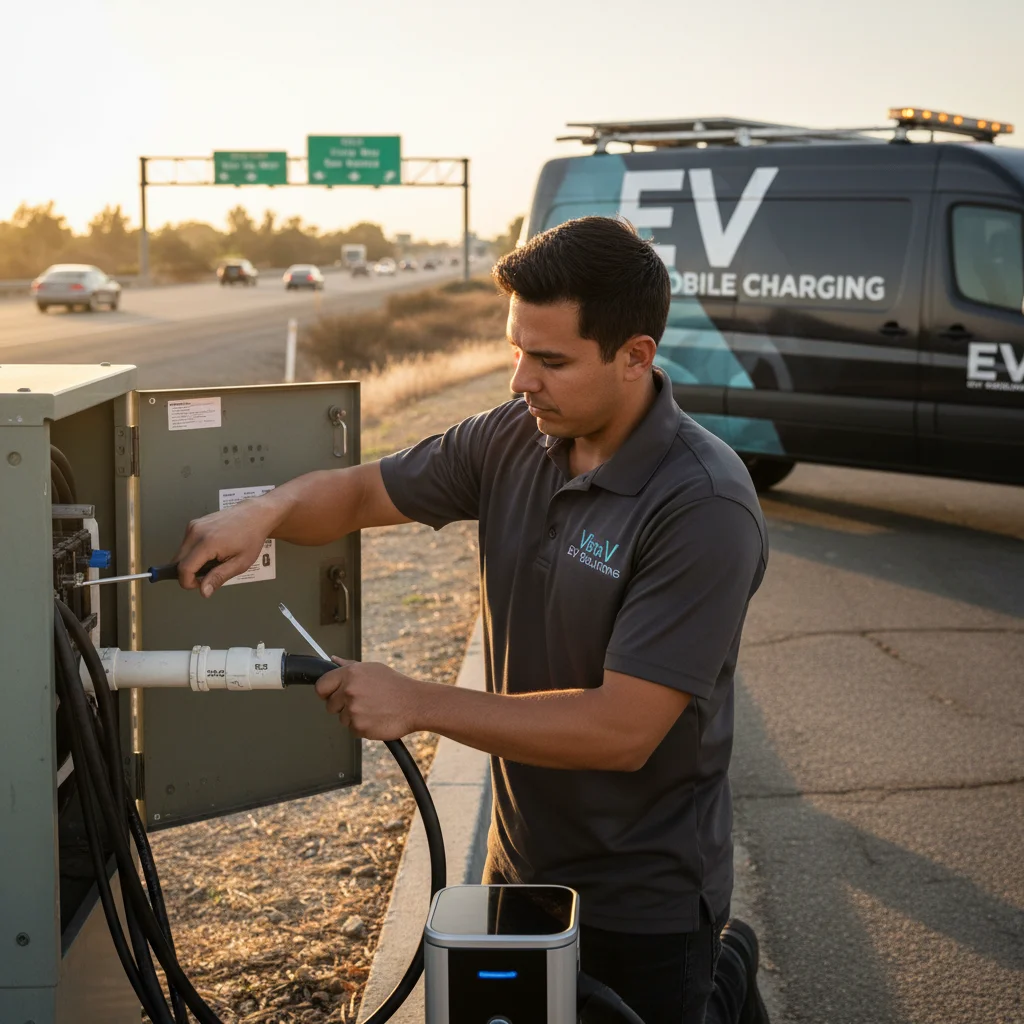
Local residential response notes
Lake Stevens is largely residential, with a mix of newer subdivisions and older lakeside homes. The streets are navigable for the operator unit, and residential calls there tend to be 12V battery failures or charge port issues rather than out-of-charge emergencies. If your Tesla will not wake up in your Soper Hill garage, that is likely the 12V, and the operators we work with can diagnose and address it on-site.
The Lake Stevens shopping center and the commercial strips along SR-9 are the highest-traffic areas for residential stranding. A driver who runs low during a quick stop at the grocery store ends up in the parking lot with nowhere to plug in, and the operator’s Level 2 source gets them home.
For context on how this compares to Marysville patterns to the south, see our post on EV roadside assistance in Everett.
What we bring and how fast the operator arrives
The operator vehicle taking Lake Stevens calls carries a 240V Level 2 source. It puts meaningful charge into CCS and CHAdeMO vehicles, and handles NACS natively. If you drive a Rivian, Hyundai, Ford, Chevy, or BMW, we have you covered, not just Tesla owners.
What we bring on every call:
- Onboard charge, enough to deliver 20 to 40 miles of additional range depending on your vehicle’s acceptance rate
- 12V jump capability, for EVs that will not open or respond because the auxiliary battery is dead
- Charge port troubleshooting, connectors that will not release are a common secondary issue
- Basic triage, we will tell you if the problem is something we can fix roadside or if you genuinely need a shop
The operator taking a Lake Stevens call factors in US-2 and SR-9 traffic when they confirm a window. We are transparent about that window when you call. Lake Stevens is well within our regular Snohomish County service corridor.
Mobile charge vs tow for north Snohomish drivers
A tow to the nearest fast charger from a Lake Stevens freeway shoulder will run you significantly more than a mobile charge call. It also takes longer, tow dispatch in north Snohomish during peak hours can mean a 60 to 90 minute wait. And once you are at the charger, you are still paying for the session and waiting another 20 to 40 minutes to get enough range to continue.
Mobile charging collapses that into one stop. An operator comes to you, pushes charge into your battery, and you drive away. No flatbed, no charger queue, no second Uber back to your car.
That said, mobile charging is not always the answer. If your car has a structural issue, a charging system fault, or a battery management error that is preventing charge acceptance, we will tell you that on-site and help you figure out next steps. We are not going to bill you for a rescue that does not actually rescue you.
For a deeper look at when to call for mobile charge versus when to tow, our post on mobile EV charging vs tow breaks down the decision in detail.
One thing north Snohomish County drivers should know: the grades around Lake Stevens, Snohomish, and Monroe make range estimation genuinely harder than in the flatter Seattle neighborhoods. If you are planning a round trip with hills in both directions, add a 10 to 15 percent buffer to whatever your car estimates.
When to call us
Call us when you are stranded with a dead battery, when your EV will not start because the 12V has failed, or when you are watching your range estimate drop faster than you can reach a charger. Those are exactly the situations the operators we send exist for, not a shop visit, not a tow, just fast on-site help from a team that knows north Snohomish’s roads.
Call (206) 202-7018 to reach a local operator.