Covington sits at the edge of South King County, where SR-18 climbs east toward Maple Valley. The route is a fast cut to I-90 for pass commuters and a slow grind in wet weather. A driver who runs the heater for the climb home with a thin buffer can hit zero on the grade or just past the Maple Valley exit.
Where Covington calls come from
Covington holds 1,125 registered EVs. Most drivers commute along SR-18 to Maple Valley, I-90 east toward North Bend, or back into Kent and Auburn via Covington Way. The Timberlane neighborhood and the Jenkins Creek area see the most calls. The pre-1980 housing share sits at 32.4 percent, and many of those homes have unheated garages that swing with the weather.
The trouble spots include the SR-18 climb out of Covington, the Maple Valley exit ramp, and the rural roads into Black Diamond and Ravensdale. A 35 to 45F commute with the cabin heat running drops the buffer fast. A driver who returns from a Bellevue or Seattle commute in the rain often arrives with the last 10 miles gone.
PSE serves Covington through the Up & Go Electric program and the Flex EV rate. Newer subdivisions often have roughed-in 240V service. Older homes need a panel upgrade before a Level 2 install fits.
What mobile rescue does on SR-18
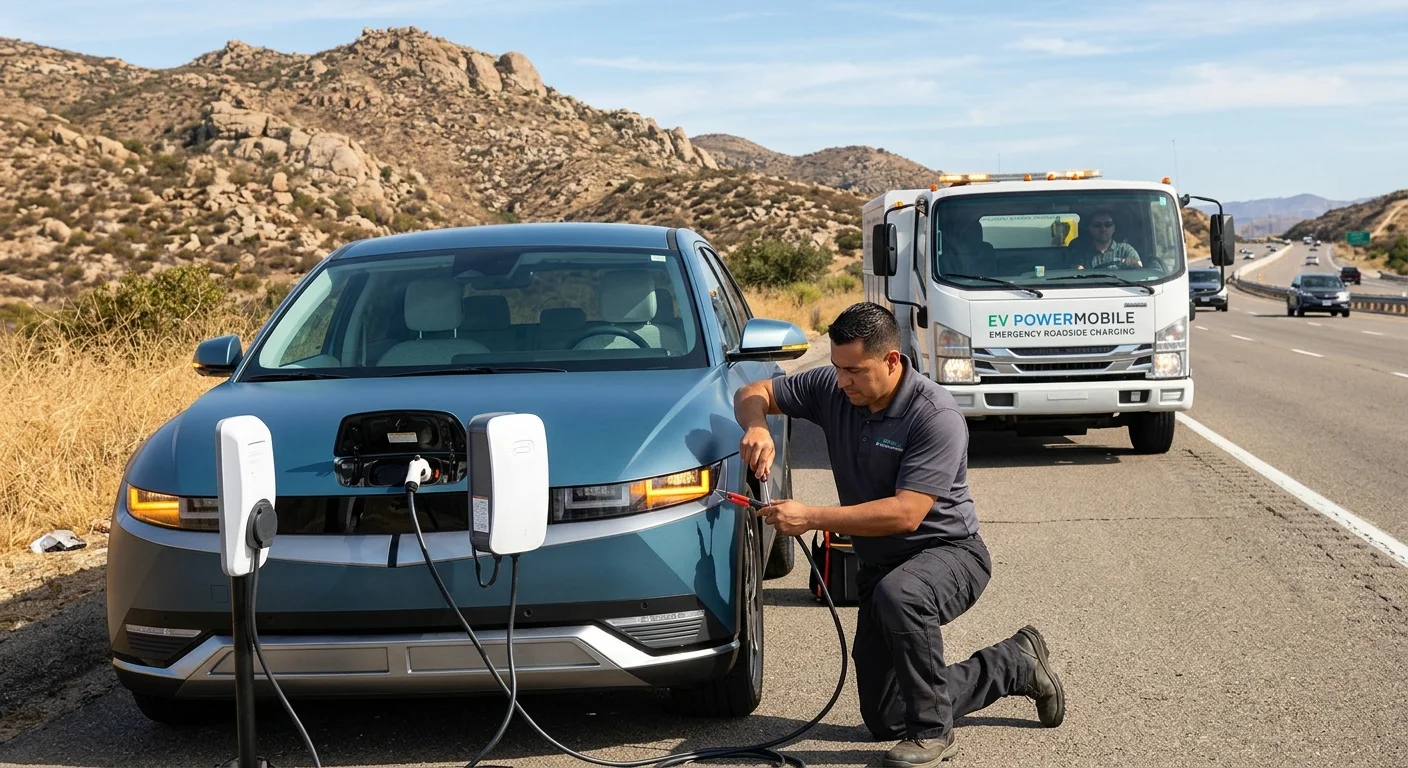
A mobile operator brings a 240V Level 2 source to the shoulder. Native NACS covers Teslas. CCS and J1772 adapters cover Chevrolet, Hyundai, Kia, and the rest of the bench. Fifteen to thirty minutes of charging typically adds 10 to 20 miles of range, which clears the path to a working charger in Covington, Maple Valley, or Kent.
The operator runs a 12V diagnostic first. A weak 12V in a cold-soaked garage mimics an empty pack. Jumping the 12V restores the car in minutes. If the traction pack is genuinely low, the cable goes in.
Mobile EV charging at the shoulder is faster than a tow to a shop. The operator quotes before starting and bills the driver directly. Charge Pro SEA connects you with a local operator who knows the corridor.
Chain rules and the pass commute
Drivers heading east from Covington to Snoqualmie Pass run RCW 46.37.420 and WAC 204-24 chain requirements. Closures arrive storm by storm and there is no fixed seasonal calendar. A driver who runs low on the climb needs to know whether chains are required before they dispatch a mobile operator. Studded tires help, but traction rules can change the dispatch picture.
WSDOT IRT covers SR-18 during peak commute periods. Their published materials describe flat tires and out-of-gas situations but do not mention EVs. The right move is to call 911 from the roadway first if the car blocks traffic, then call a mobile operator for the charge.
When to call
Call (206) 202-7018 when your EV cannot reach a charger in Covington or anywhere on the SR-18 corridor. Charge Pro SEA connects you with a local operator who quotes before starting and bills you directly.