A roadside mobile EV charger is a 240V Level 2 source on wheels. Operators in the metro use it to add 10 to 20 miles of range in 15 to 30 minutes of charging. It is not a fast charger, and it is not a tow. Knowing what it can and can’t do saves time.
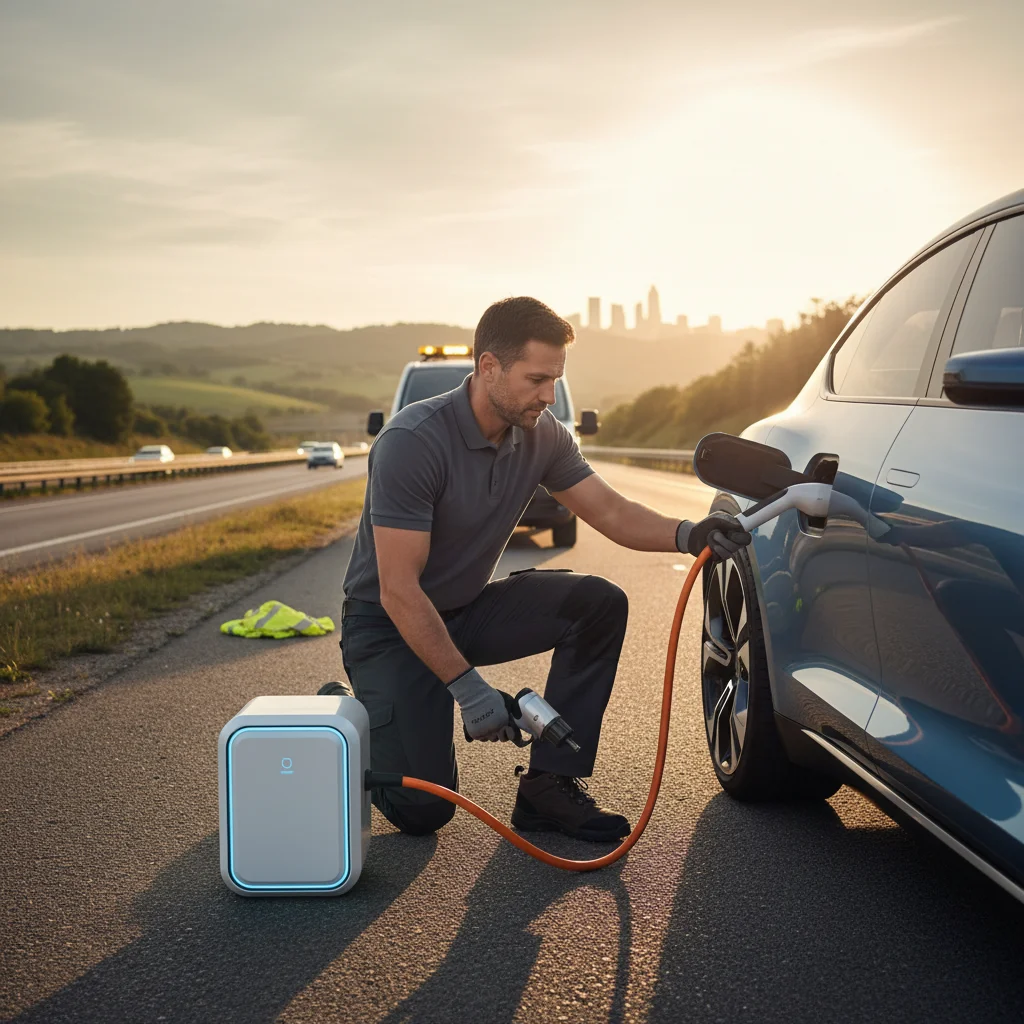
What a mobile charger can do
A mobile charger can wake a dead 12V, top up an empty traction pack enough to clear the path to a working charger, and free a stuck charge cable. The operator carries the cabling, the 12V jump pack, and the diagnostic tools to handle the three most common roadside calls.
Fifteen to thirty minutes of Level 2 charging typically adds 10 to 20 miles of range. That is enough to reach a working charger, the nearest driveway, or a safe parking lot. It is not a full pack.
The operator brings native NACS for Teslas and CCS or J1772 adapters for the rest of the fleet. The mobile charger works on any modern EV that accepts Level 2 AC.
What a mobile charger cannot do
A mobile charger cannot fast-charge a pack. The 240V Level 2 source on a mobile truck is much slower than a DC fast charger. A driver who needs a full pack should drive to a working charger, not call for mobile rescue.
A mobile charger cannot fix a charge port fault. If the car’s port will not accept a cable, the operator needs to diagnose and possibly replace the port. That is a shop case.
A mobile charger cannot fix a battery management fault. If the car throws a high-voltage warning or refuses to charge on multiple cables, the operator needs to send the car to a shop with factory diagnostics.
A mobile charger cannot fix a stuck parking brake or a failed motor. The operator will tell you on the phone whether the car is a mobile case or a tow case.
What the operator does before work starts
The operator runs a quick diagnostic by phone or on arrival. The driver should have the car’s make, model, year, and current state ready. The operator asks:
- Can the car roll, shift, or steer?
- Is the dashboard dark or lit?
- Is the cable stuck in the port?
- What is the current pack percentage, if available?
- Has the car thrown any warning messages?
The operator quotes the work before starting. The driver can accept or decline. If the driver declines, the operator leaves and bills only the dispatch fee, if any.
What mobile rescue costs
Charge Pro SEA does not set operator prices. Independent operators quote the driver before starting work and bill the driver directly. The cost varies by location, time of day, and the operator’s own pricing structure.
A mobile rescue that adds 10 to 20 miles of range takes 15 to 30 minutes of Level 2 charging. The cost covers the operator’s dispatch, the truck, and the charge itself. Drivers should confirm the quote before the operator starts work.
Mobile EV charging at the shoulder is faster than a tow. The operator quotes before starting and bills the driver directly. Charge Pro SEA connects you with a local operator who knows the metro.
When to call
Call (206) 202-7018 when your EV cannot reach a charger in the Puget Sound region. Charge Pro SEA connects you with a local operator who quotes before starting and bills you directly.