Tesla charge time in the Puget Sound is not the same as a desert or southern California climate. The lowlands sit in the 35 to 45F band for months. Cabin heat and defrost run on nearly every trip. A driver who leaves home with 80 percent and runs the heater for an hour has lost more range than the dashboard predicted.
What the cold band actually does
Recurrent Auto reports that across 30-plus EV models, EVs retain about 78 percent of range at 32F. AAA testing at 20F showed climate control pushing losses toward 40 percent. The Puget Sound does not hit 20F often, but it sits in the cold-soak zone for months. The drain is not a hard freeze but a slow leak from the heater and the defrost.
A driver who charges to 90 percent overnight sees the battery warm slowly to operating temperature before the morning drive. A driver who parks outside in a 35F rain soaks the battery overnight and loses more on the first miles of the morning commute.
The charge time scales with the battery size and the power the car can accept. A Model 3 Standard Range Plus on a 240V Level 2 source fills overnight. A Model S Long Range on the same source takes longer. The cold band stretches both by 20 to 30 percent in real conditions.
What changes at a Supercharger
Tesla Superchargers in the metro are 150 kW to 250 kW units. A driver who plugs in at 20 percent and tops up to 80 percent gets 30 to 40 minutes of charging on a V3 stall. The cold band stretches that. A 35F battery that has not been pre-conditioned accepts charge more slowly until the thermal management system warms it up.
Pre-conditioning before a Supercharger stop is the right move. The in-car navigation knows the route and warms the pack on the way. A driver who navigates to the Supercharger in the cold gets the fastest session.
What changes at home
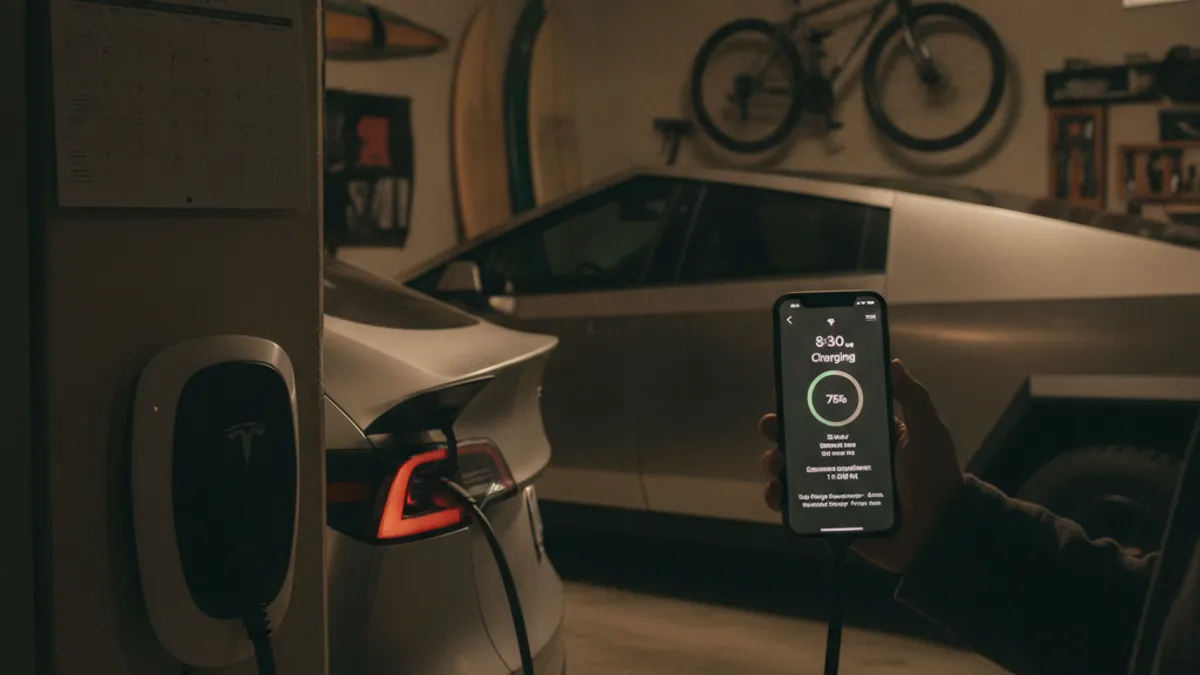
Home Level 2 charging depends on the Tesla’s onboard charger and the home’s electrical service. Most Model 3 and Model Y homes have a NEMA 14-50 outlet or a Tesla Wall Connector. The onboard charger accepts 32 to 48 amps depending on the model. A driver who runs the car down to 10 percent overnight wakes up to a full pack on a working Level 2 circuit.
Older homes across King, Pierce, and Snohomish counties may need a panel upgrade before a Level 2 install fits. Pre-1980 housing sits at 46.6 percent in King, 43.0 percent in Pierce, and 36.0 percent in Snohomish. Many of those older panels do not have the ampacity for a 50-amp Level 2 circuit.
Puget Sound Energy serves most of the metro through the Up & Go Electric program. The program includes a home charger rebate for qualifying customers. Confirm current rules with PSE before installing. Seattle City Light, Tacoma Power, and SnoPUD each have their own programs.
When the car is dead on the road
A Tesla that runs out of charge on I-5 or I-90 needs a mobile operator with a 240V Level 2 source. The operator connects to the NACS port and tops up the car enough to reach a working charger. WSDOT IRT covers the major corridors. Their published materials describe flat tires and out-of-gas situations but do not mention EVs. The right move is to call 911 from the roadway first if the car blocks traffic, then call a mobile operator for the charge.
A Tesla that cannot roll, shift, or steer needs a flatbed. The operator will tell you that case on the phone before dispatch. Chapter 46.55 RCW governs towing and impound, and the Washington State Patrol posts the maximum impound rates.
Mobile EV charging at the shoulder is faster than a tow. The operator quotes before starting and bills the driver directly. Charge Pro SEA connects you with a local operator who knows the metro.
When to call
Call (206) 202-7018 when your Tesla cannot reach a charger in the Puget Sound region. Charge Pro SEA connects you with a local operator who quotes before starting and bills you directly.