The GMC Sierra EV is a heavy-duty work truck with a large battery pack. A Sierra that runs out of charge on I-5 or I-405 needs a mobile Level 2 source, not a flatbed. The operator brings a 240V source to the truck, adds 10 to 20 miles of range, and gets the truck off the shoulder.
What emergency charging actually adds
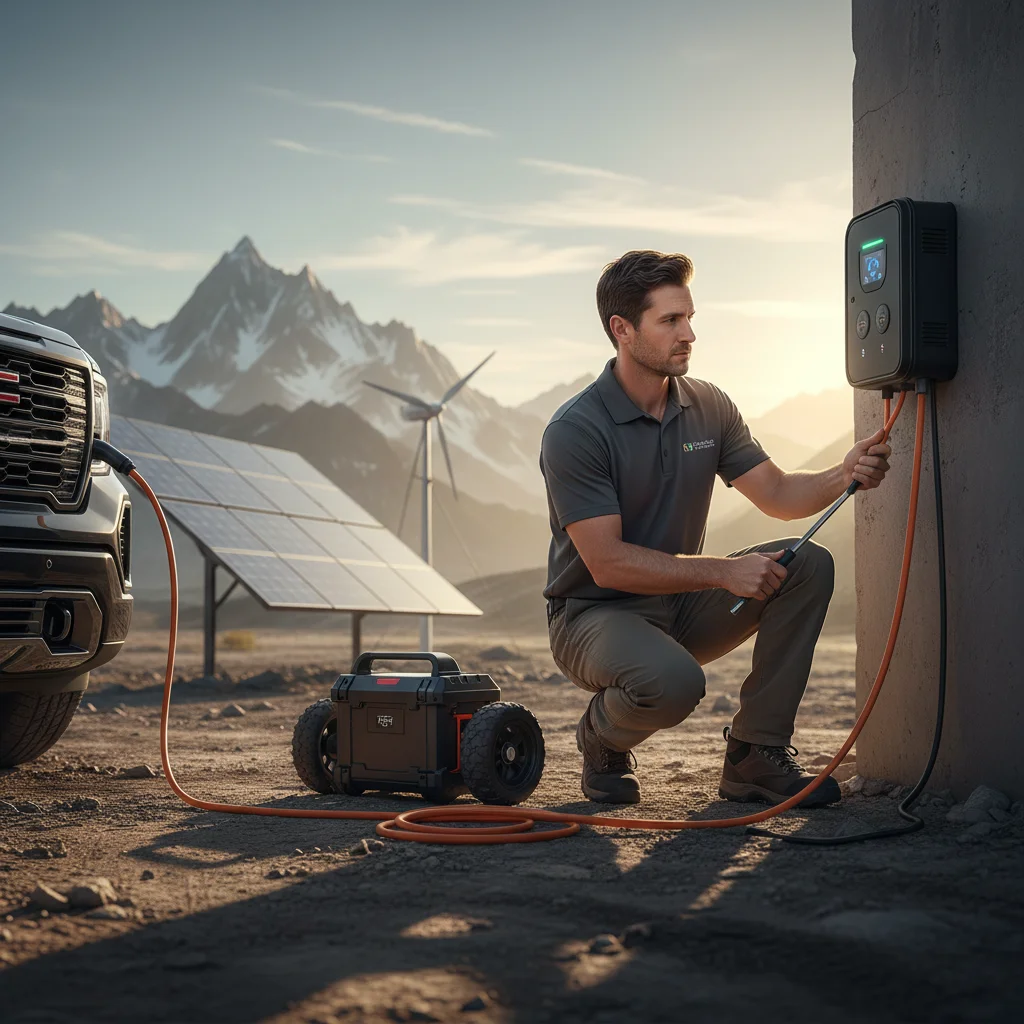
A mobile operator brings a 240V Level 2 source to the truck. Fifteen to thirty minutes of charging typically adds 10 to 20 miles of range. That is enough to clear the path to a working charger or the nearest exit. It is not a full pack.
This is the honest answer for any Level 2 roadside recovery, not a Sierra-only limit. A work truck that needs a full charge at the road should not be on a mobile rescue truck. Mobile rescue is the bridge from zero to a working charger.
The Sierra EV uses a CCS connector for fast charging and a J1772 connector for Level 1 and Level 2. The mobile operator carries a J1772 adapter as part of the standard kit. Native NACS covers Teslas, and CCS covers most non-Tesla EVs in the metro.
What changes in wet weather
Puget Sound drivers sit in the 35 to 45F band for months. Recurrent Auto reports that across 30-plus EV models, EVs retain about 78 percent of range at 32F. AAA testing at 20F showed climate control pushing losses toward 40 percent. The Sierra follows the same pattern.
Wet weather slows charging slightly. The truck’s battery management system balances cell temperature and incoming power. Cold-soaked batteries accept charge more slowly until the heater warms them up. A driver who plugs in a cold-soaked Sierra sees the first few minutes run at a reduced rate, then ramp up as the pack warms.
Cabin heat running during the drive to the operator’s truck drops the buffer. A driver who runs the heater for the whole trip can hit the mobile truck with less range than the dashboard predicted.
What changes at job sites
Work trucks often sit on job sites overnight without charging. A contractor who drives from Tacoma to a Bellevue job in the morning, then back in the evening, can hit zero on the return leg if the buffer was thin to start. The Sierra’s range estimate is honest in good weather, but cabin heat plus a wet cold snap cuts it by 20 to 30 percent.
Mobile rescue at the job site is more expensive than a flatbed, but it returns the truck to service without a tow. A contractor who can charge at the job site in the morning has a path back. A contractor who can’t is stuck waiting for a tow.
When the truck is dead on the road
A Sierra that runs out of charge on I-5 or I-405 needs a mobile operator with a 240V Level 2 source. The operator connects to the J1772 port and tops up the truck enough to reach a working charger. WSDOT IRT covers the major corridors. Their published materials describe flat tires and out-of-gas situations but do not mention EVs. The right move is to call 911 from the roadway first if the truck blocks traffic, then call a mobile operator for the charge.
A Sierra that cannot roll, shift, or steer needs a flatbed. The operator will tell you that case on the phone before dispatch. Chapter 46.55 RCW governs towing and impound, and the Washington State Patrol posts the maximum impound rates.
Mobile EV charging at the shoulder is faster than a tow. The operator quotes before starting and bills the driver directly. Charge Pro SEA connects you with a local operator who knows the corridor.
When to call
Call (206) 202-7018 when your Sierra EV cannot reach a charger in the Puget Sound region. Charge Pro SEA connects you with a local operator who quotes before starting and bills you directly.