Tesla Insurance does include roadside assistance, but the coverage has real limits that catch local drivers by surprise. The app-based request handles dead 12V batteries and flat tires. It does not bring a portable charger that puts 240V into your traction pack. Knowing the gap is the difference between a 20-minute roadside event and a long Saturday.
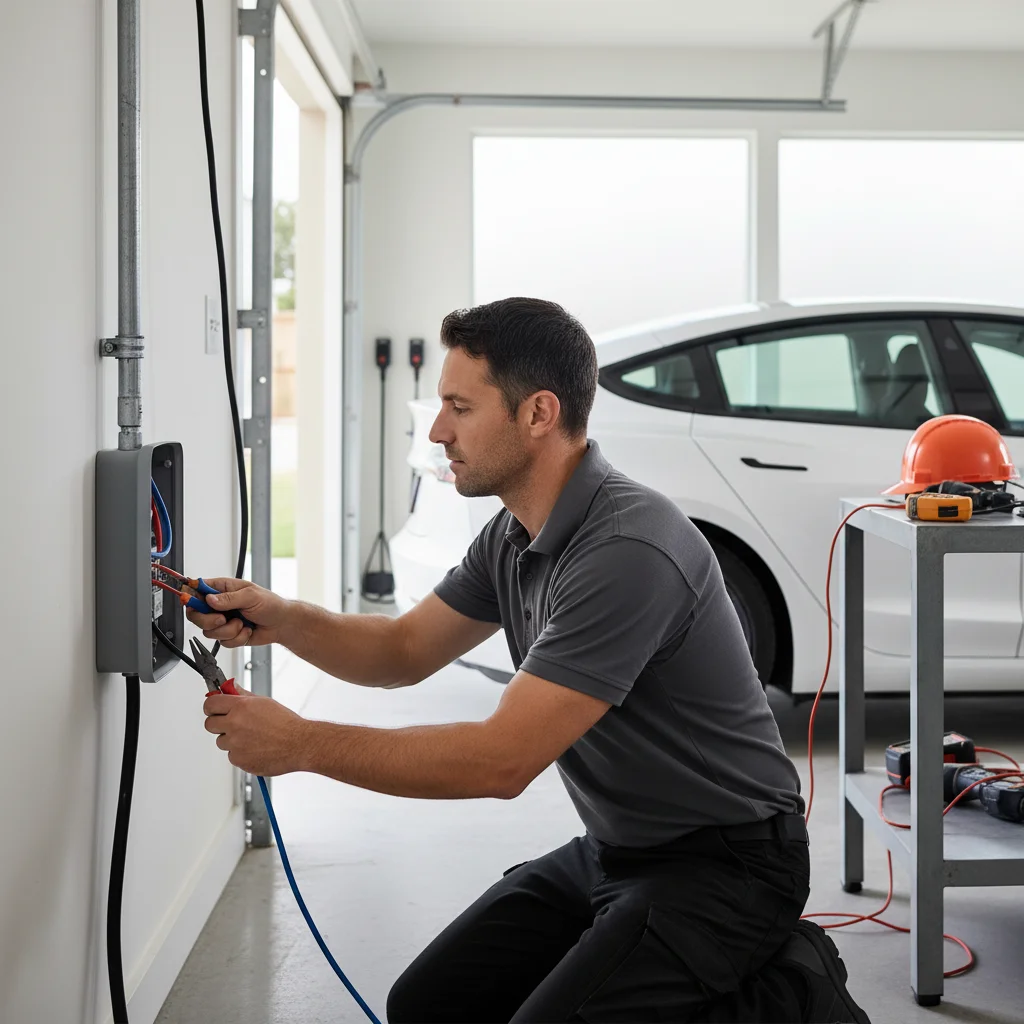
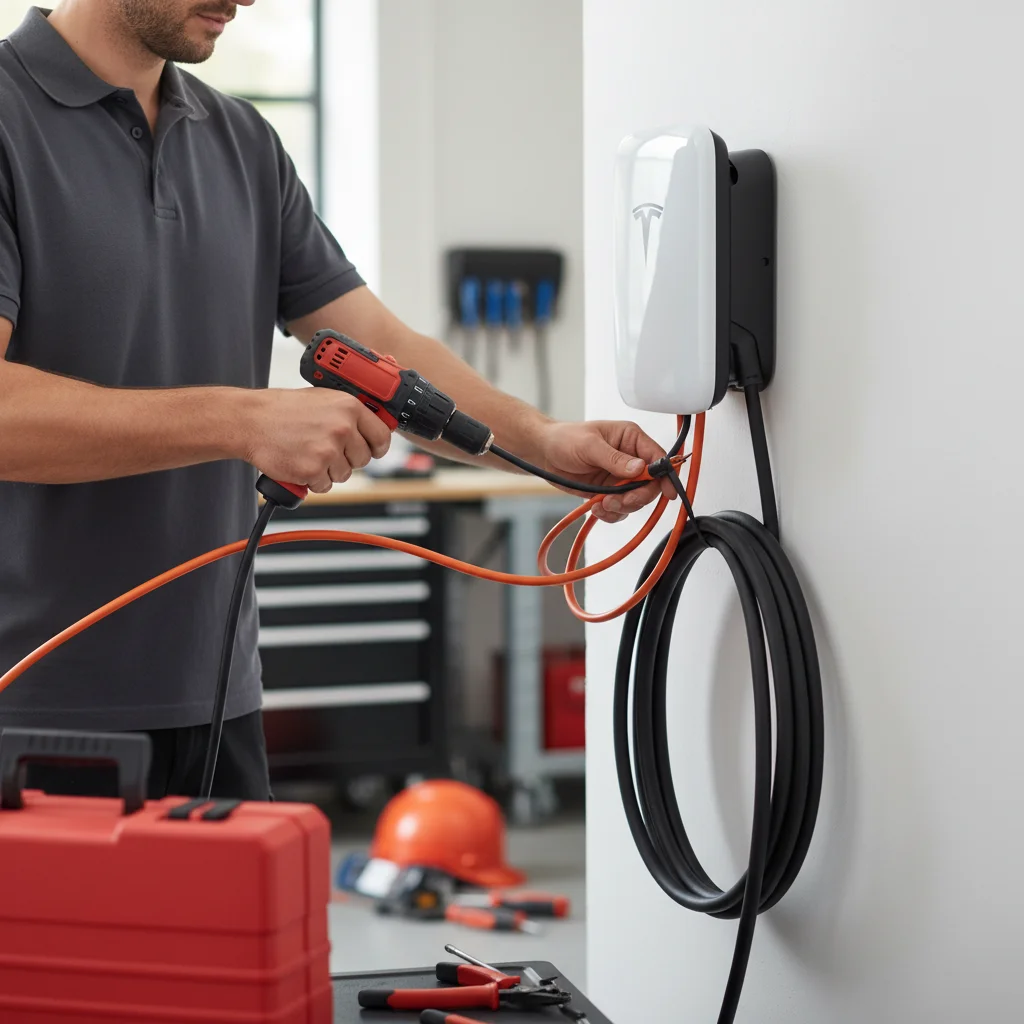
What Tesla Insurance roadside actually covers
When a Tesla driver opens the Tesla app and requests roadside help through the Insurance flow, the request routes to Tesla’s roadside partner. The partner dispatches based on the issue you describe:
- Dead 12V battery: the partner brings a portable jump pack and revives the 12V through the under-hood jump posts.
- Flat tire: the partner brings a donut spare or a plug kit, depending on model. Some Tesla models do not include a spare at all, in which case the partner tows to a service center.
- Lockout: the partner coordinates entry help, usually via the Tesla app’s phone-key function.
- Out of charge: the partner tows the vehicle to the nearest Supercharger or service center.
That last item is the gap most local drivers miss. A tow to a Supercharger is the only “out of charge” path Tesla Insurance covers. The tow itself can be long, the Supercharger may have a queue, and the driver pays the time. There is no mobile Level 2 charging truck option through the Tesla Insurance flow.
Why local Tesla owners still end up calling a separate service
The Puget Sound region has thousands of Teslas. King County alone holds more than 63,000 Tesla-registered vehicles out of roughly 144,000 total registered EVs. On a cold, wet Saturday in Bellevue or Kirkland, it is not unusual to find a Supercharger location with a 20-minute wait.
A driver whose pack is at 4 percent and whose nearest Supercharger has a queue has a problem the Tesla Insurance flow does not solve. The tow to that Supercharger still leaves the driver waiting in the car. The mobile alternative is a referral service like Charge Pro SEA matching the driver with a licensed independent local operator running a portable Level 2 or DC truck. The operator connects to the car’s charging port at the address where it sits, adds enough range to drive home or to a charger of the driver’s choice, and the driver pays the operator directly.
The two services are not competitors. Tesla Insurance roadside handles 12V and tire work. Mobile EV charging handles traction-pack emptiness. The same driver may use both in a year, just not for the same incident.
What Tesla Insurance does not promise
Tesla Insurance roadside, like most insurance-provided roadside programs, does not promise a specific arrival window. The partner dispatches based on workload. During a winter cold snap, when hundreds of EVs lose 12V overnight, response times stretch. The same is true during summer heat, though less often in this region.
The service also does not cover the operator-set cost of a third-party tow if the Tesla partner cannot reach the vehicle in a reasonable time. Some Tesla owners carry an additional membership for that gap; many do not.
Tesla Insurance roadside does not include a mobile charge. It does not promise a tire replacement if the plug kit does not hold. It does not cover lockout damage caused by forcing a mechanical key into a frozen door handle. The exclusions are spelled out in the policy documents; the practical effect is that the service is best for the cases it was designed for, and the cases outside that scope need a separate plan.
A side-by-side for the common scenarios
Dead 12V in a Capitol Hill garage. Tesla Insurance covers the 12V jump; mobile EV rescue covers the same thing and adds a 12V health check before driving away.
Flat tire on I-90 near Mercer Island. Tesla Insurance covers the donut spare or tow; mobile rescue covers the tow plus a flatbed to a tire shop of the driver’s choice.
Out of charge at 4 percent in Redmond. Tesla Insurance covers a tow to the nearest Supercharger. Mobile EV charging adds range at the scene so the driver does not need to be towed.
The two paths can stack. A driver with Tesla Insurance can call Tesla for the 12V jump, then call a mobile operator for a confidence charge of the traction pack if the local Supercharger is the only nearby option and the driver does not want to wait.
When to use the Tesla app, when to use Charge Pro SEA
Use the Tesla app for a 12V no-start, a flat tire, a lockout, or a tow to the nearest Supercharger. Use Charge Pro SEA for traction-pack emptiness where a mobile Level 2 or DC charger is the better answer than a tow, or for vehicles the Tesla partner will not cover.
The non-Tesla EV case is the second category. Drivers of Rivian, BMW, Ford, Hyundai, and other EVs have no Tesla Insurance roadside option at all. Their path is mobile rescue from the moment the car is dark or empty.
For a broader view of how roadside programs stack across the EV market, our Tesla roadside assistance guide covers what each model costs and what each plan covers.
Practical limits to keep in mind
Most mobile EV charging operators in this region work a referral-based schedule. They do not promise arrival windows. They confirm availability when the matched operator picks up the case, then dispatch. Drivers who need a guaranteed arrival window may prefer a Tesla Insurance tow plus a Supercharger wait, accepting the time cost.
Tesla Insurance roadside does not cover damage caused by the stranded vehicle before help arrives. A driver who tries to limp a Tesla with a soft tire onto a freeway can void part of the coverage. The same is true for any vehicle. The safe move is to stop where it is safe and call from there.
The Washington State all-party consent law, RCW 9.73.030, applies to recorded calls. Any roadside partner that records calls for quality or training must inform all parties. Drivers who do not want calls recorded can ask before sharing details.
When to call us
If the traction pack is empty and the nearest Supercharger is far or full, Charge Pro SEA connects Puget Sound Tesla drivers with licensed, independent local operators who run mobile charging trucks. Call (206) 202-7018 to reach a local EV rescue operator.