You have plugged in your Chevy Bolt expecting it to hum along, steadily regaining charge. Instead of that satisfying notification, you get silence, or worse, an error like “Unable to Charge.” It is a frustrating moment, especially when you are trying to get across the metro or back to your parking spot in Bellevue. Before panic sets in, there are several troubleshooting steps you can take to diagnose the problem.
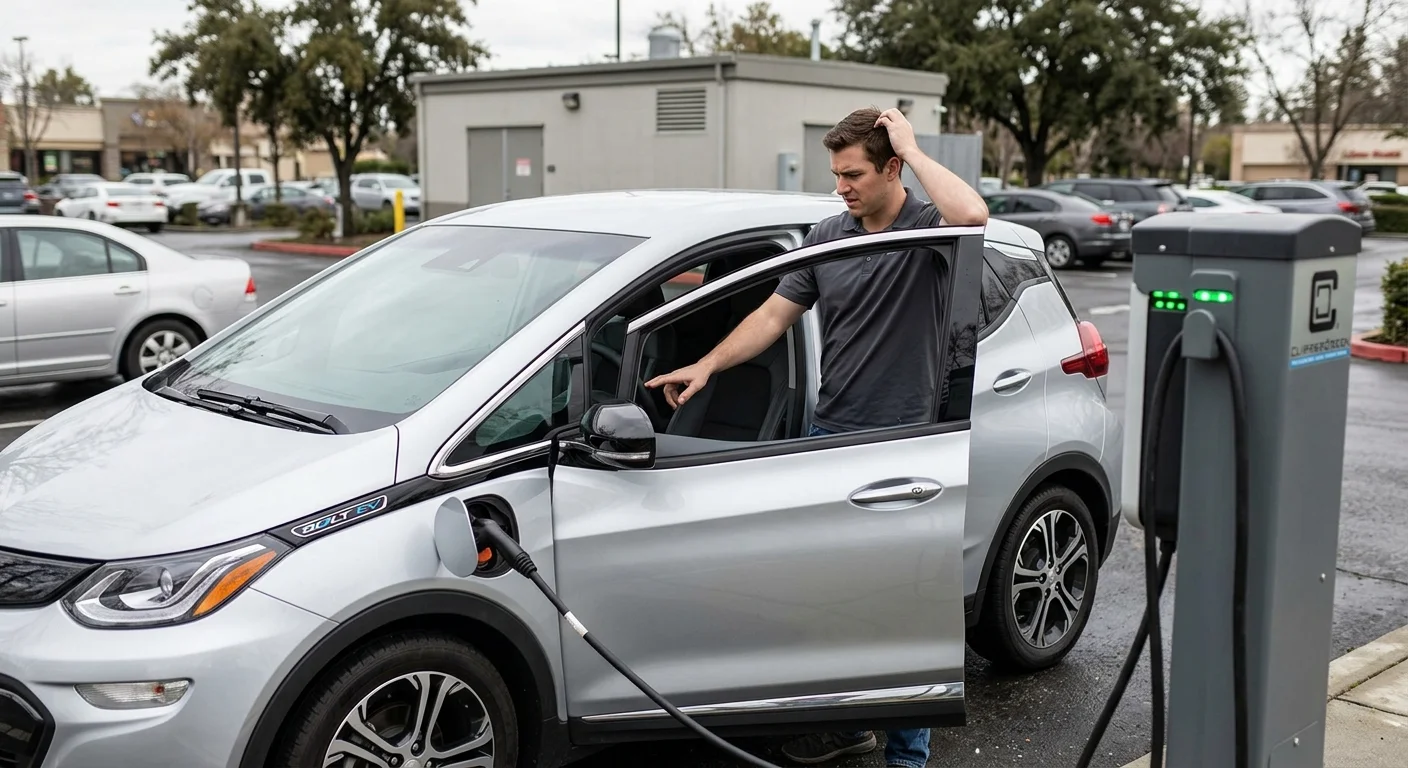
This guide walks through common issues and solutions when your Bolt will not charge. You will figure out whether the problem is the charger, the car, or the power source. Knowing these steps can often resolve minor glitches or at least help you understand when it is time to call for help.
Is it the charger, the car, or the power source
When your Bolt refuses to charge, the first step is to pinpoint the origin. Charging involves a three-way interaction: the equipment, your vehicle, and the electricity supply. A fault in any one of these can interrupt the process.
Start with the most obvious components. If you are at a public station, try a different port at the same site, or move to a different station if possible. Public chargers can sometimes be faulty or temporarily offline. If you are charging at home, ensure the cable is fully seated in both the wall outlet and your Bolt’s port. Wiggle it gently to confirm a secure connection. Also, check your home’s circuit breaker panel. A tripped breaker is a surprisingly common reason for charging interruptions. Sometimes a high-power appliance or an overloaded circuit can cause your charger’s circuit to trip. Resetting it might restore power.
If you have access to a different cable, try swapping it out. A damaged cable can be the culprit even when the damage is not immediately visible. For DC fast charging, ensure the charger itself looks operational and does not display error codes. Different levels (Level 1, Level 2, DC fast) use distinct protocols, so a failure on one type might not mean a failure on another.
Common error codes: ‘Unable to Charge’ and what it means
The “Unable to Charge” message on your Bolt’s dashboard is a general indicator that something is preventing a successful session. It does not always specify the exact problem, but it signals a communication breakdown or a safety protocol trigger. This message may be accompanied by specific diagnostic codes if you dig into the vehicle’s menus.
This generic error frequently points to a few core issues. One common cause is a communication error between the vehicle and the charging station. EVs and chargers constantly talk to each other, negotiating power levels and ensuring safety. If this handshake fails at any point, the car will refuse to charge. Power fluctuations or an unstable supply can also trigger this error. The Bolt’s onboard charging system is designed to protect its battery, so it will halt charging if it detects an inconsistent source.
Less common but still possible are internal vehicle issues such as a problem with the onboard charger, the battery management system, or a high-voltage battery fault. While “Unable to Charge” is often a minor hiccup that a simple reset can resolve, persistently seeing this message warrants a deeper look.
How to perform a soft reset on your Bolt’s charging system
Before resorting to more complex diagnostics, a simple soft reset can often clear minor glitches. Think of it like restarting your computer when it acts up.
To perform a soft reset of your Bolt’s charging system:
- Disconnect the charger. Safely remove the cable from your Bolt’s port. Make sure the session has ended.
- Turn off the vehicle. Press the power button to completely shut down your Bolt.
- Open and close the driver’s door. This action can help reset some of the vehicle’s internal modules.
- Wait a few minutes. Give the systems a moment to power down fully. Around 2 to 5 minutes should be sufficient.
- Restart the vehicle. Power your Bolt back on.
- Attempt to charge again. Reconnect the cable and see if the session initiates successfully.
This procedure is a safe first step. It often resolves issues stemming from temporary communication errors between the car and the charger, or minor software bugs within the Bolt’s charging management system. If the soft reset does not work, the problem is more complex, and other troubleshooting is needed.
Checking the 12V battery: a common hidden culprit
It may seem counterintuitive for an electric vehicle, but a healthy 12V battery is essential for your Bolt to initiate charging. While the massive high-voltage battery powers the motor and stores the bulk of the energy, the smaller 12V auxiliary battery is responsible for running all the vehicle’s low-voltage electronics. This includes critical systems like the onboard computer, infotainment, sensors, door locks, and the relays and communication modules necessary to start the high-voltage charging process.
Symptoms of a failing 12V can be misleadingly similar to other EV problems. Your Bolt may not “wake up” when you try to start it, accessories might fail or act erratically, or the charging port will not acknowledge the charger, displaying that “Unable to Charge” message. Even if the main drive battery has plenty of range, a dead or weak 12V can effectively brick your car.
The Bolt’s 12V battery is typically located under the hood, on the driver’s side. While you can visually inspect its terminals for corrosion, diagnosing its health accurately requires a multimeter. A healthy 12V battery should read around 12.6V when the car is off. Anything significantly lower, especially below 12V, suggests a problem. Replacing or jumping a 12V battery on a Bolt is a specialized task. Improper handling can cause damage to sensitive electronics, and experienced technicians usually do this work. Regular 12V checks should be part of your EV maintenance schedule.
What to do if you are stranded in the metro and your Bolt won’t accept a charge
Finding yourself stranded with a Bolt that will not charge is stressful. Whether you are in downtown Bellevue, navigating I-405, or stuck in a neighborhood like Kirkland or Edmonds, the immediate priority is safety and a reliable solution. Do not panic. There are clear steps to take.
First, ensure your vehicle is in a safe location. If you are on a road or shoulder, activate your hazards. If possible, move to a safer, more visible spot. Your next move should be professional help. While a tow truck can get your car to a service center, it may not be the most efficient solution for an EV charging issue. Many times the problem is solvable on-site.
This is where we come in. We specialize in non-Tesla EV rescue across the metro. Instead of an expensive tow, we can dispatch a mobile unit to your location. Operators carry diagnostic tools, jump-start equipment for 12V batteries, and mobile charging capabilities to get you enough range to reach a station. This is particularly valuable if the issue is a dead 12V, which operators can often jump-start on the spot.
When to call for mobile EV rescue instead of a tow
Deciding between a traditional tow and mobile EV rescue can save time, money, and hassle. For many Bolt charging issues, especially when the car is not accepting a charge, mobile rescue is often the smarter choice.
A tow truck simply transports your vehicle from point A to point B. While necessary for severe mechanical failures or accidents, it does not offer diagnostics or on-site solutions for charging problems. Your Bolt might end up at a service center only to find the issue was a dead 12V or a charging port glitch that could have been fixed on the spot.
Our EV roadside assistance service is designed for electric vehicles. Operators’ mobile units are equipped with diagnostic tools, jump-start equipment for 12V batteries, and mobile charging capabilities. If the issue is a dead 12V, operators can typically jump-start it on-site, allowing your vehicle to power up and begin accepting a charge. If it is a software glitch, diagnostics may uncover it. This targeted expertise means we can often get your Bolt back on the road faster than a traditional tow service.
If you have tried the troubleshooting steps and your Chevy Bolt still will not charge, or if you are stranded and unsure what to do, call (206) 202-7018. We will connect you with a local operator who quotes you before starting.