If you typed “battery backup Edmonds” into a search bar, there’s a good chance you’re thinking about your house, not your car. That phrase covers two completely different products, and mixing them up wastes time when the wind is rattling the windows and the rain hasn’t stopped in three days.
Why Edmonds asks this question more than most places
Edmonds sits on the Puget Sound shoreline north of Seattle, and a lot of the housing stock predates 1980. The census puts Edmonds at 63.3% pre-1980 housing, and Snohomish County overall still sits at 36.0% pre-1980 across its stock. Older homes mean older electrical panels, fewer Level 2 charger installations, and a steady population of EV owners who trickle-charge on a 120V outlet in the garage.
When a fall storm hits and the power drops for six or eight hours, an EV in that situation faces two problems at once. The home battery backup keeps the fridge running but does nothing for the car. The car needs charge to reach the next ferry wait or the next commute, and the home plug is dead.
Add the Mukilteo ferry holding-lane effect and the problem compounds. A driver waiting for the ferry in line, with the cabin heater on, burns through the last percent of range with the car essentially idling. If the storm then knocks out power in Edmonds, that driver can’t get home and can’t get to a public charger that still works.
What a home battery backup system actually is
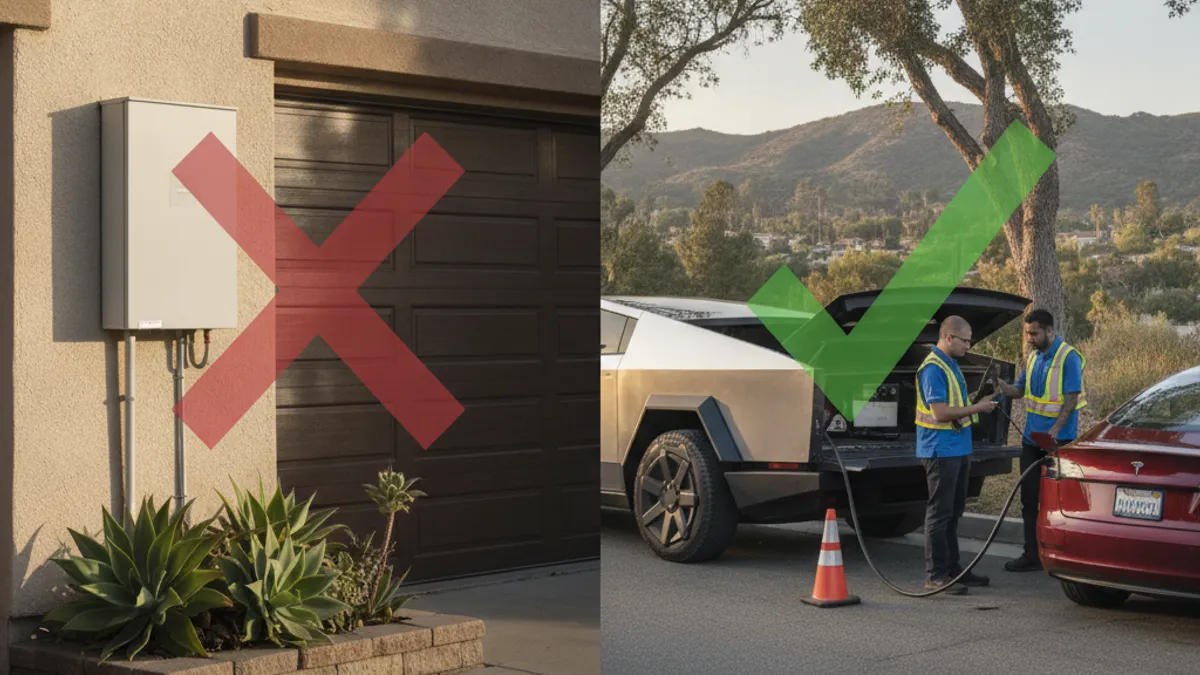
Products like the Tesla Powerwall or Enphase IQ Battery are large wall-mounted units, usually installed in a garage or against an exterior wall, wired directly into your home’s electrical panel. They store energy so your household keeps running through a blackout.
Installing one is a real electrical project. It requires a licensed electrician, a permit from the City of Edmonds, and coordination with Snohomish County PUD for interconnection. Charge Pro SEA does not sell, install, or service these systems. If you’re comparing home battery backup options for an Edmonds property, that’s a job for a licensed electrical contractor, and it’s worth verifying any contractor’s license directly before signing anything.
SnoPUD runs a residential EV charger rebate and a separate commercial and multifamily program, but those programs are for permanent wiring, not portable power. Confirm the current program status with SnoPUD before any work begins.
What mobile EV charging is, and when Edmonds drivers need it
Mobile EV charging is roadside rescue built specifically for electric cars. When your EV’s main battery runs critically low, or the smaller 12V battery that controls door locks and the touchscreen dies, the vehicle won’t move under its own power. That’s a different problem than a home outage, and towing isn’t always the fastest or safest fix for an EV.
An operator brings a truck equipped with a mobile Level 2 charger directly to wherever you’re stuck, whether that’s a driveway off 9th Avenue, a shoulder on SR 99, or a parking lot near the ferry terminal. The matched operator adds enough range on-site to get you to the nearest working charger or back home, usually faster than arranging a flatbed tow. Edmonds sits close enough to Shoreline and the I-5 corridor that a lot of our calls here come from commuters who misjudged range on the freeway climb.
Our mobile EV charging referral service connects Edmonds drivers with licensed, independent local operators who carry commercial-grade Level 2 equipment. The referral doesn’t guarantee a specific amount of charge or a specific arrival window. The operator confirms those details when they take the call.
The two situations are not interchangeable
A home backup battery cannot move your car. A mobile EV charging truck cannot power your refrigerator. Each solves its own problem, and neither substitutes for the other. The wrong call costs you hours in a storm.
If the wind took the power out and your house is dark, call an electrician or SnoPUD. If your EV is sitting dead in the driveway because it never finished charging before the outage, that’s a mobile rescue call. If both problems hit at once, the EV is the one that has to move, because the public chargers at the Edmonds Crossing area and the ferry terminal are on a separate grid feed that may still be live while your house is not.
A few questions worth asking a home battery installer
If you end up talking to an electrician about a whole-home system, ask how many hours of backup the proposed setup actually covers for your household’s typical usage, whether it’s sized for the whole panel or just essential circuits, and whether the quote includes the City of Edmonds permit and the SnoPUD interconnection paperwork. Edmonds’ mix of mid-century homes and remodels means quotes can vary block to block, so getting two estimates is worth the extra week it takes.
For an EV-specific question, ask the installer whether the proposed system includes a vehicle-to-load port or a dedicated Level 2 circuit that can ride through an outage. Some modern whole-home batteries do both. Most do not.
When to call us
If your electric vehicle is stranded from a dead 12V battery or an empty main pack anywhere in Edmonds, that’s exactly what our referral service handles. If you’re chasing a whole-home battery backup system instead, save yourself a call and go straight to a licensed electrician or SnoPUD.
If you find yourself stuck along the Edmonds waterfront during a storm outage, or you can’t reach a working charger before the ferry line swallows the rest of your charge, call (206) 202-7018 to reach a local EV rescue operator.